Habitat
 Depth
 Group
 Role
 Size
WHAT DOES IT LOOK LIKE?
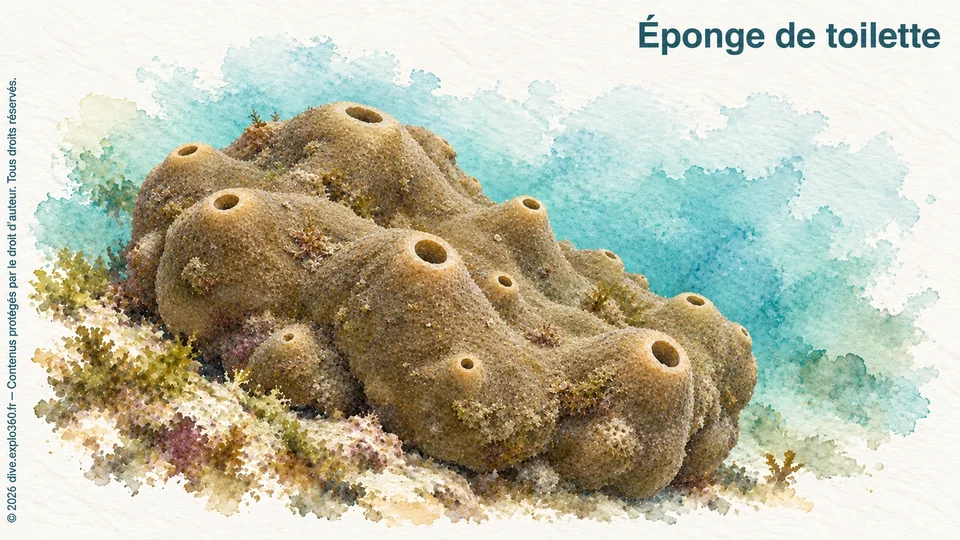
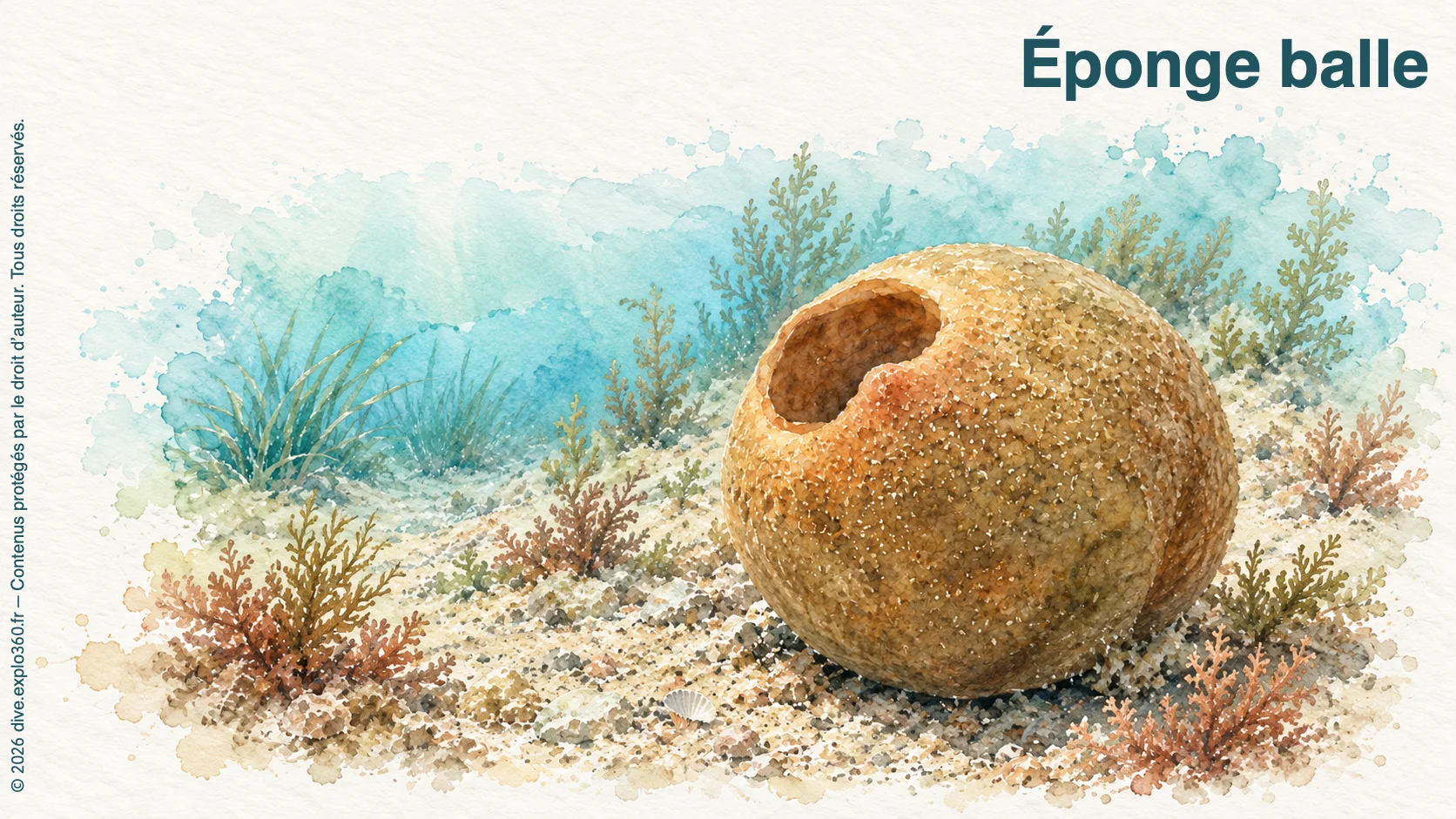
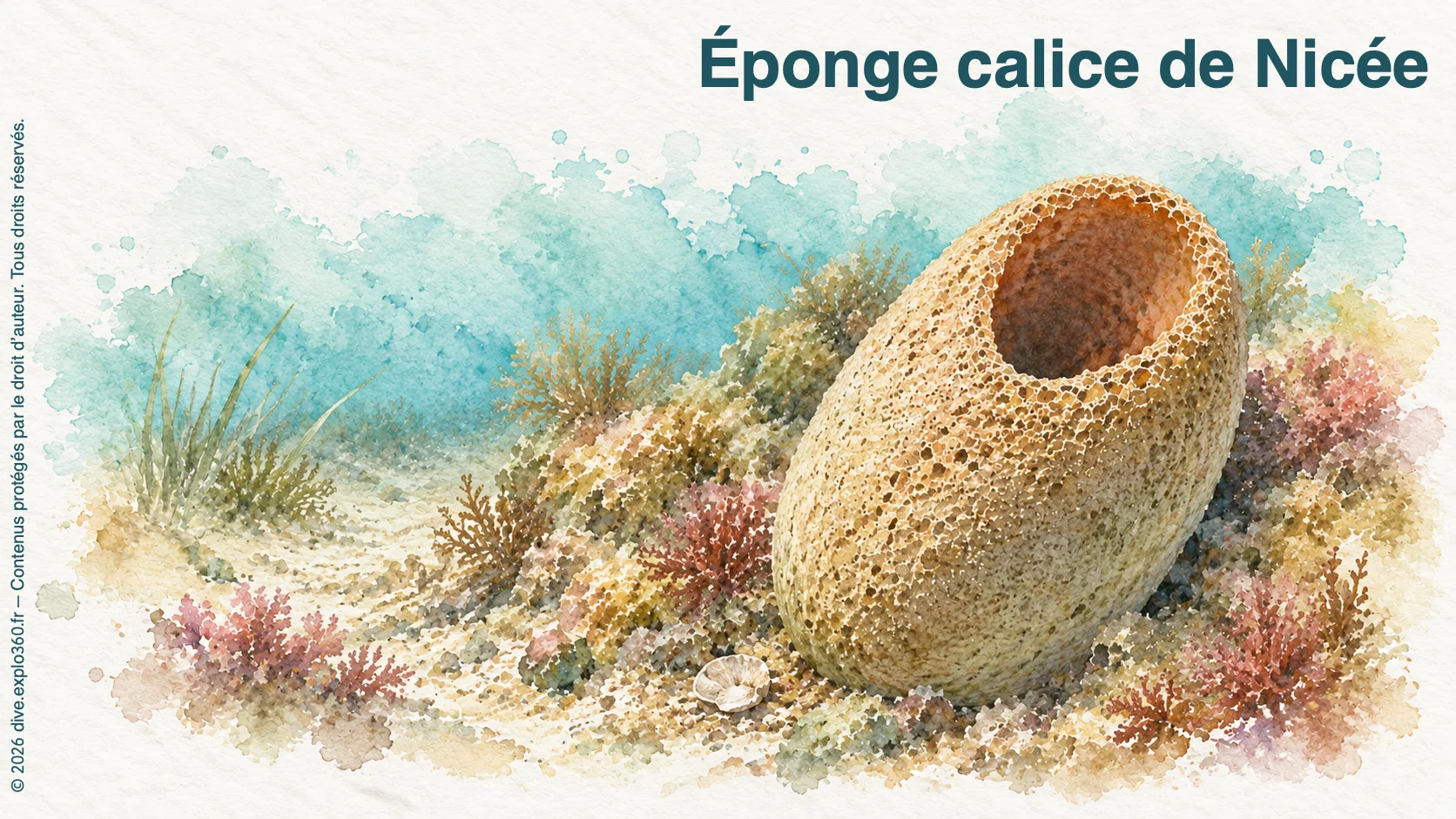
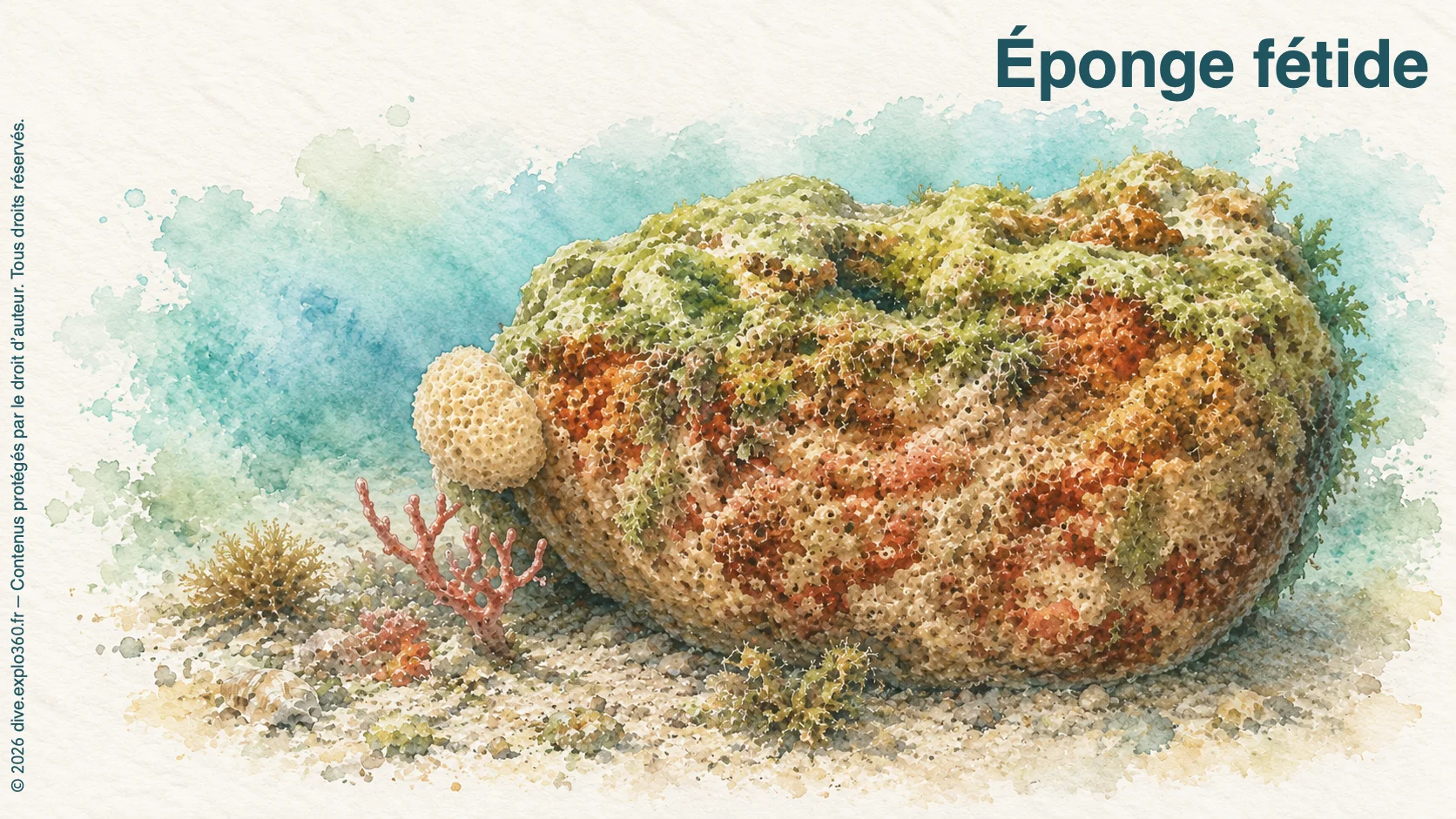
The bath sponge (Spongia officinalis) forms a rounded or lobed mass, grey to very dark brown, with tiny cone-shaped bumps. Its large visible openings, called oscules, sometimes have pale rims and may sit on small bumps. The living sponge looks more solid at the surface than the open network of a sponge prepared for use.
WHERE DOES IT LIVE?
It occurs in the Mediterranean, including along the coast of Provence. It attaches to rocks and sometimes to seagrass rhizomes, from shallow water down to about 80 m.
WHAT DOES IT EAT?
The bath sponge feeds by filtering seawater. Water enters through tiny pores across its surface, then passes through a network of canals and small filtering chambers. Cells called choanocytes maintain the water flow and trap bacteria, microalgae and fine organic particles. Experiments have shown that this sponge captures certain bacteria efficiently, depending in part on their size. Filtered water leaves through the larger openings visible on its surface, called oscula.
GO FURTHER WITH AMIGANSEAU
Unlock the full profile
Deepen your knowledge with the exclusive chapters and interactive resources included in an AMIGANSEAU licence.
Subscribing to Dive.Explo360 means supporting a different way to discover marine life.
Our independent platform is entirely self-funded and relies solely on subscriptions. Every licence helps us continue our work, create new content, and share what we know about the marine world with as many people as possible.
Starting at €80 per year, your support makes all the difference.
 Understand the species