Habitat
 Depth
 Group
 Role
 Size
WHAT DOES IT LOOK LIKE?
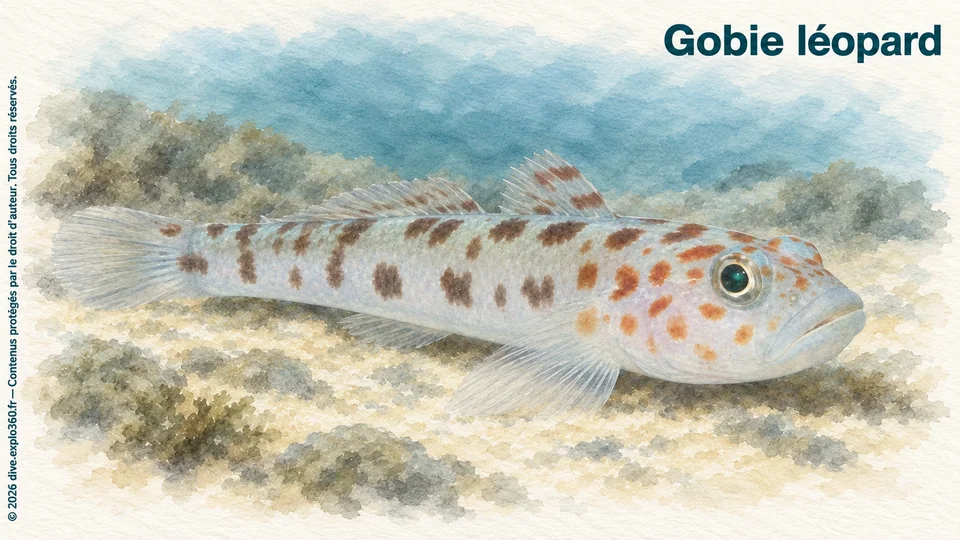
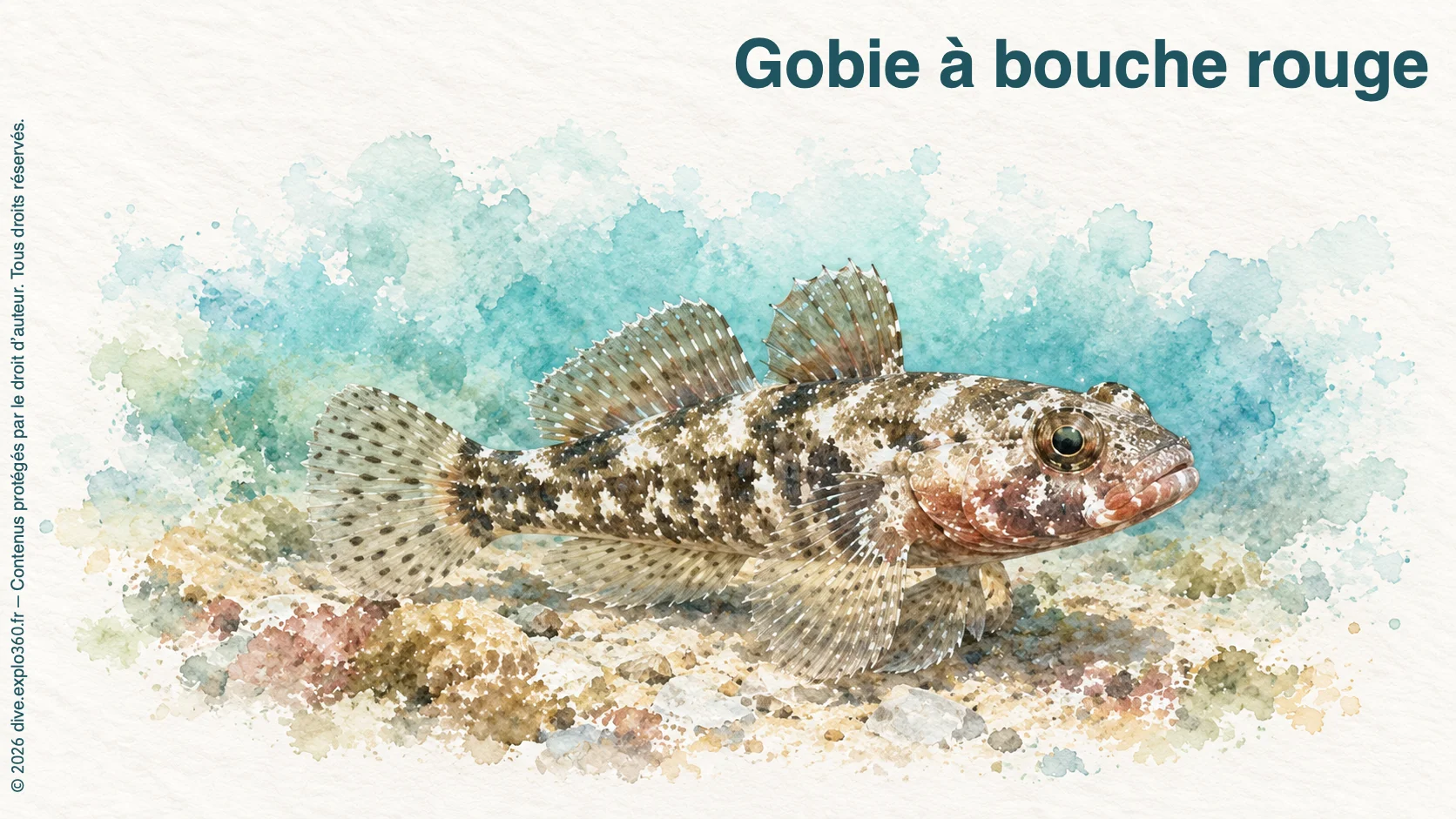
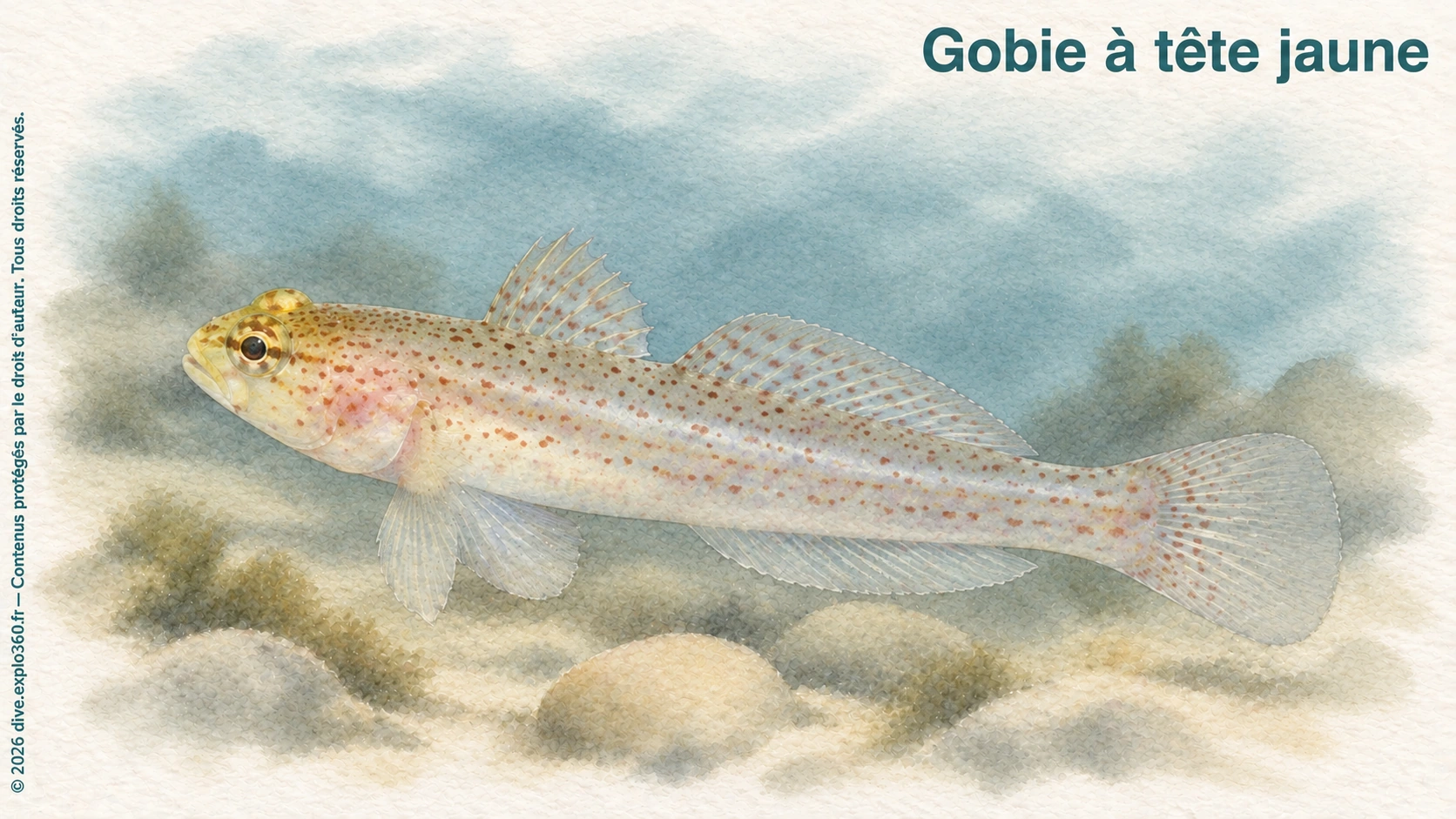
Contrasting fine head dots and large flank spots give the leopard-spotted goby (Thorogobius ephippiatus) its pattern. Orange-red marks the head and brown the white to grey body; iridescent reflections may be added. Two back fins carry orange bands. The front body is fairly rounded, becoming flatter from side to side towards the tail.
WHERE DOES IT LIVE?
A small sand patch shaded by an overhang or beside a cave is a characteristic position for the leopard-spotted goby. Cracks in vertical walls provide other refuges. Found in the Mediterranean, Atlantic and English Channel as far as north-western Europe, it remains closely associated with rocky shelters, from a few metres to around forty metres.
WHAT DOES IT EAT?
Small crustaceans are the leopard-spotted goby’s main resource within a broader menu. Worms, gastropods, bivalves, eggs and various larvae are consumed too, and algae are also reported. This combination underlies its opportunistic feeding: several resources can be used. Animal prey is important without restricting the goby to one crustacean type.
GO FURTHER WITH AMIGANSEAU
Unlock the full profile
Deepen your knowledge with the exclusive chapters and interactive resources included in an AMIGANSEAU licence.
Subscribing to Dive.Explo360 means supporting a different way to discover marine life.
Our independent platform is entirely self-funded and relies solely on subscriptions. Every licence helps us continue our work, create new content, and share what we know about the marine world with as many people as possible.
Starting at €80 per year, your support makes all the difference.
 Understand the species