Habitat
 Depth
 Group
 Role
 Size
WHAT DOES IT LOOK LIKE?
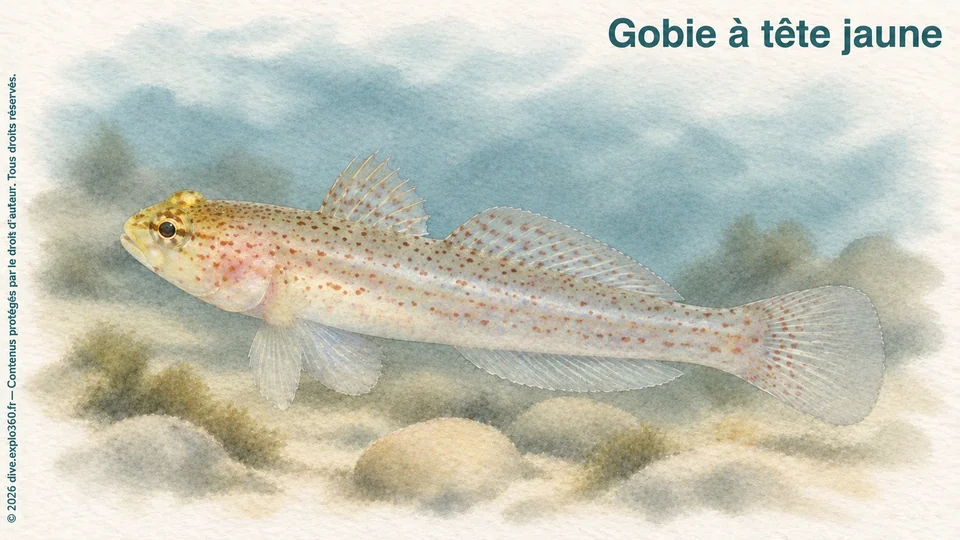
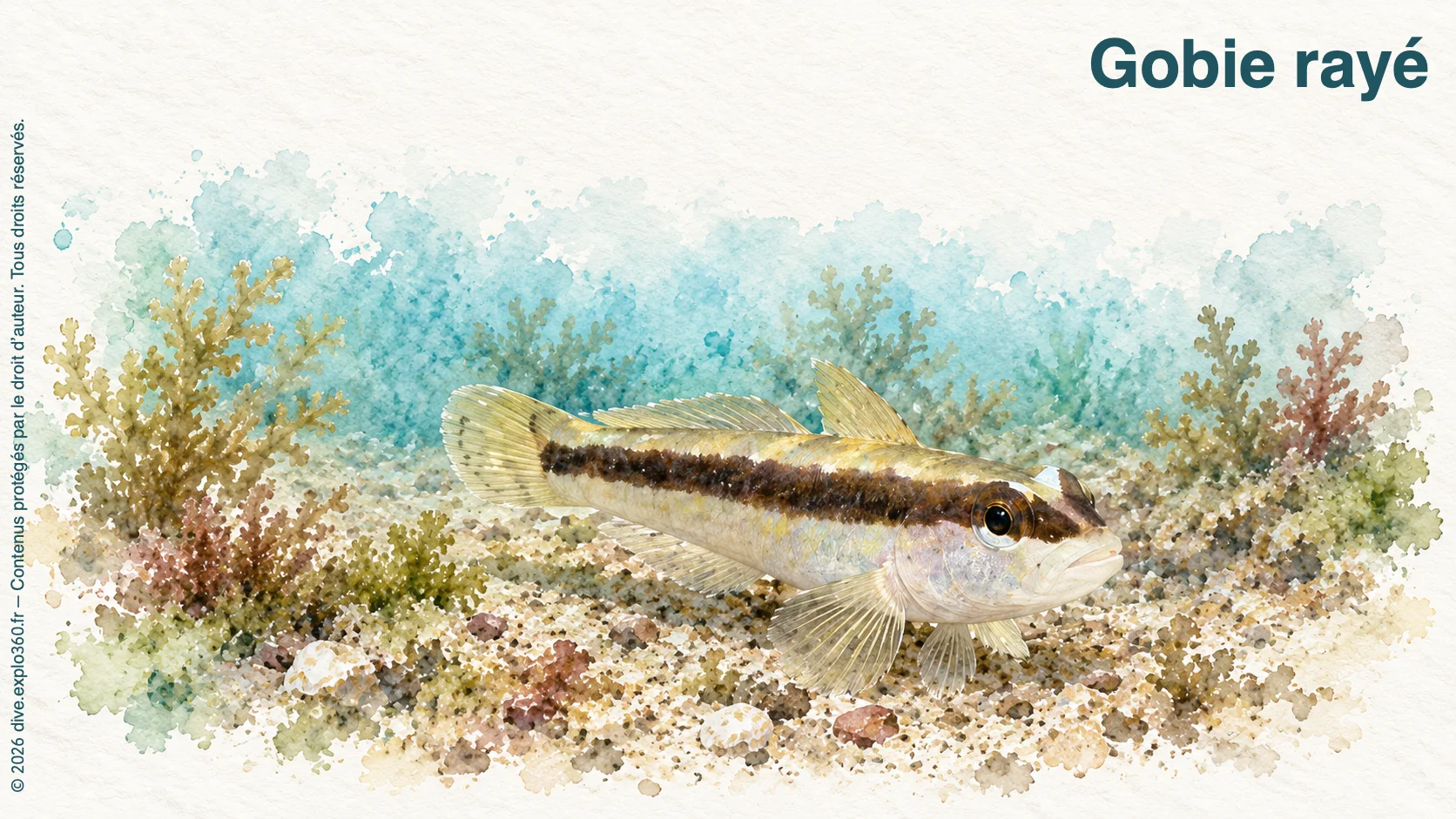
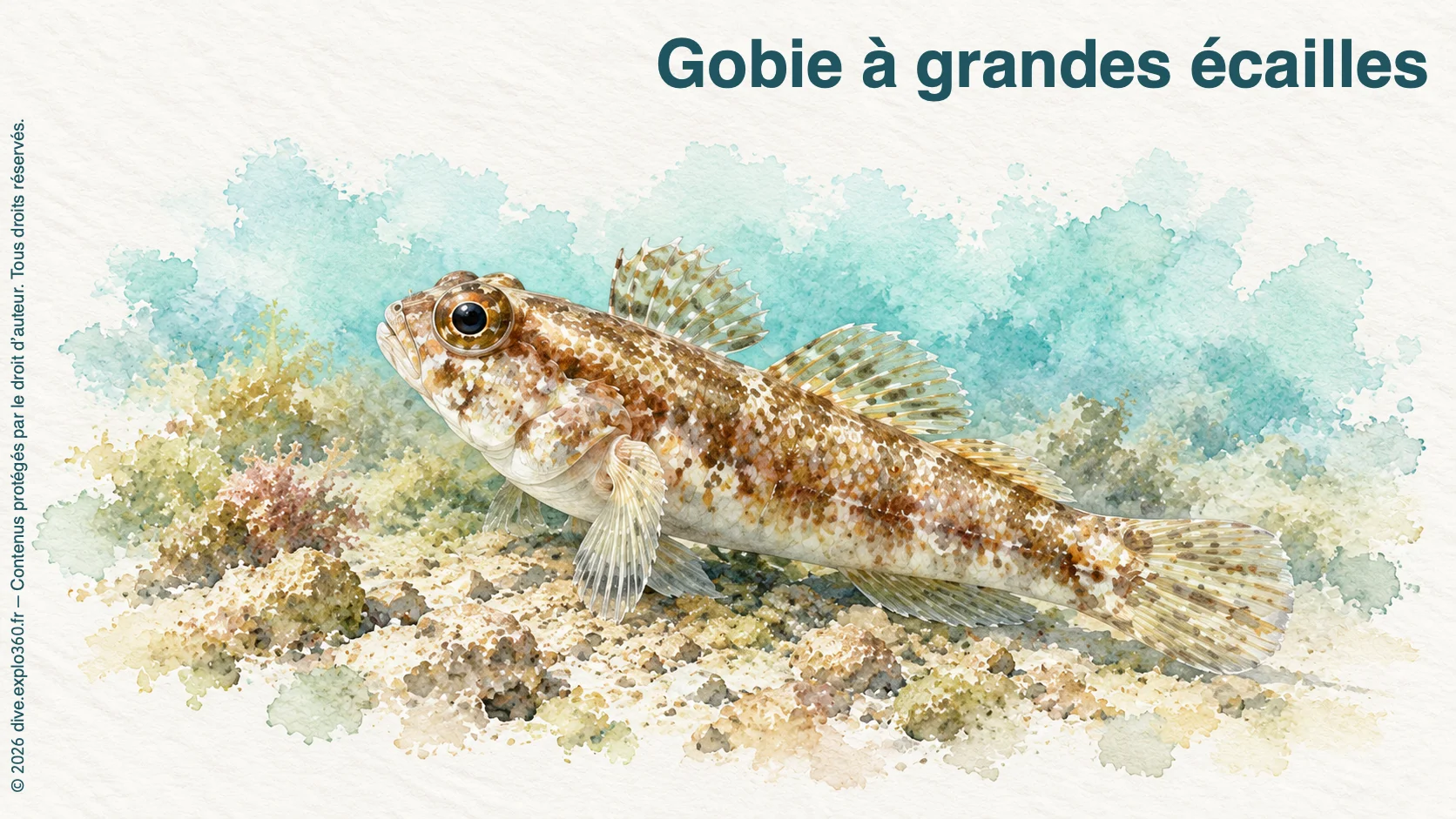
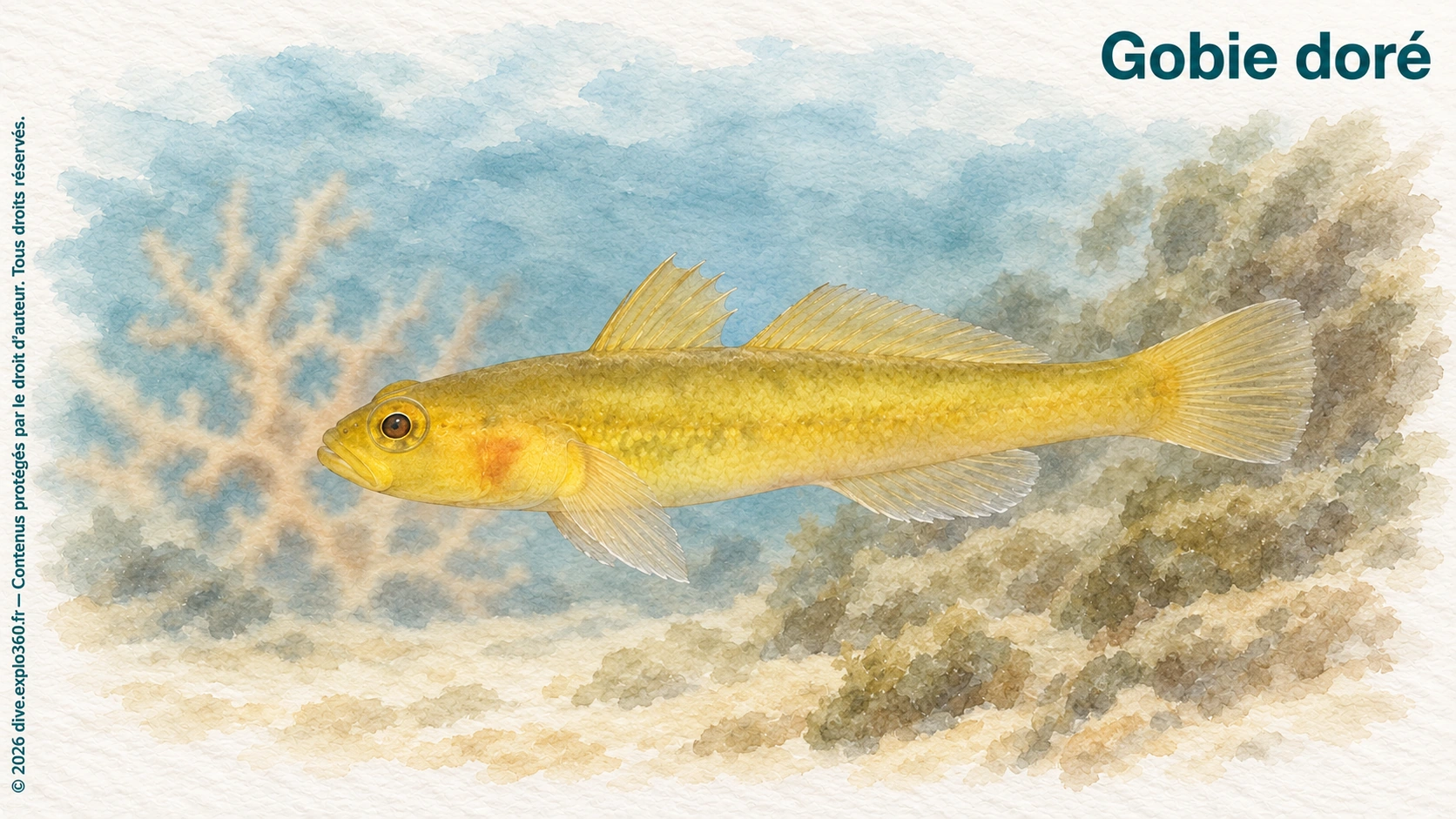
Red dashes follow the greyish to pinkish beige flanks of the yellow-headed goby (Gobius xanthocephalus). The sturdy head, nape and large close-set eyes are yellow-tinted. Two separate fins stand along the back, the first taller; small belly fins join into a disc. Brown night-time bars markedly change the usual pattern.
WHERE DOES IT LIVE?
It uses rocky crevices, including coralligenous areas, underwater structures partly built by lime-producing algae. It also inhabits seagrass meadows. Sightings are frequent between five and twenty metres, with records down to eighty metres.
Its range includes the western Mediterranean and eastern Atlantic. It is known from the French Mediterranean coast, Corsica and the Iberian Peninsula, as well as Madeira and the Canary Islands.
WHAT DOES IT EAT?
Bottom invertebrates form the yellow-headed goby’s main meals. It catches small decapod crustaceans, the group containing shrimps and crabs, as well as molluscs and polychaete worms. Prey includes several animal forms with different coverings. It is a small consumer of benthic resources taken at the scale of its mouth.
GO FURTHER WITH AMIGANSEAU
Unlock the full profile
Deepen your knowledge with the exclusive chapters and interactive resources included in an AMIGANSEAU licence.
Subscribing to Dive.Explo360 means supporting a different way to discover marine life.
Our independent platform is entirely self-funded and relies solely on subscriptions. Every licence helps us continue our work, create new content, and share what we know about the marine world with as many people as possible.
Starting at €80 per year, your support makes all the difference.
 Understand the species