Partners and information

Contact us

Verification code

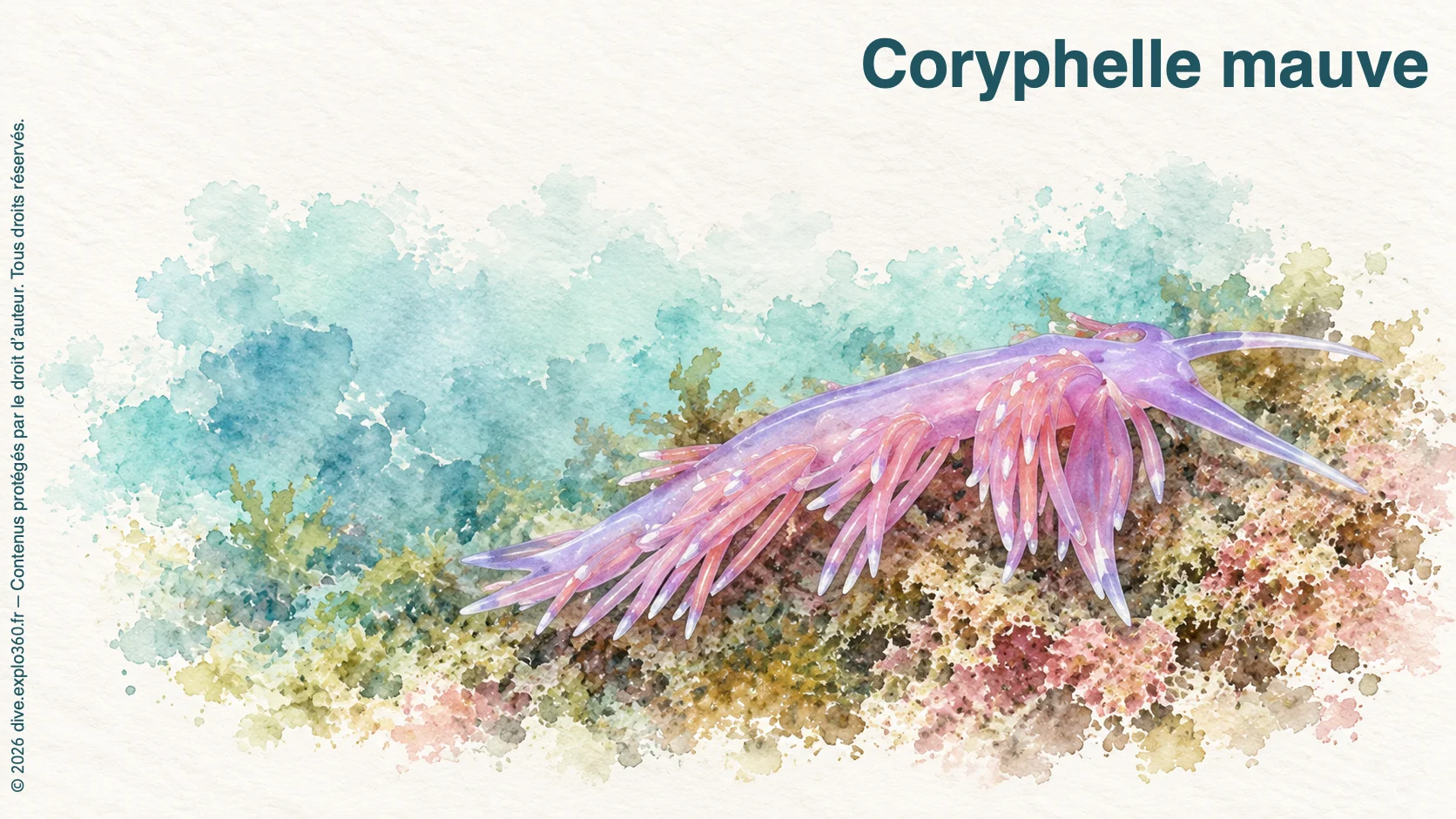
Banyuls Aeolid

Distribution : Mediterranean · Atlantic Ocean

According to a medieval legend, Lady Godiva rode through Coventry on horseback, concealed by her long hair, to protest against taxes imposed on the townspeople. Centuries later, her story inspired the name given to a group of sea slugs. The orange godiva once belonged to that group, named after a heroine whose famous ride became part of English folklore.

Photos being acquired · Your photos here

Habitat of Banyuls Aeolid Habitat
Hydroid
Depth range of Banyuls Aeolid Depth
5-35 m
Biological group of Banyuls Aeolid Group
Ecological role of Banyuls Aeolid Role
Predator

Average size

7 cm

WHAT DOES IT LOOK LIKE?

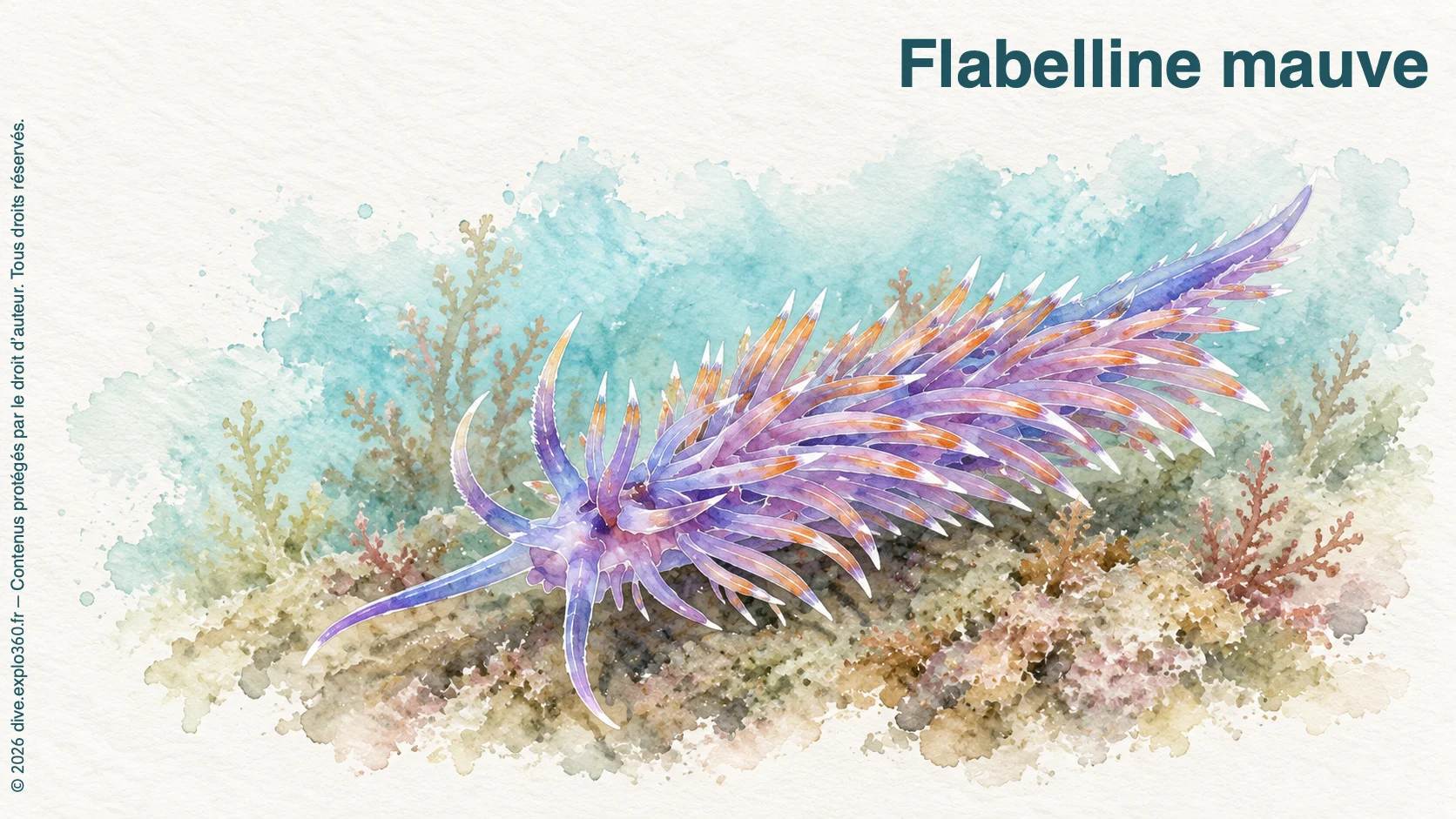
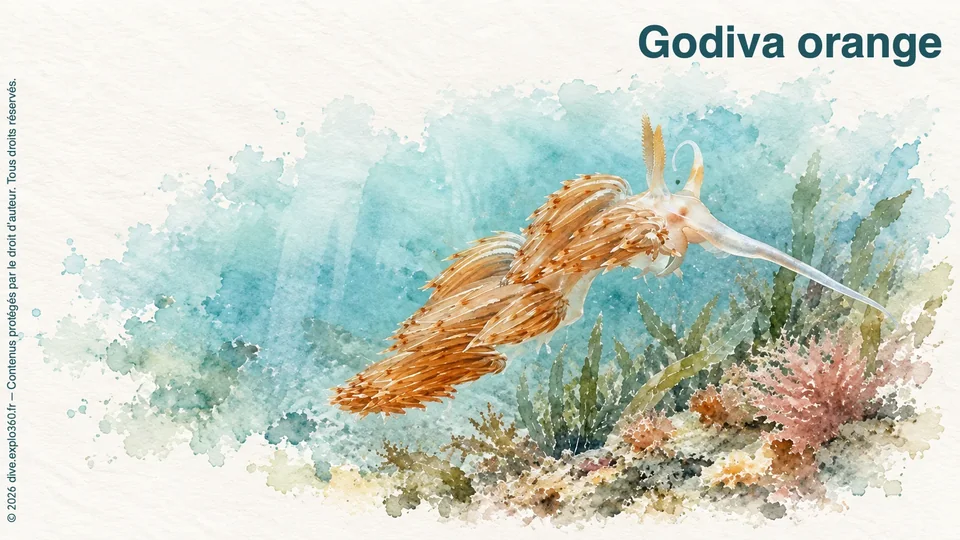
Two very long tentacles reach ahead of the orange godiva’s head. They are longer than the two upright projections just behind them.

White lines follow the back of the translucent, orange-toned body. The cerata, the long, soft projections gathered in bunches, have bright orange to red ends.

GO FURTHER WITH AMIGANSEAU

Unlock the full profile

Deepen your knowledge with the exclusive chapters and interactive resources included in an AMIGANSEAU licence.

Choose my licence
  • WHERE DOES IT LIVE?
  • WHAT DOES IT EAT?
  • HOW DOES IT REPRODUCE?
  • OUR OBSERVATIONS

Also included in the full profile

  • Advanced navigation between description, ecological context, observations and behaviour
  • Interactive food chain to explore the species’ feeding relationships
  • Infographic and illustrated summary profile
An active licence gives access to enriched profiles and AMIGANSEAU exploration tools.
Banyuls Aeolid

Understand the species

What is this species’ ecological role?

AMIGANSEAU Explorer Premium

Access enriched species profiles with advanced content (audio, infographics and detailed articles).

Explore all species easily through a single interface.

Enjoy a smooth, fast learning experience suited to every level.

🔒 The full profile is available with a paid subscription only.

Discover licences

POURSUIVRE L’EXPLORATION

Articles related to this species

ArticlePHYLA WITHOUT THE FUSSRead the article →