Habitat
 Depth
 Group
 Role
 Size
WHAT DOES IT LOOK LIKE?
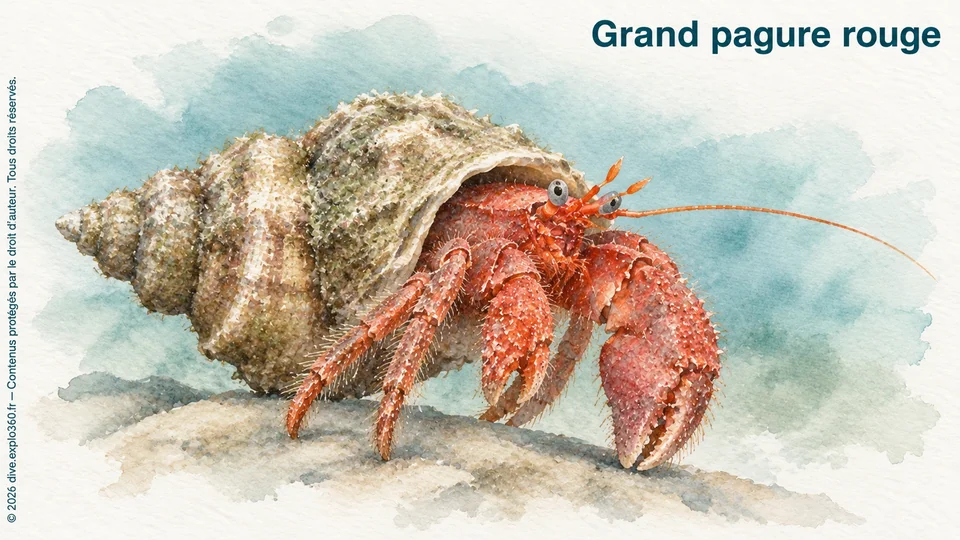
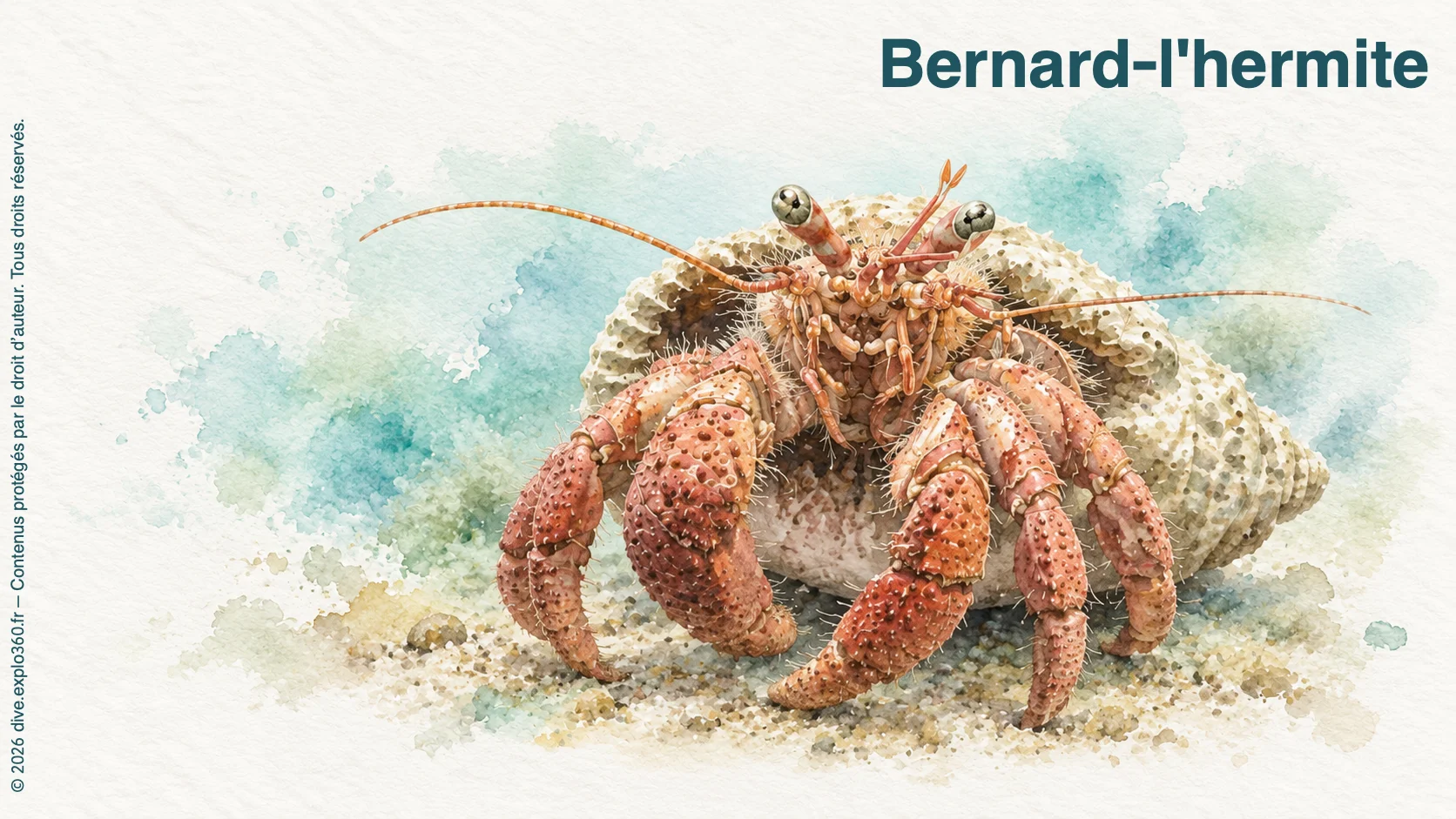
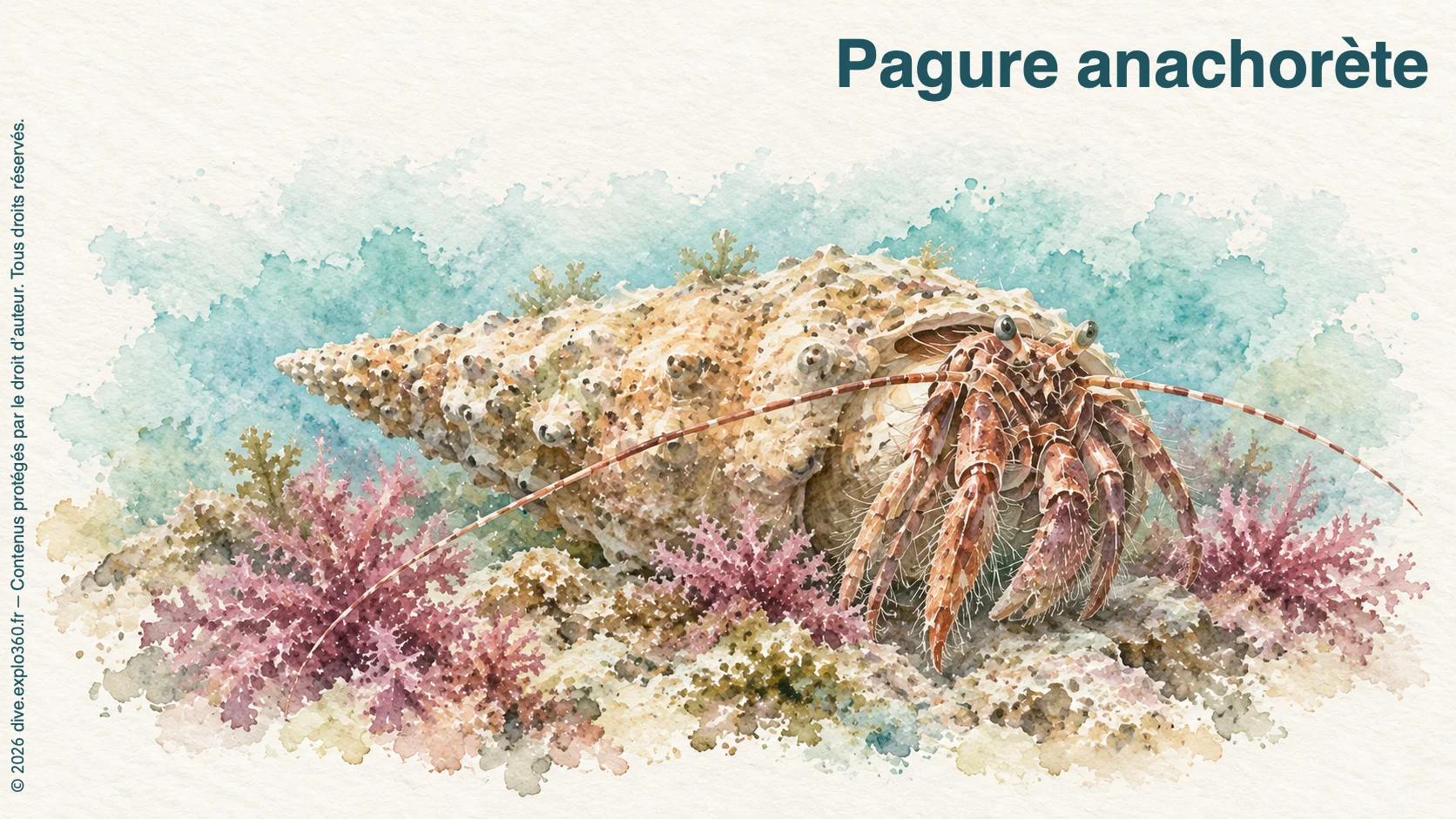
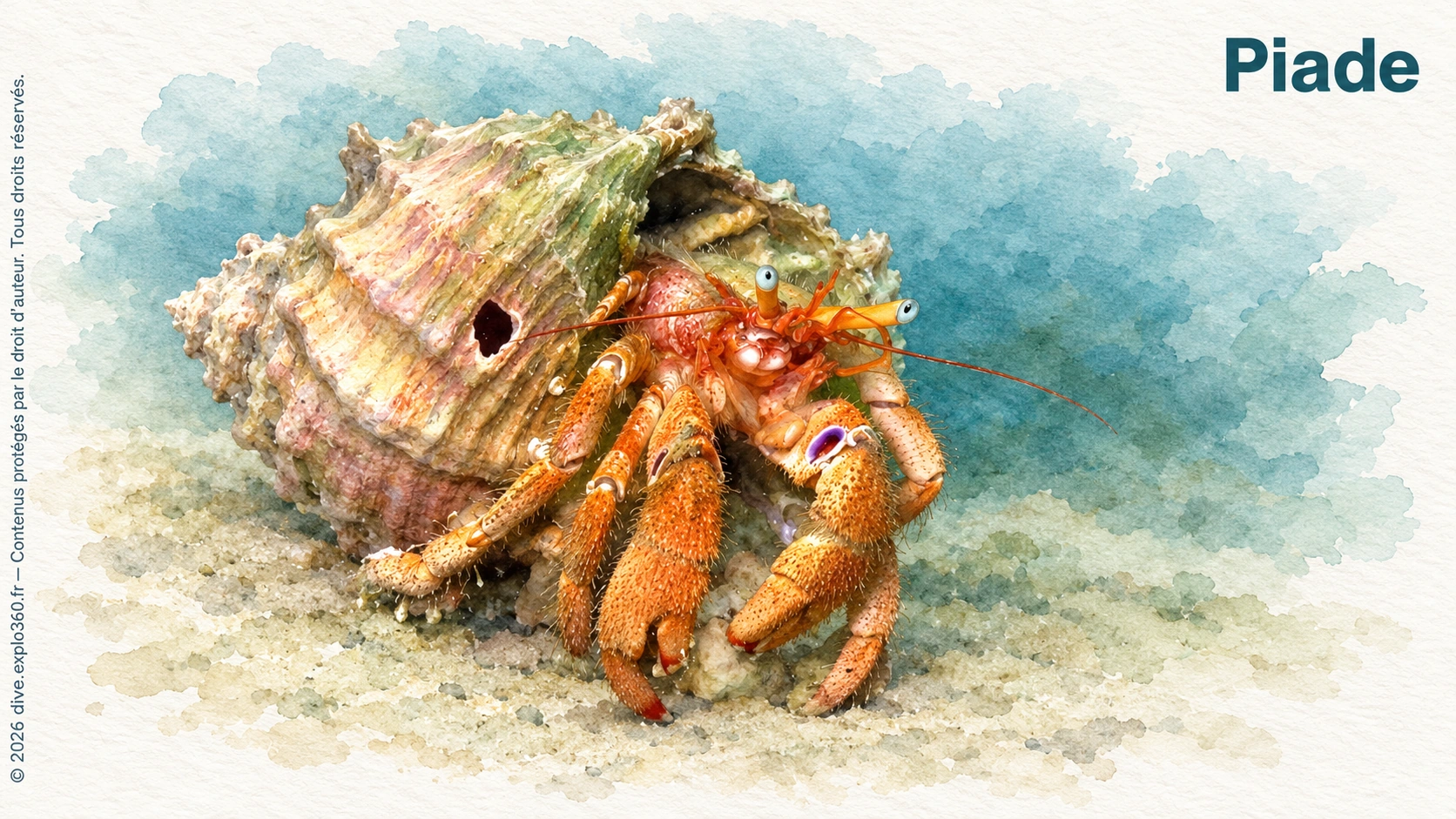
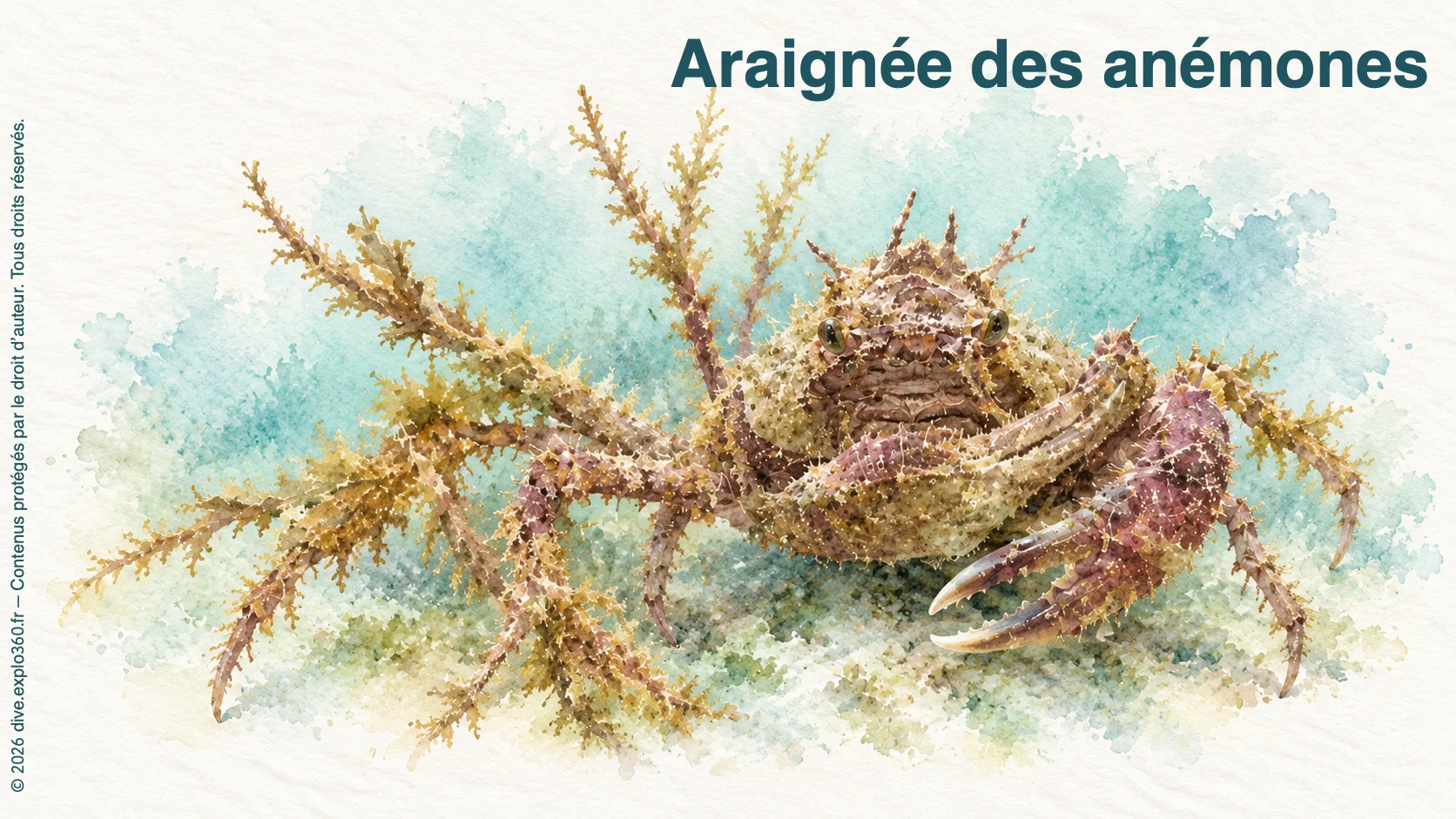
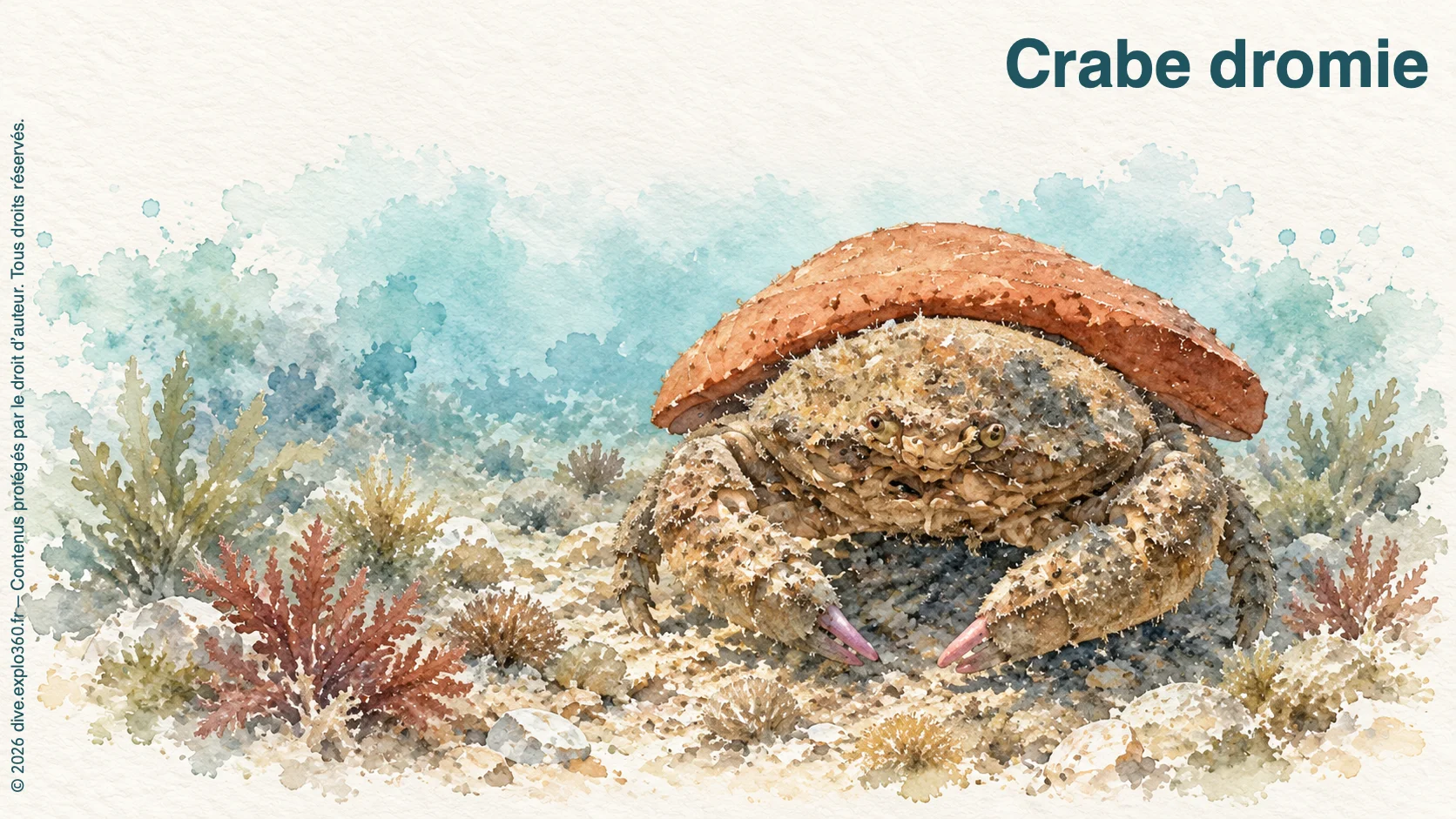
Its large claws have an uneven surface covered with small bumps and hairs. The same texture appears on its red legs, which have pinkish joints. Orange antennae contrast with its grey eyes. The left claw, noticeably larger than the right, provides another useful identification feature. At the rear, its soft abdomen remains hidden inside a gastropod shell.
WHERE DOES IT LIVE?
Rocky seabeds provide plenty of shelter. You can look for it among boulders, at the foot of small rock faces or near the entrances to cavities. During the day, it may remain partly concealed in a crevice, while its movements are generally more frequent at night.
Found in shallow water, it can also live at depths approaching 100 metres. Its distribution extends across the Mediterranean and parts of the eastern Atlantic, including the Portuguese coast, the Azores, the Canary Islands and Cape Verde.
WHAT DOES IT EAT?
It searches for food on the seabed, feeding on animal remains as well as small invertebrates. Polychaete worms and crustaceans are among the foods it consumes. It may also feed on dead fish: this species has been documented eating the remains of a scorpionfish.
Its claws allow it to grasp and handle pieces of food before bringing them to its mouth. When anemones live on its shell, they may sometimes collect food particles scattered during the crab's meal.
GO FURTHER WITH AMIGANSEAU
Unlock the full profile
Deepen your knowledge with the exclusive chapters and interactive resources included in an AMIGANSEAU licence.
Subscribing to Dive.Explo360 means supporting a different way to discover marine life.
Our independent platform is entirely self-funded and relies solely on subscriptions. Every licence helps us continue our work, create new content, and share what we know about the marine world with as many people as possible.
Starting at €80 per year, your support makes all the difference.
 Understand the species