Habitat
 Depth
 Group
 Role
 Size
WHAT DOES IT LOOK LIKE?
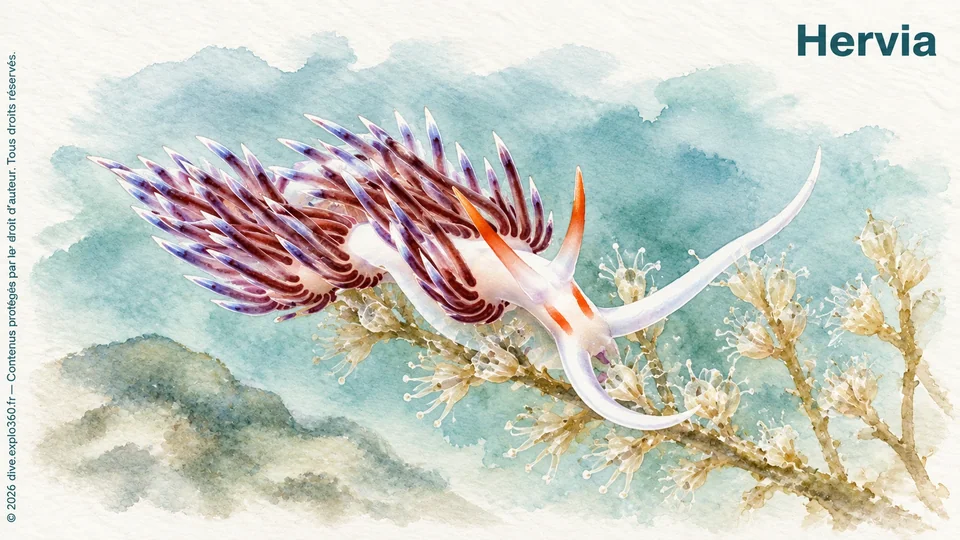
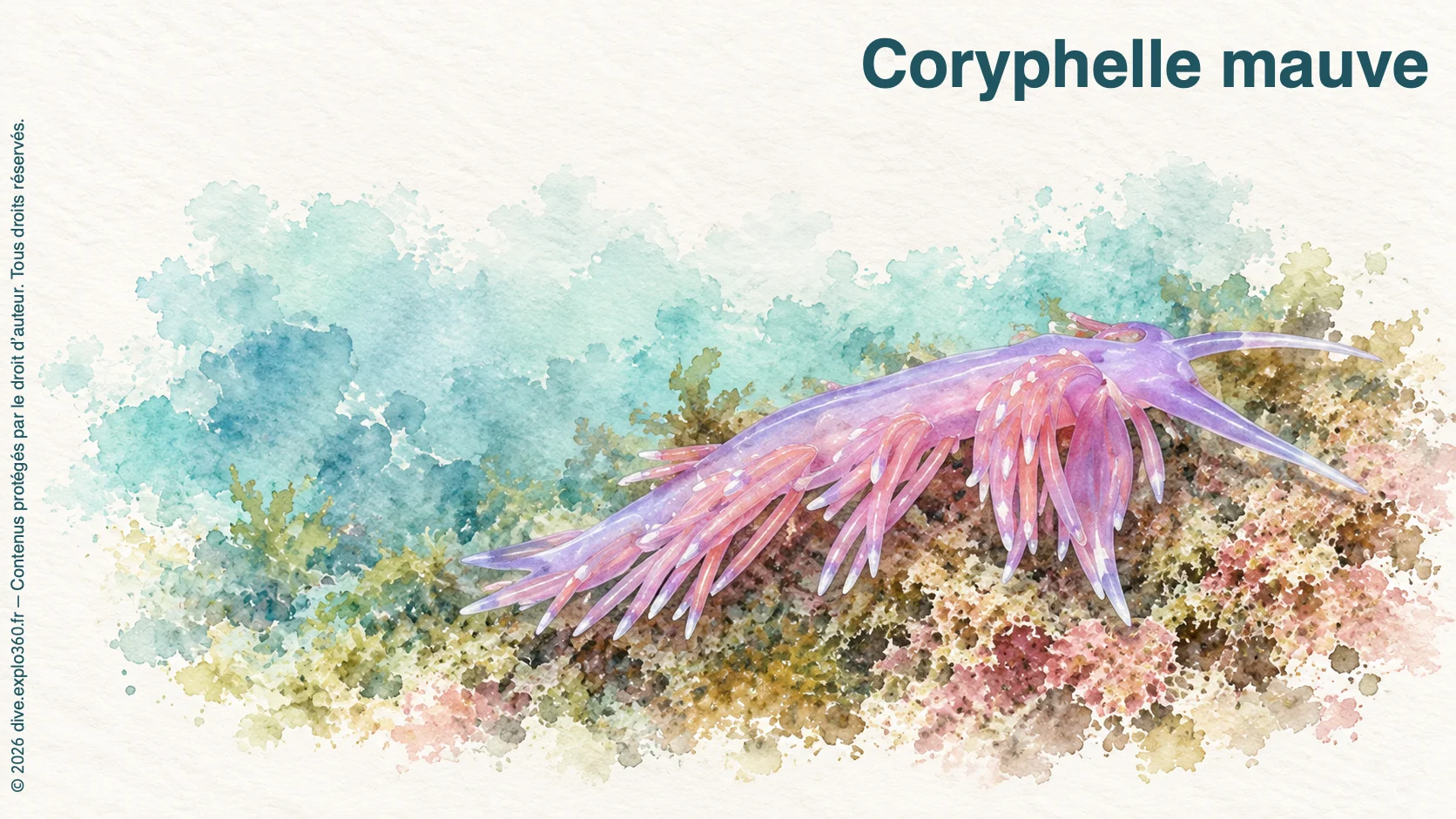
Two orange front marks dot the white body of this sea slug (Cratena peregrina). Cerata, the elongated back projections, carry orange, brown or violet shades with often bluish tips. The head combines long white tentacles with shorter rhinophores, two upright appendages tipped orange. The slender tail remains clear of the back projections.
WHERE DOES IT LIVE?
It inhabits rocky seabeds, particularly where Hydroids grow. These colonial animals form small branches and are not algae.
Encounters are frequent in the warmer season when colonies are available. The slug uses the branches for movement, support and feeding.
WHAT DOES IT EAT?
A hydroid polyp can supply the pilgrim hervia with more than its own tissues. After catching a planktonic organism, it may be consumed together with that food. The slug removes the polyp with its radula and ingests the recent contents too. Kleptopredation combines consumption of an attached animal and planktonic prey. Experiments show fed polyps are taken more often than empty ones. Open-water food thus reaches the bottom-dwelling slug through captures made by the hydroid.
GO FURTHER WITH AMIGANSEAU
Unlock the full profile
Deepen your knowledge with the exclusive chapters and interactive resources included in an AMIGANSEAU licence.
Subscribing to Dive.Explo360 means supporting a different way to discover marine life.
Our independent platform is entirely self-funded and relies solely on subscriptions. Every licence helps us continue our work, create new content, and share what we know about the marine world with as many people as possible.
Starting at €80 per year, your support makes all the difference.
 Understand the species