AMIGANSEAU Explorer – Personal
Strictly for private and family use.
This profile is available under the personal licence. Any professional, commercial, association, institutional or training use requires an appropriate licence.
Distribution : English Channel, eastern Atlantic and Mediterranean. Lagoons and sedimentary coastal seabeds, including the Gulf of Lion; occurs within the first 30 m and is not exclusively dependent on seagrass.
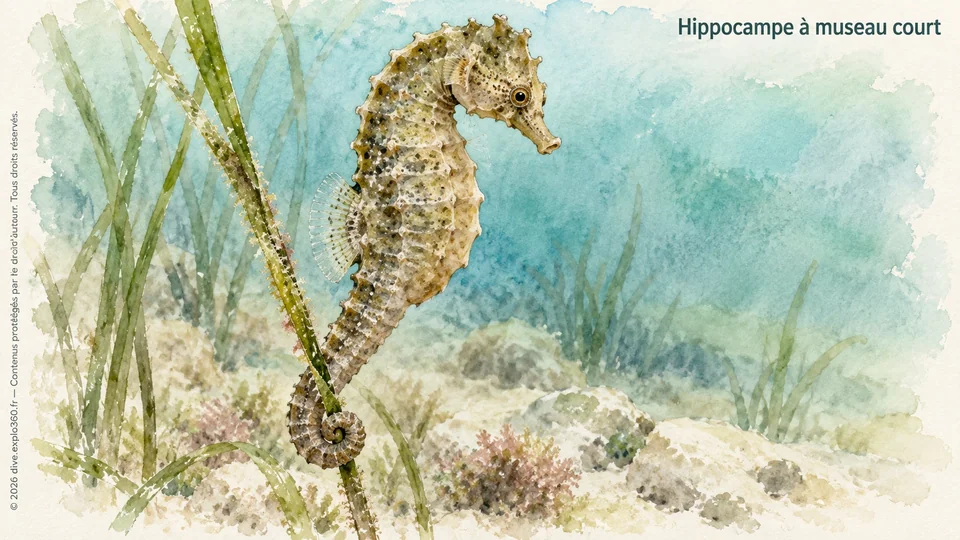
What might a fisherman from Nice have hidden inside his cap? A tiny seahorse! Long ago, some believed that carrying a dried seahorse could protect them from headaches. An unusual lucky charm, especially for a creature that spends its life underwater, holding on to sea plants with its tail.
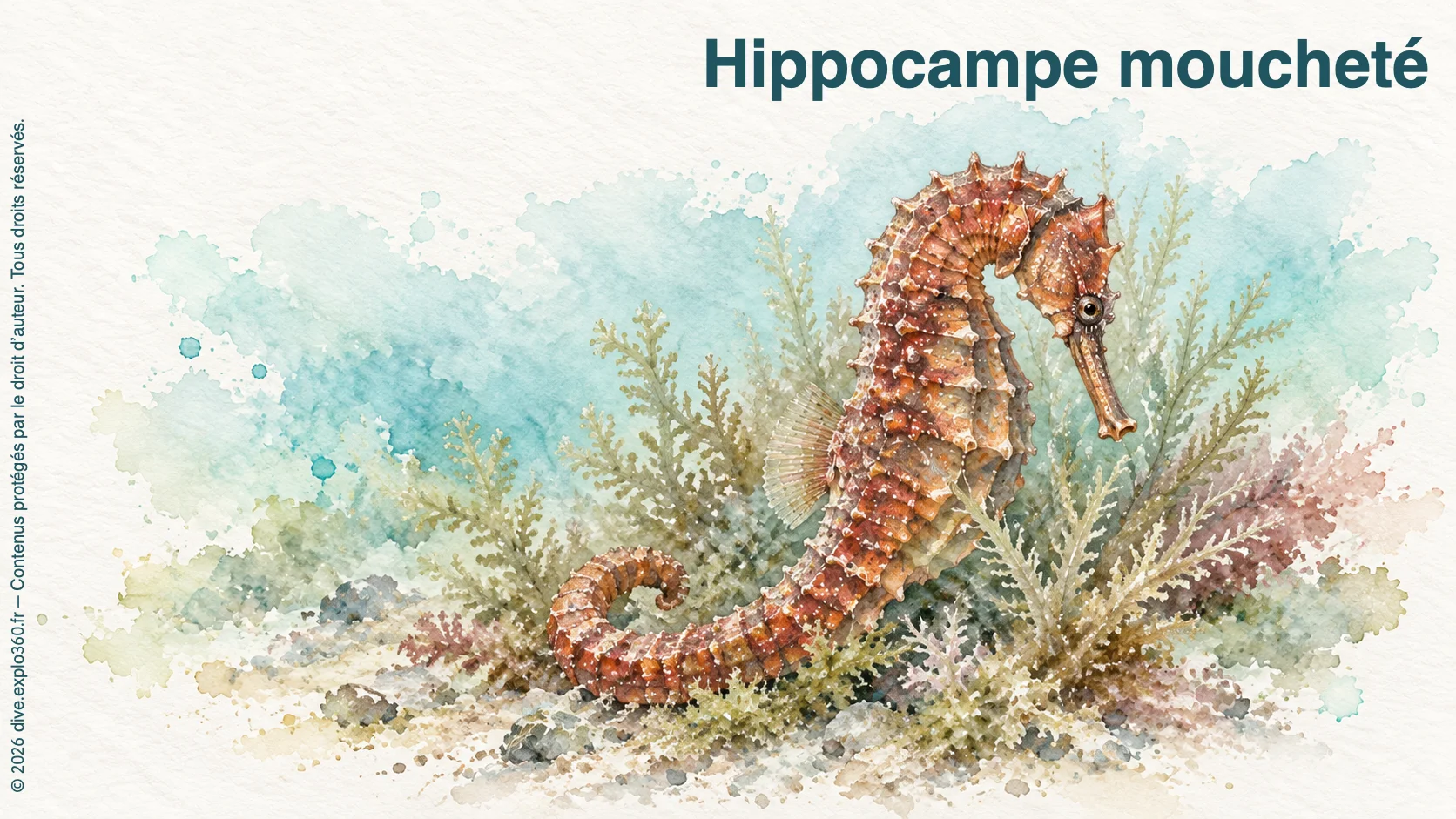
The short-snouted seahorse has a curved neck and a little tube-like mouth. Hard rings surround its body. It may be brown, green or almost black, with a tail that curls.
GO FURTHER WITH AMIGANSEAU
Unlock the full profile
Deepen your knowledge with the exclusive chapters and interactive resources included in an AMIGANSEAU licence.



 Habitat
 Depth
 Group
 Role
 Size
 Understand the species