Partners and information

Contact us

Verification code

Poli’s sea cucumber

Distribution : Mediterranean

Born in 1746, Giuseppe Saverio Poli was an Italian scholar whose collections contributed to Naples’s zoological heritage. Poli’s sea cucumber was named in his honour. You can therefore encounter the memory of an eighteenth-century figure on the Mediterranean seabed, from an era when natural history collections held an important place in European intellectual life.

Images being acquired · Your video or photos here

Habitat of Poli’s sea cucumber Habitat
Rocky habitat, Seagrass meadow, Sand
Depth range of Poli’s sea cucumber Depth
0-250 m
Biological group of Poli’s sea cucumber Group
Ecological role of Poli’s sea cucumber Role
Decomposer

Size

About 25 cm long and 5 cm across

WHAT DOES IT LOOK LIKE?

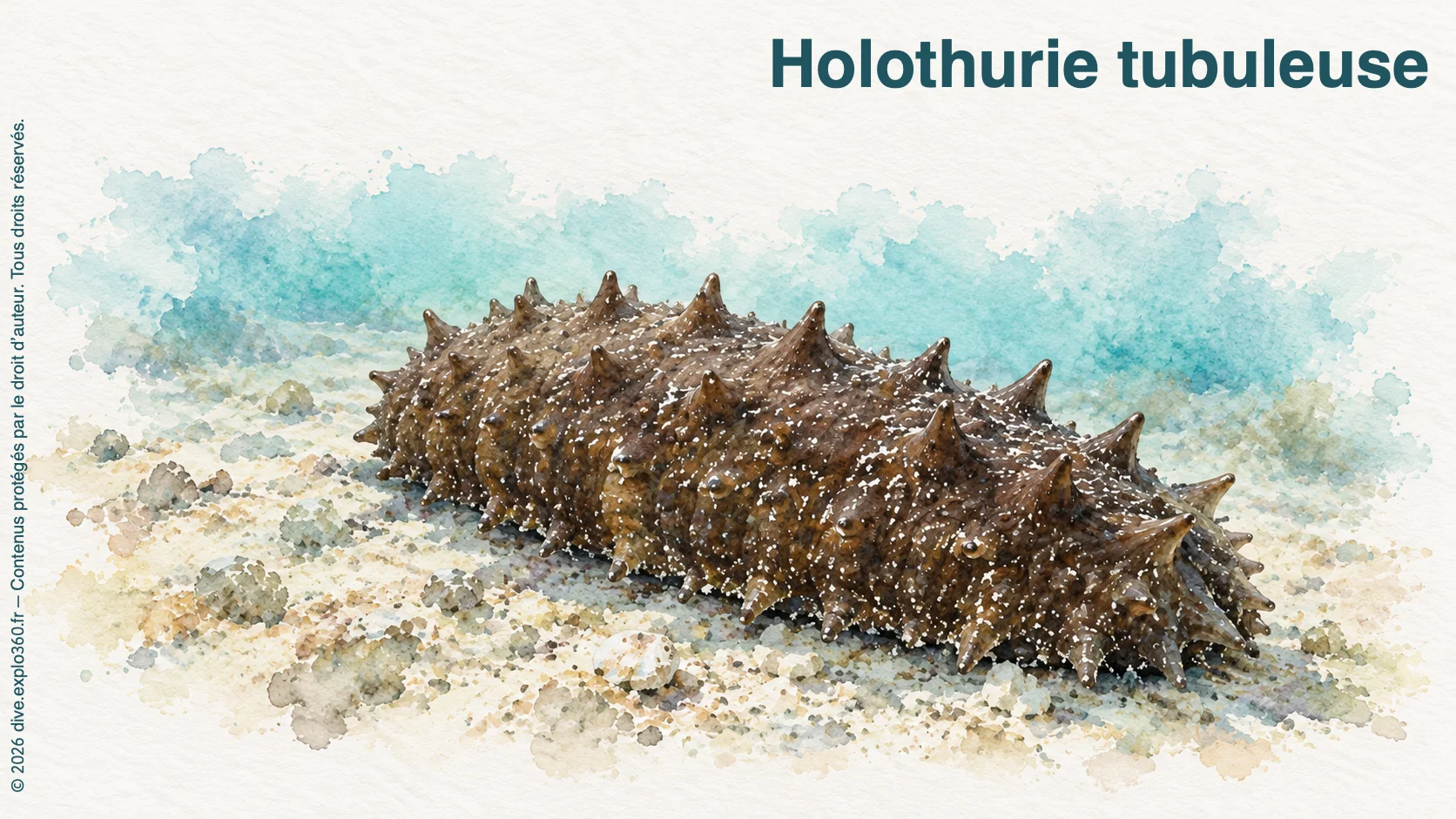
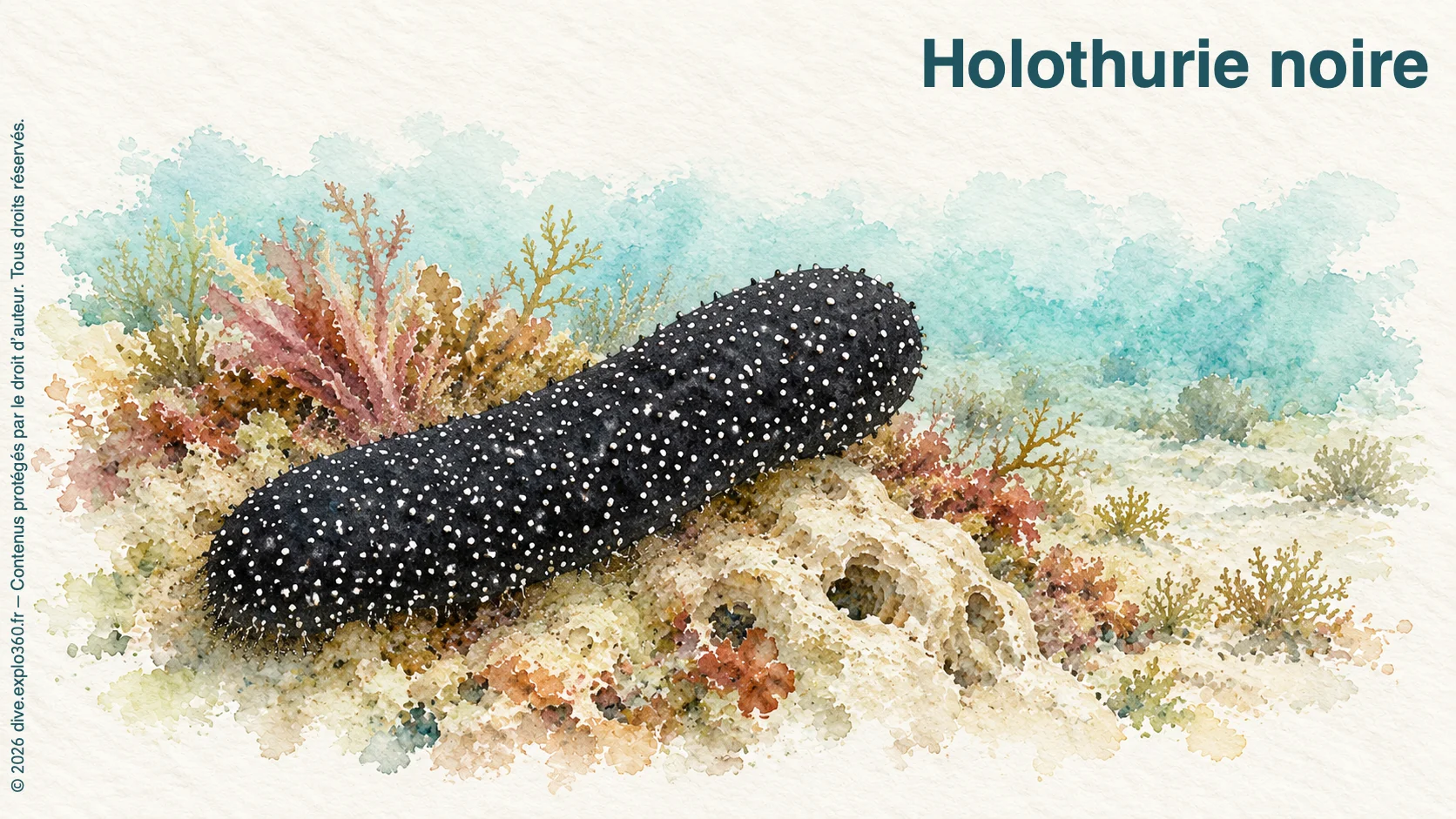
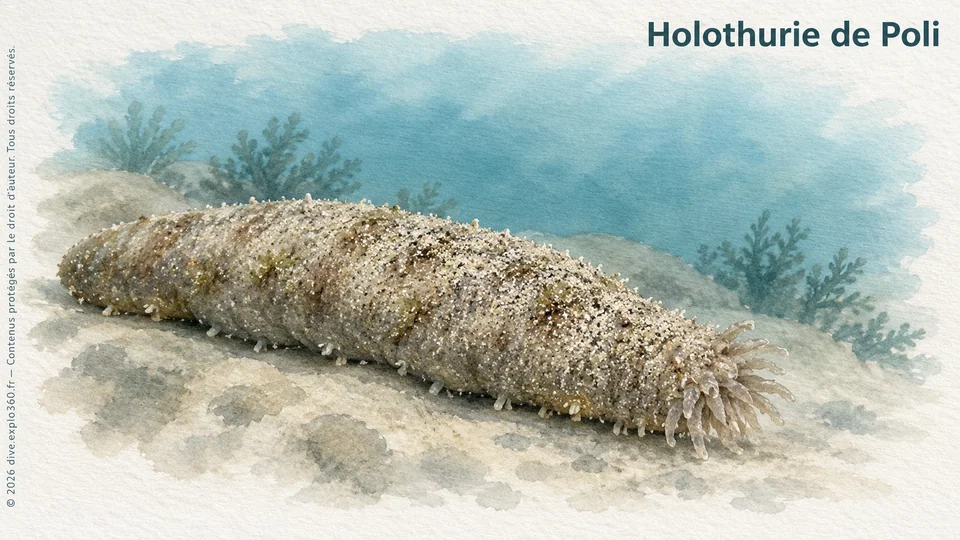
Poli’s sea cucumber (Holothuria poli) has a cylindrical body, grey to brown with dark speckles. Its papillae, little skin projections, have pale tips. The tube feet, the small extensible tubes visible on the body, are whitish too.

GO FURTHER WITH AMIGANSEAU

Unlock the full profile

Deepen your knowledge with the exclusive chapters and interactive resources included in an AMIGANSEAU licence.

Choose my licence
  • WHERE DOES IT LIVE?
  • WHAT DOES IT EAT?
  • HOW DOES IT REPRODUCE?
  • OUR OBSERVATIONS
  • ARTICLE

Also included in the full profile

  • Advanced navigation between description, ecological context, observations and behaviour
  • Interactive food chain to explore the species’ feeding relationships
An active licence gives access to enriched profiles and AMIGANSEAU exploration tools.
Poli’s sea cucumber

Understand the species

What is this species’ ecological role?

AMIGANSEAU Explorer Premium

Access enriched species profiles with advanced content (audio, infographics and detailed articles).

Explore all species easily through a single interface.

Enjoy a smooth, fast learning experience suited to every level.

🔒 The full profile is available with a paid subscription only.

Discover licences

POURSUIVRE L’EXPLORATION

Explore further

ArticleTHE SECRETS OF THE SEAGRASS MEADOWRead the article →ArticleTHE SECRETS OF SANDRead the article →ArticleWhat marine animals do and why it mattersRead the article →