Habitat
 Depth
 Group
 Role
 Average size
 Good to know
WHAT DOES IT LOOK LIKE?
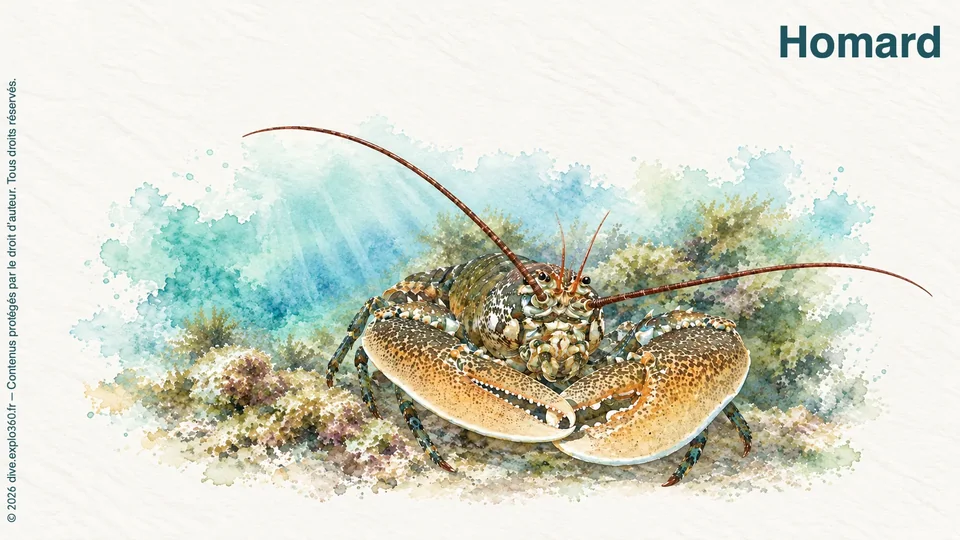
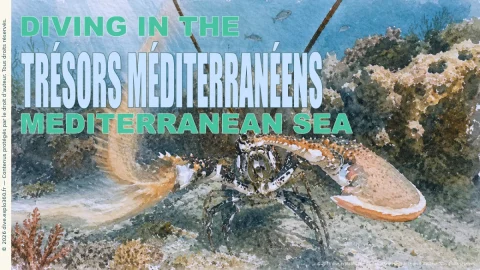
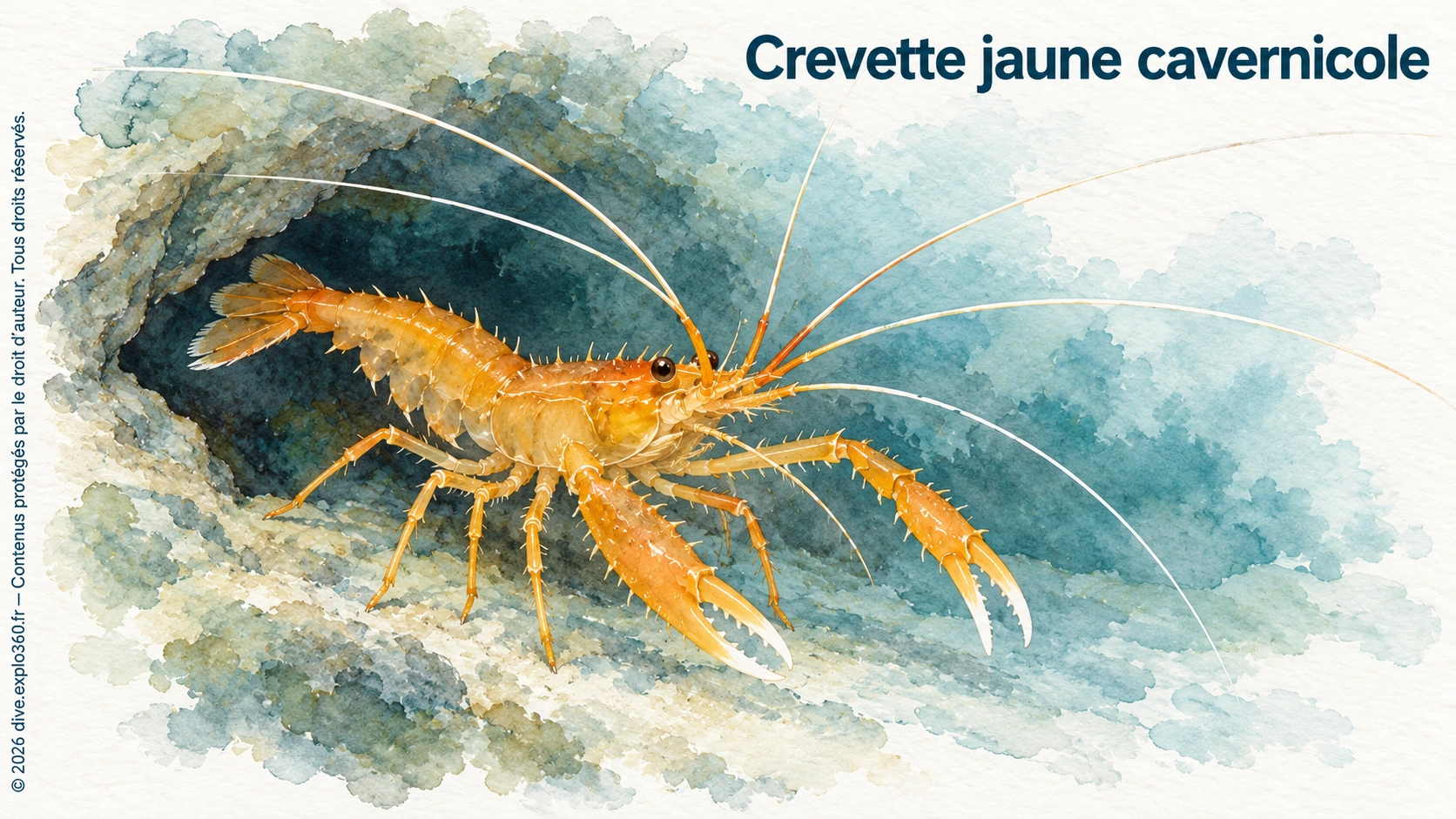
Orange antennae and unequal claws give the European lobster (Homarus gammarus) a striking outline. One claw is broad and heavy with irregular teeth; the other is narrower, with a row of finer teeth.
The shell is bluish, often very dark, while the leg tips are pale. Behind the robust front section, the abdomen, the jointed rear part, continues to the tail.
WHERE DOES IT LIVE?
It mainly frequents rocky seabeds, where it finds cavities to hide in, but may also occur on sandy substrates or around wrecks. It is encountered from the coast down to several tens of metres deep, depending on the region.
WHAT DOES IT EAT?
The European lobster’s two large claws grasp and prepare food. The heavy claw can break a resistant covering, while the slimmer one cuts and holds. Pieces then pass to appendages around the mouth. This equipment handles a varied menu: molluscs, crustaceans, worms and echinoderms, as well as fish and animal remains. The lobster can capture live prey or use food that is already dead. Scavenging accounts for only part of its meals.
GO FURTHER WITH AMIGANSEAU
Unlock the full profile
Deepen your knowledge with the exclusive chapters and interactive resources included in an AMIGANSEAU licence.
Subscribing to Dive.Explo360 means supporting a different way to discover marine life.
Our independent platform is entirely self-funded and relies solely on subscriptions. Every licence helps us continue our work, create new content, and share what we know about the marine world with as many people as possible.
Starting at €80 per year, your support makes all the difference.

 Understand the species