Habitat
 Depth
 Group
 Role
 Size
 Good to know
WHAT DOES IT LOOK LIKE?
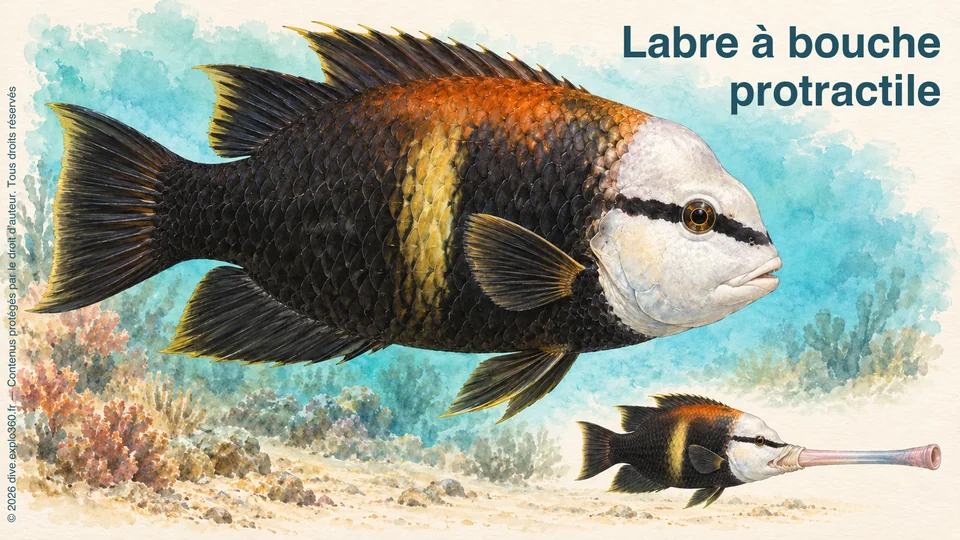
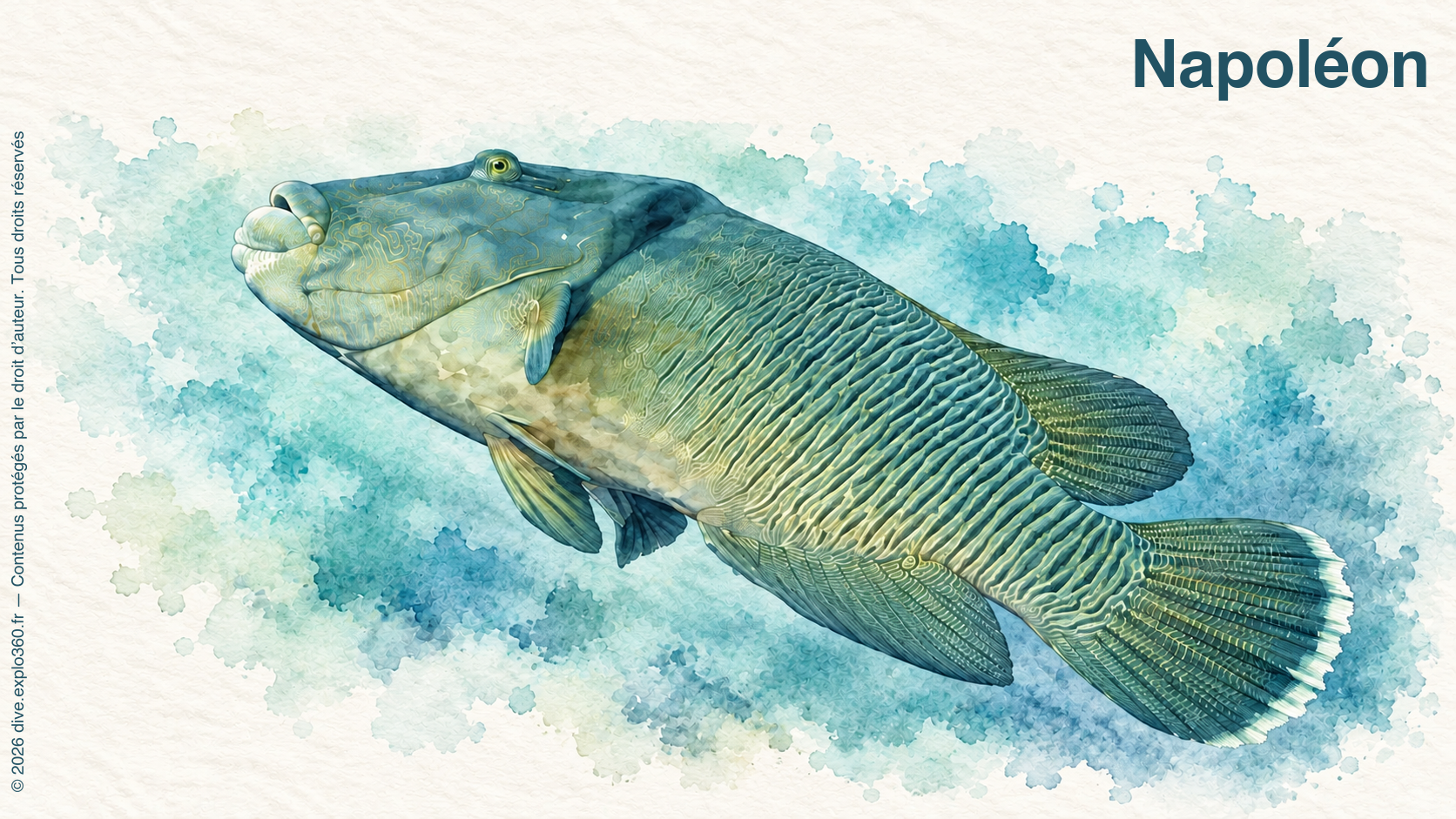
A large male has a white head crossed by a dark line near the eye, a rusty-orange upper back and a nearly black body. Females may be yellow, pale or brown, with dark-edged scales; juveniles bear pale bars. At rest, the elongated jaws fold beneath the head. They can extend far forward as a narrow tube. The largest individuals reach 54 cm.
WHERE DOES IT LIVE?
Look for this wrasse around coral-rich lagoons and outer reef slopes, from the Red Sea across the tropical Indo-Pacific. It moves among coral formations, often alone, from shallow water to depths of several tens of metres.
WHAT DOES IT EAT?
It lies in wait near the reef until a small fish or crustacean comes within reach, then suddenly thrusts its jaws forward and drawing prey into the tubular mouth. It may also follow a goatfish stirring the sand and take small animals exposed by its search.
GO FURTHER WITH AMIGANSEAU
Unlock the full profile
Deepen your knowledge with the exclusive chapters and interactive resources included in an AMIGANSEAU licence.
- HOW DOES IT REPRODUCE?
- OUR OBSERVATIONS
- ARTICLE
Also included in the full profile
- Advanced navigation between description, ecological context, observations and behaviour
- Interactive food chain to explore the species’ feeding relationships
 Understand the species