Habitat
 Depth
 Group
 Role
 Size
WHAT DOES IT LOOK LIKE?
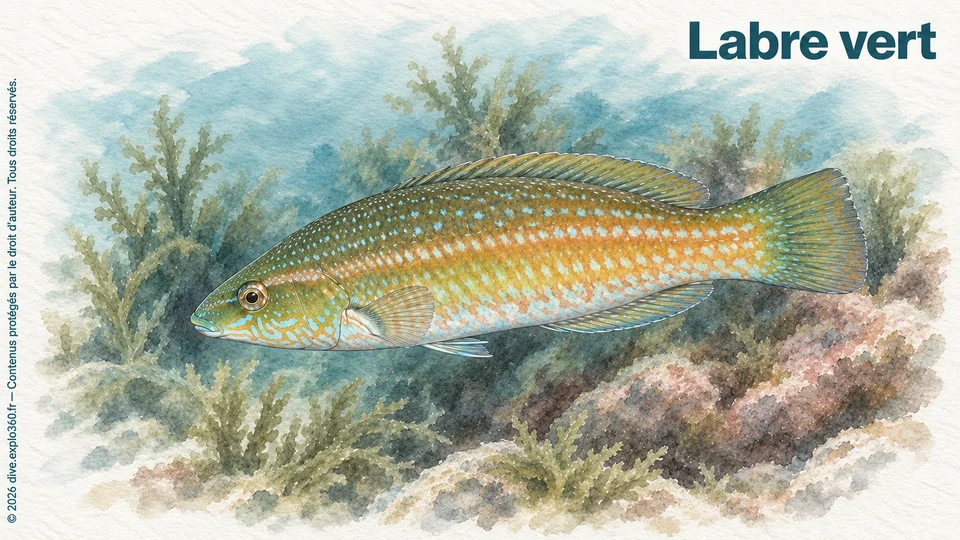
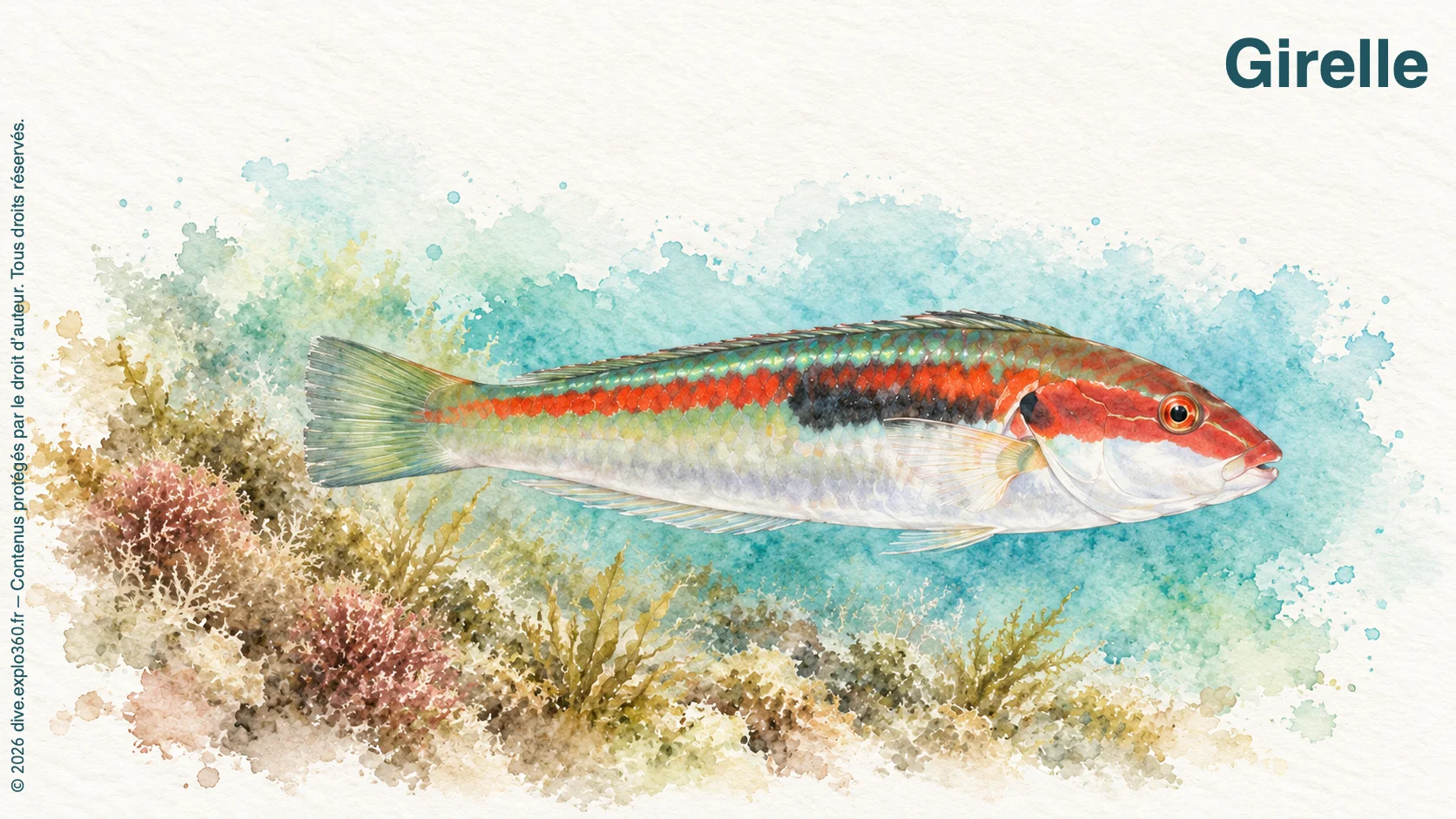
The green wrasse (« Labrus viridis ») has a long, slender body and a pointed snout framed by thick lips. Young fish are often bright green with a pale stripe along the flank. Adults vary from yellow-green to brown or reddish, sometimes with small white spots. Most measure 15–35 cm, although they can reach 50 cm.
WHERE DOES IT LIVE?
The species occurs on rocky bottoms and in seagrass beds, from a few metres down to around fifty metres. Young fish particularly frequent seagrass.
Often alone, a fish moves between shelters and may disappear beneath a rock or among leaves. Its speed makes observation difficult if it is followed too closely.
WHAT DOES IT EAT?
Behind its thick lips, the green wrasse has strong, pointed teeth. It catches crustaceans, molluscs and echinoderms and can crush hard shells or coverings. Fish are also among its prey. Among seagrass leaves, it searches for animals rather than grazing on the plants.
GO FURTHER WITH AMIGANSEAU
Unlock the full profile
Deepen your knowledge with the exclusive chapters and interactive resources included in an AMIGANSEAU licence.
Subscribing to Dive.Explo360 means supporting a different way to discover marine life.
Our independent platform is entirely self-funded and relies solely on subscriptions. Every licence helps us continue our work, create new content, and share what we know about the marine world with as many people as possible.
Starting at €80 per year, your support makes all the difference.
 Understand the species