Habitat
 Depth
 Group
 Role
WHAT DOES IT LOOK LIKE?
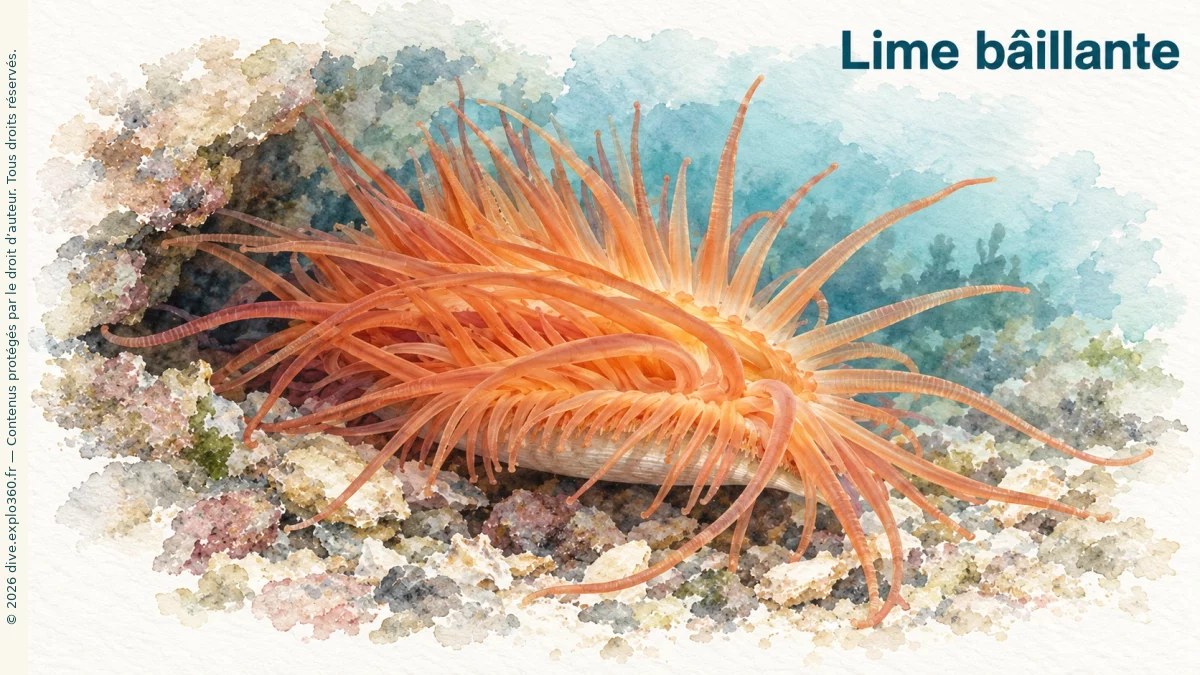
The white shell usually measures fifteen to twenty-five millimetres. It is oval, thin and marked with numerous radiating ribs. Openings remain at the sides even when the valves close, explaining the alternative name gaping file shell.
The long orange-red tentacles are contractile, meaning they can shorten. They fringe the mantle, the tissue surrounding the body. The spiny file shell differs in having white tentacles and a larger shell with stronger ribs.
WHERE DOES IT LIVE?
It uses coarse sand, gravel, shell debris, rocky cracks and the undersides of stones. It also occurs near marine plants, from shallow water to around a hundred metres.
It produces a byssus, a bundle of strong threads, to bind seabed materials around itself. The shell may stay inside this shelter while tentacles project outside.
WHAT DOES IT EAT?
It gathers small organic particles from water. The term microphagous filter feeder means that it uses fine food rather than large prey.
Sticky tentacles can help collect food and also have properties involved in the mollusc’s defence.
GO FURTHER WITH AMIGANSEAU
Unlock the full profile
Deepen your knowledge with the exclusive chapters and interactive resources included in an AMIGANSEAU licence.
- HOW DOES IT REPRODUCE?
- OUR OBSERVATIONS
- ARTICLE
Also included in the full profile
- Advanced navigation between description, ecological context, observations and behaviour
- Interactive food chain to explore the species’ feeding relationships