Habitat
 Depth
 Group
 Role
 Size
WHAT DOES IT LOOK LIKE?
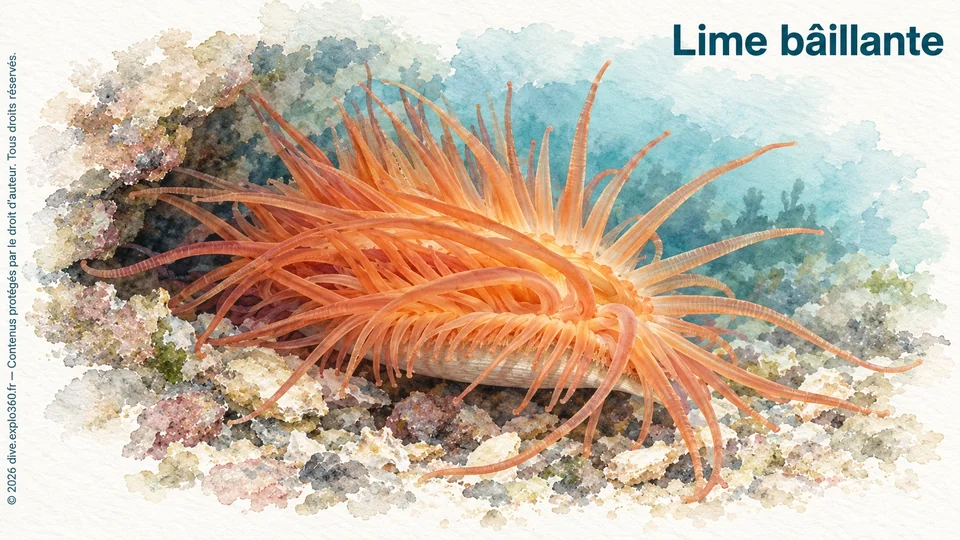
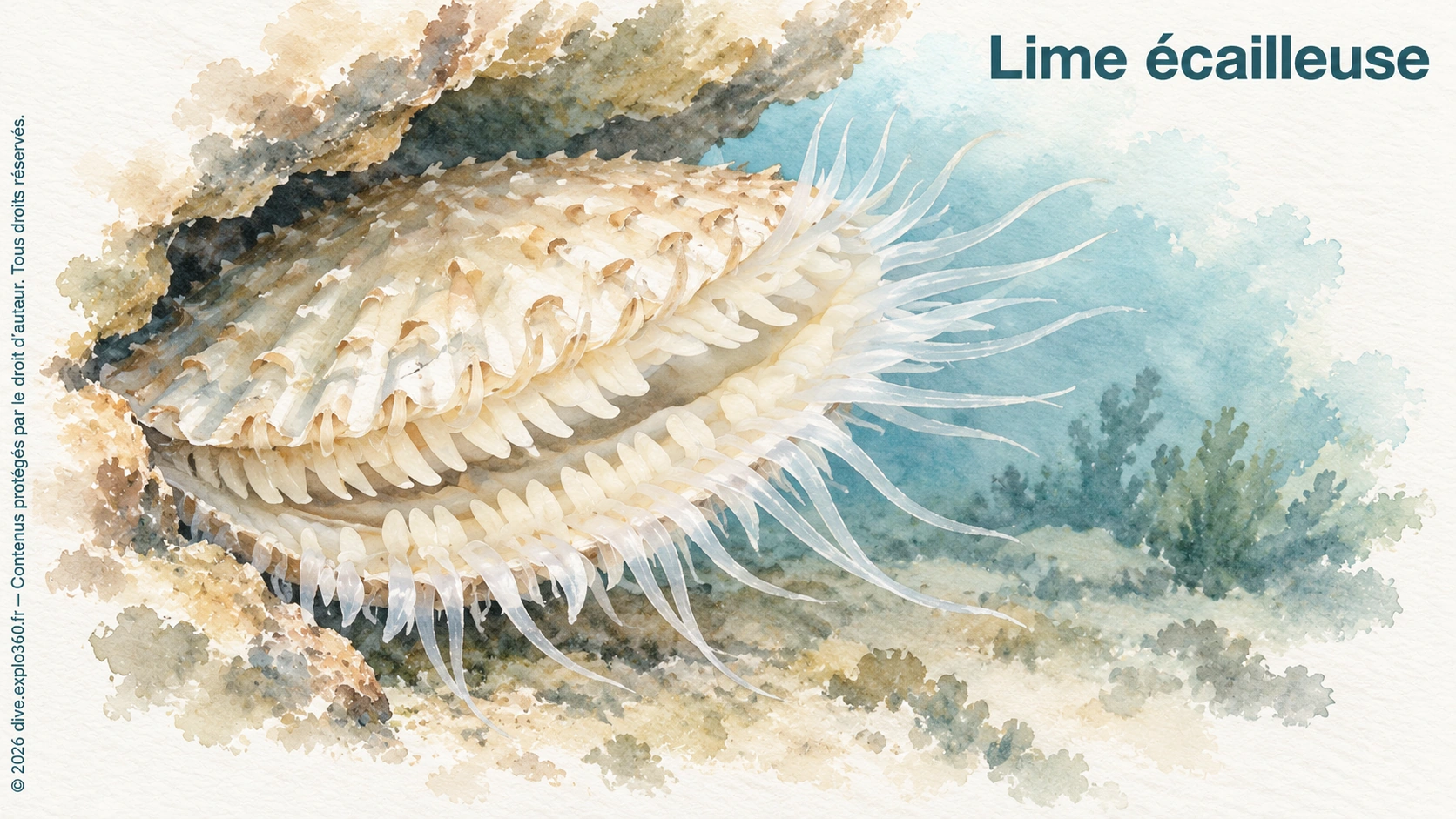
Orange-red tentacles contrast with the white shell of the gaping file shell (Limaria hians). These extensions edge the mantle, the tissue around the body, and can shorten. Its two thin oval valves carry numerous ribs, little radiating ridges; even together, they remain open at the sides.
WHERE DOES IT LIVE?
It uses coarse sand, gravel, shell debris, rocky cracks and the undersides of stones. It also occurs near marine plants, from shallow water to around a hundred metres.
It produces a byssus, a bundle of strong threads, to bind seabed materials around itself. The shell may stay inside this shelter while tentacles project outside.
WHAT DOES IT EAT?
Inside its shelter, the flame shell captures particles carried by seawater, including phytoplankton, bacteria and organic debris. Water flowing between the bound fragments continually brings new food. Its sticky tentacles can also help collect particles.
GO FURTHER WITH AMIGANSEAU
Unlock the full profile
Deepen your knowledge with the exclusive chapters and interactive resources included in an AMIGANSEAU licence.
Subscribing to Dive.Explo360 means supporting a different way to discover marine life.
Our independent platform is entirely self-funded and relies solely on subscriptions. Every licence helps us continue our work, create new content, and share what we know about the marine world with as many people as possible.
Starting at €80 per year, your support makes all the difference.
 Understand the species