Habitat
 Depth
 Group
 Role
 Size
WHAT DOES IT LOOK LIKE?
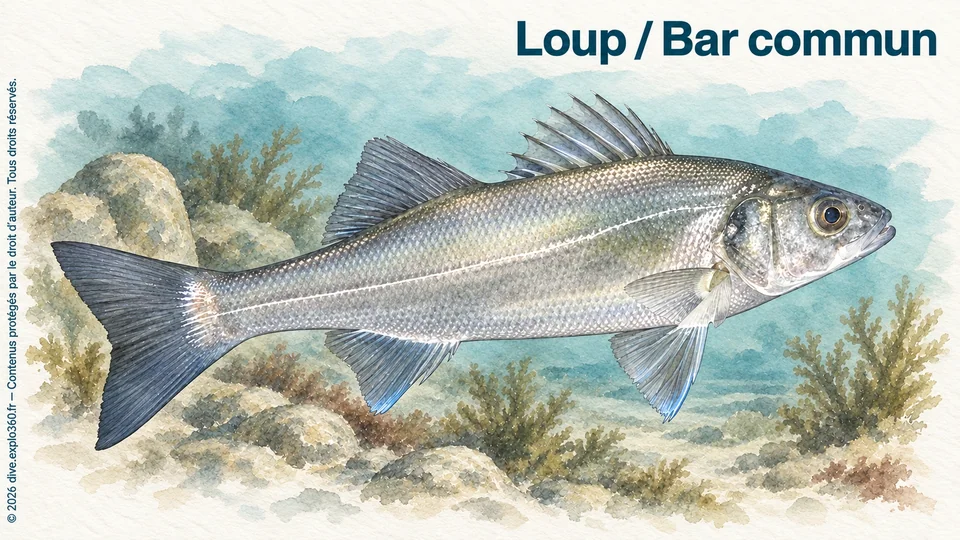
A broad mouth and slightly projecting lower jaw shape the head of the European seabass (Dicentrarchus labrax). The elongated body, grey above and silver along the flanks, carries two clearly separate dorsal fins along the back. The first is spiny, the second softer. A dark patch may show behind the head, while little body spots occur mainly in young fish.
WHERE DOES IT LIVE?
These fish mainly frequent inshore waters above sand or rock. They also use waves, currents and eddies, from the surface to a few tens of metres.
They also enter lagoons, ports and estuaries. They tolerate brackish water, the mixture of seawater and fresh water found in some of these places.
WHAT DOES IT EAT?
A European seabass may wait facing a current, stay near the bottom or join a group hunt. These situations provide access to different prey. Fishes including sardines, anchovies and pouting are important adult foods, alongside squids and crustaceans. Crustaceans dominate more strongly in young fish and subadults. The shift towards fish eating does not eliminate other prey. Solitary waiting and group pursuit of pelagic fishes represent distinct feeding behaviours.
GO FURTHER WITH AMIGANSEAU
Unlock the full profile
Deepen your knowledge with the exclusive chapters and interactive resources included in an AMIGANSEAU licence.
Subscribing to Dive.Explo360 means supporting a different way to discover marine life.
Our independent platform is entirely self-funded and relies solely on subscriptions. Every licence helps us continue our work, create new content, and share what we know about the marine world with as many people as possible.
Starting at €80 per year, your support makes all the difference.
 Understand the species