Habitat
 Depth
 Group
 Role
 Average size
WHAT DOES IT LOOK LIKE?
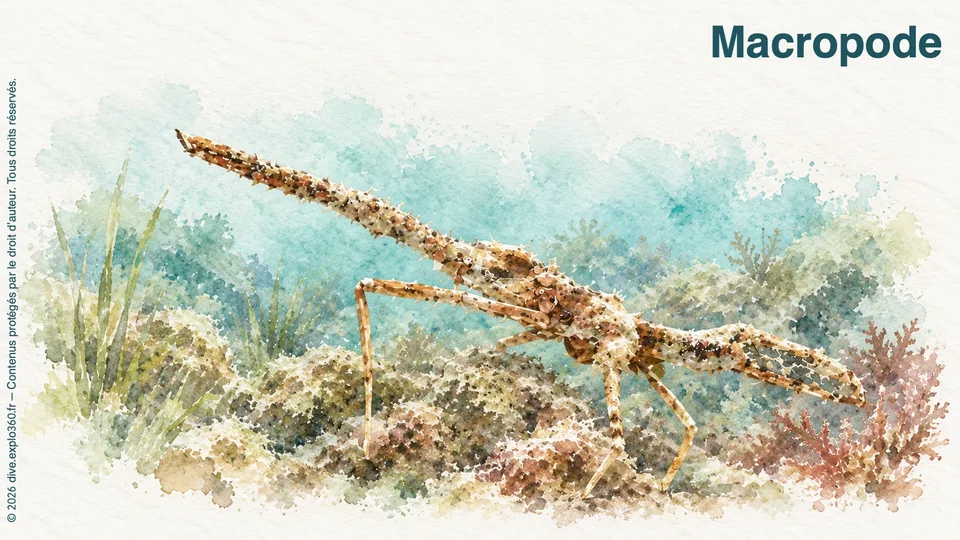
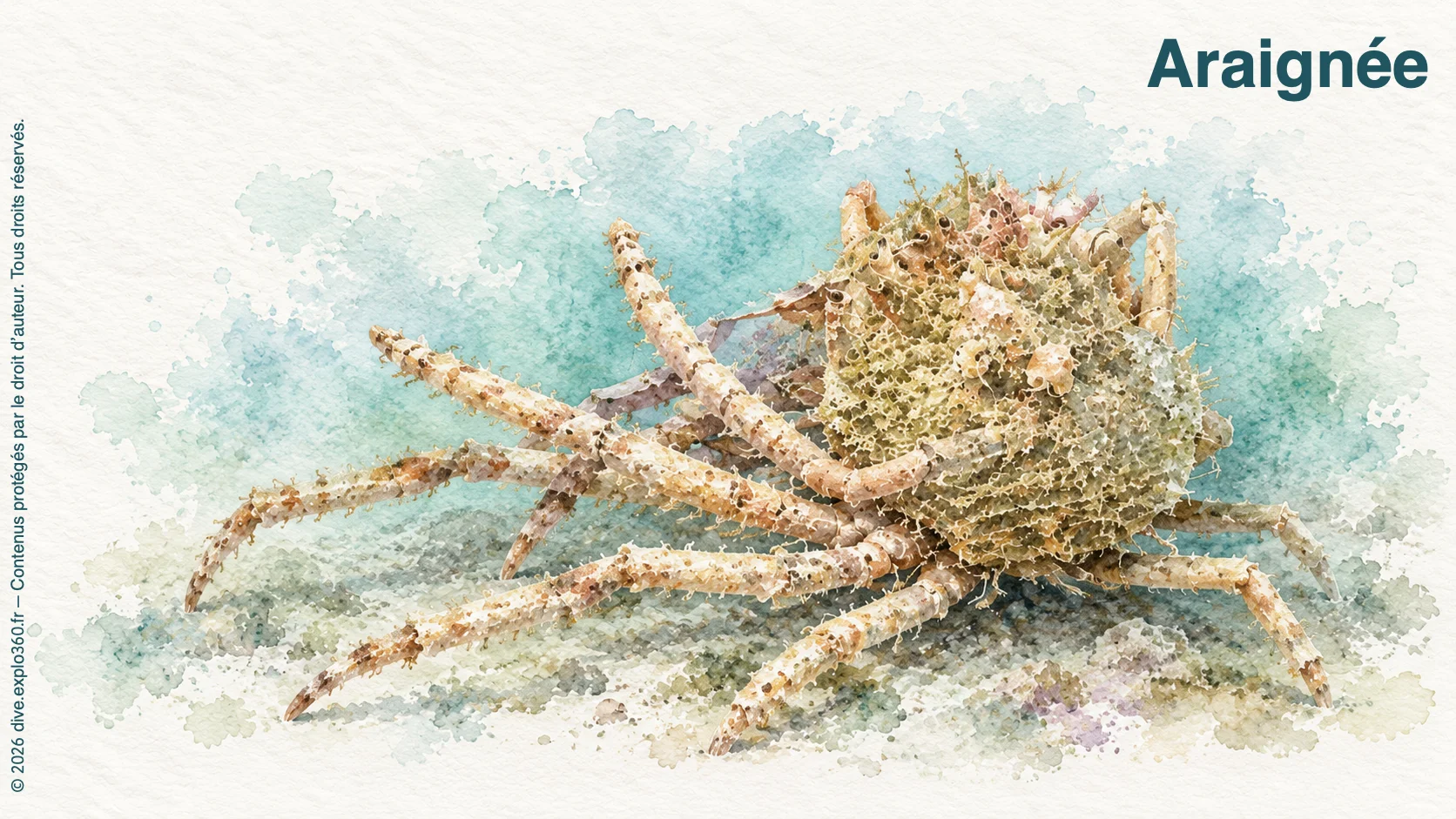
The small triangular shell of the long-legged spider crab (Macropodia rostrata) seems suspended between very long, thin legs. Its rostrum, the point projecting from the front of the head, reinforces the narrow body outline.
Colour varies between grey, yellowish and reddish brown. Claws are more robust in adult males than females. Several spider crabs share a similar appearance, limiting the certainty of identification from a distance.
WHERE DOES IT LIVE?
It mainly lives in seagrass meadows, algal areas and on soft seabeds such as sand or shell debris.
It occurs in coastal areas, often attached to vegetation where it camouflages itself effectively.
WHAT DOES IT EAT?
The long-legged spider crab probably searches for food among algae and small organisms on the seabed. Its diet may include plant material and small animals that remain attached to surfaces or move very little. However, its feeding habits are poorly documented, and the prey actually consumed by this species has not been studied in enough detail to establish a complete diet.
GO FURTHER WITH AMIGANSEAU
Unlock the full profile
Deepen your knowledge with the exclusive chapters and interactive resources included in an AMIGANSEAU licence.
Subscribing to Dive.Explo360 means supporting a different way to discover marine life.
Our independent platform is entirely self-funded and relies solely on subscriptions. Every licence helps us continue our work, create new content, and share what we know about the marine world with as many people as possible.
Starting at €80 per year, your support makes all the difference.
 Understand the species