 Habitat
 Depth
 Group
 Role
 Size
 Good to know
WHAT DOES IT LOOK LIKE?
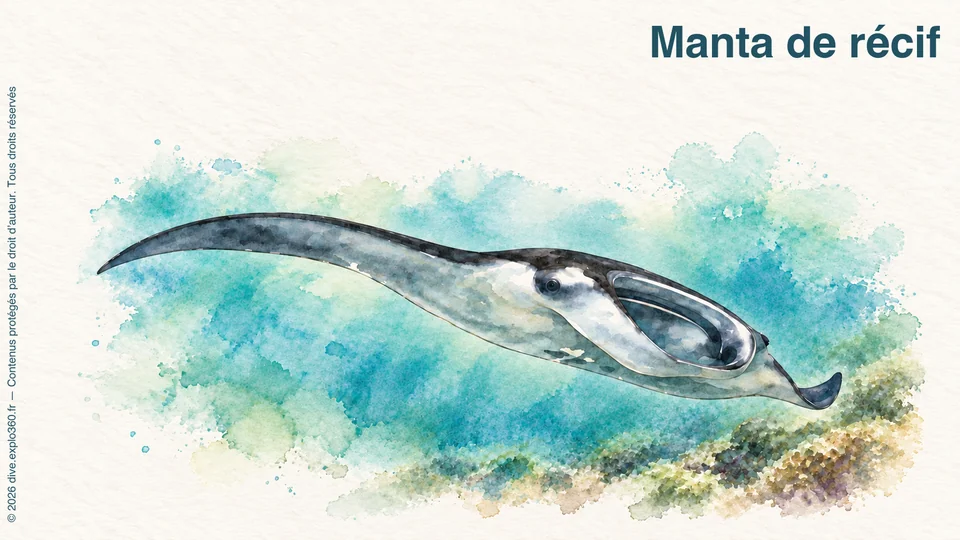
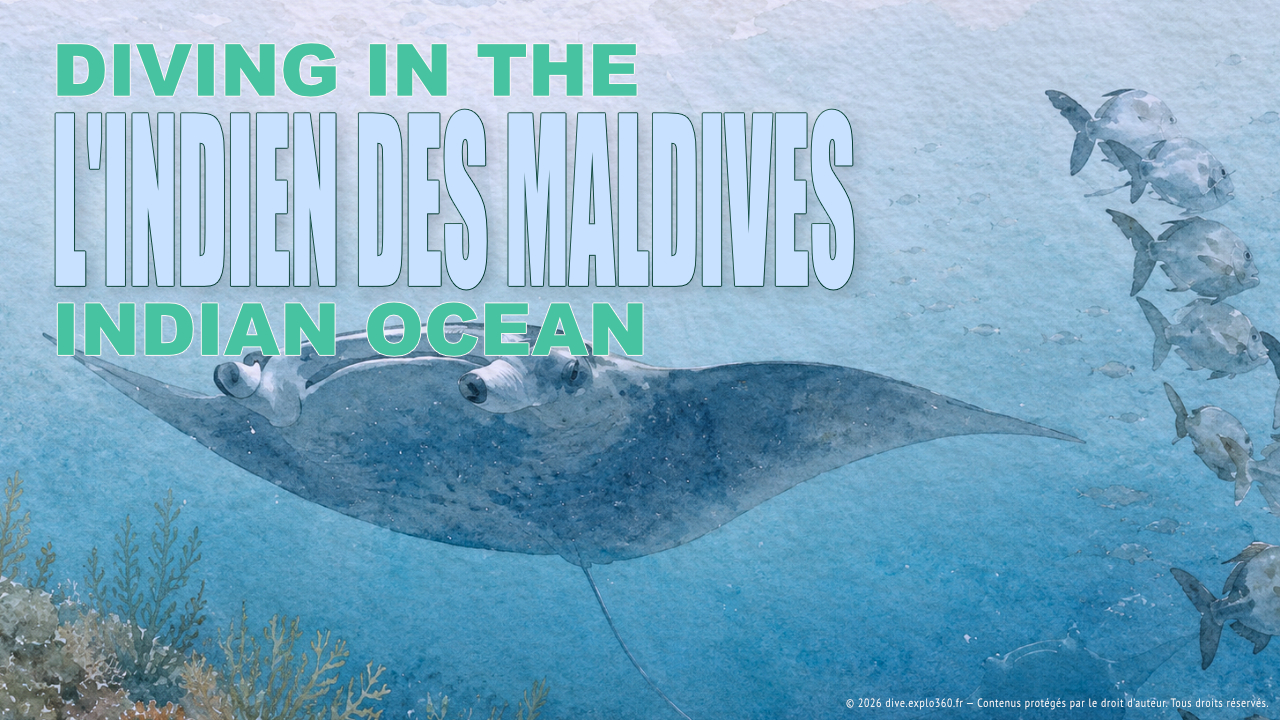
The underside spots form an individual pattern in the reef manta ray (Mobula alfredi). Against this pale surface, dark marks vary in number and may be absent; their arrangement helps recognise some individuals in photographs.
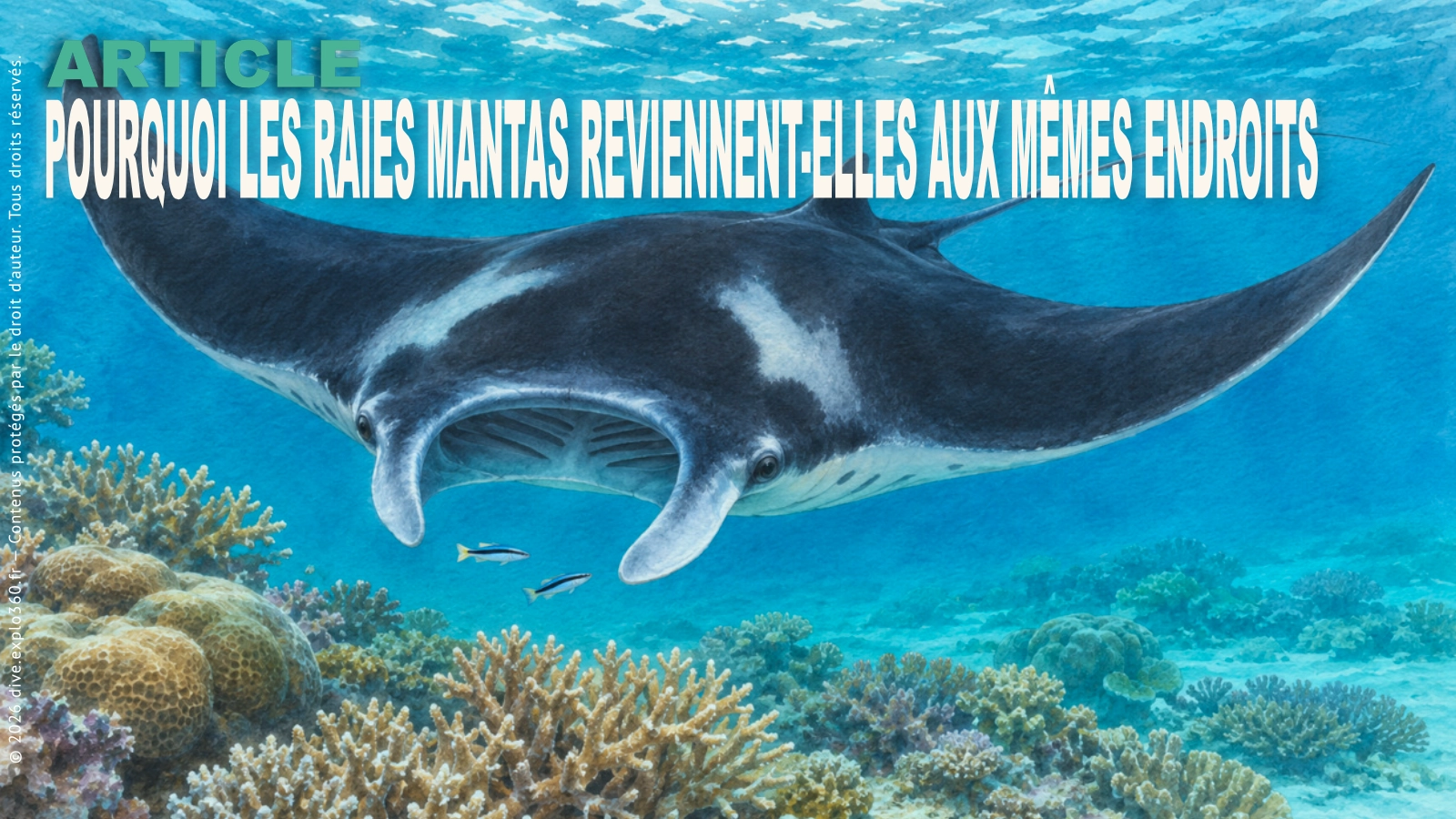
Large side fins spread the body into wings. Two cephalic lobes, flexible extensions framing the mouth, may remain open or roll up. Width between the two wingtips reaches a maximum of about 5.5 m.
WHERE DOES IT LIVE?
It uses coastal and island habitats while also making deep excursions. Feeding aggregations and cleaning stations are particular parts of its activity. Its natural range includes the Red Sea, Indian Ocean and tropical Pacific.
WHAT DOES IT EAT?
The head lobes unroll and the mouth opens: the reef manta begins filtering zooplankton. Swimming brings water containing small prey, including crustaceans, towards its internal filter plates. Retained animals are swallowed, while water leaves through gill slits beneath the body. Within food concentrations, the manta may repeat passes and turn to remain among the prey. Such movements make sense for a scattered resource that currents sometimes gather into dense patches.
GO FURTHER WITH AMIGANSEAU
Unlock the full profile
Deepen your knowledge with the exclusive chapters and interactive resources included in an AMIGANSEAU licence.
- HOW DOES IT REPRODUCE?
- OUR OBSERVATIONS
- ARTICLE
Also included in the full profile
- Advanced navigation between description, ecological context, observations and behaviour
- Interactive food chain to explore the species’ feeding relationships
- Infographic and illustrated summary profile
 Understand the species