Partners and information

Contact us

Verification code

Banded murex

Distribution : Mediterranean

Three Roman-period textiles from the Murabba’at caves were examined using chemical analysis. The results identified the banded dye-murex as a source of their colour. One fabric had a blue-green shade, possibly caused by sunlight during dyeing. The other two had undergone a second dyeing process using Armenian cochineal, an insect-derived red colourant.

Images being acquired · Your video or photos here

Habitat of Banded murex Habitat
Rocky habitat, Sand, Seagrass meadow
Depth range of Banded murex Depth
0-50 m
Biological group of Banded murex Group
Ecological role of Banded murex Role
Predator

Size

4–7.5 cm; up to 8.5 cm

WHAT DOES IT LOOK LIKE?

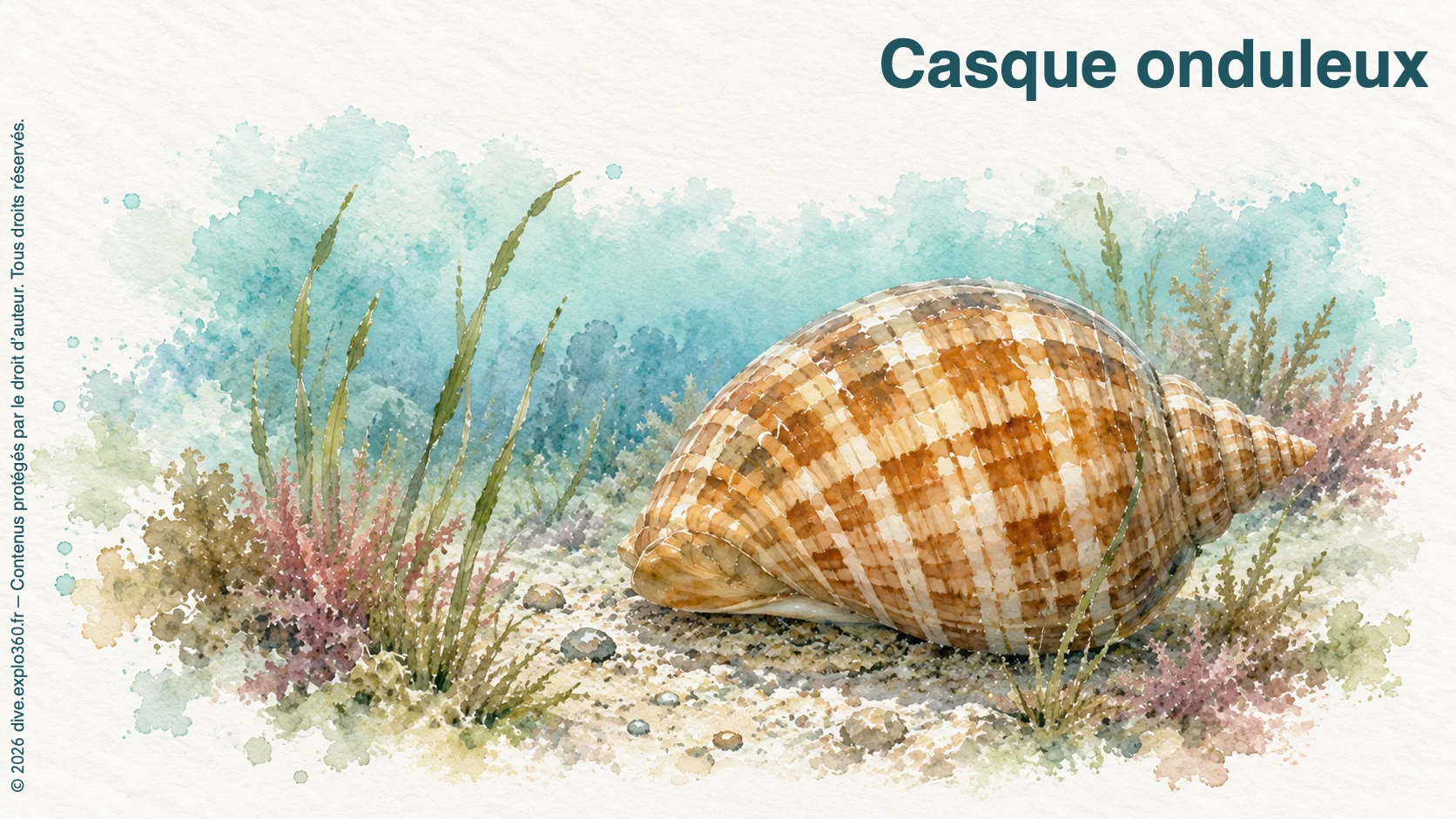
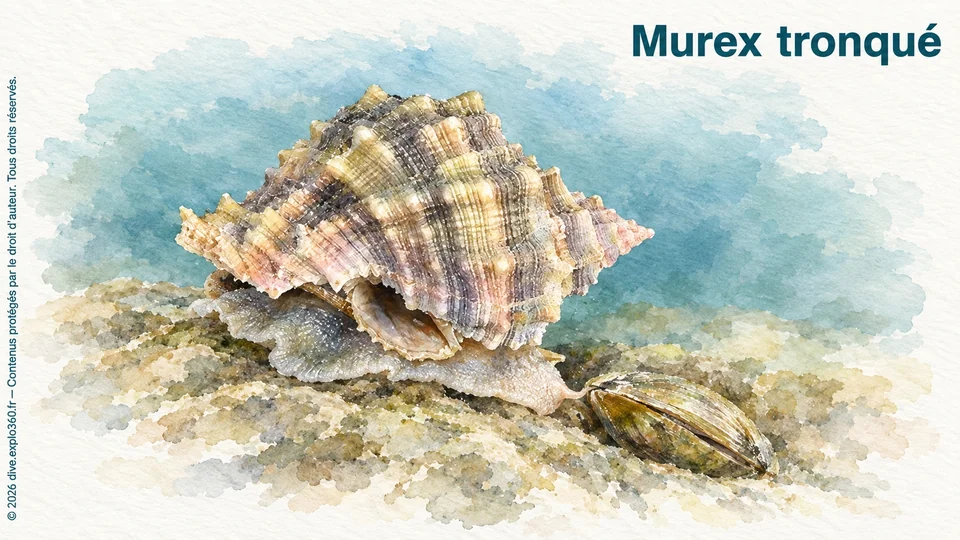
The banded dye-murex (Hexaplex trunculus) has a large final whorl beneath a pointed spire, the coiled shell top. The siphonal canal, the front extension of the opening, is short and curved. Thickened ribs, raised ridges, carry knobs or spines. Dark bands on a pale background are often hidden by organisms.

GO FURTHER WITH AMIGANSEAU

Unlock the full profile

Deepen your knowledge with the exclusive chapters and interactive resources included in an AMIGANSEAU licence.

Choose my licence
  • WHERE DOES IT LIVE?
  • WHAT DOES IT EAT?
  • HOW DOES IT REPRODUCE?
  • OUR OBSERVATIONS
  • ARTICLE

Also included in the full profile

  • Advanced navigation between description, ecological context, observations and behaviour
  • Interactive food chain to explore the species’ feeding relationships
An active licence gives access to enriched profiles and AMIGANSEAU exploration tools.
Banded murex

Understand the species

What is this species’ ecological role?

AMIGANSEAU Explorer Premium

Access enriched species profiles with advanced content (audio, infographics and detailed articles).

Explore all species easily through a single interface.

Enjoy a smooth, fast learning experience suited to every level.

🔒 The full profile is available with a paid subscription only.

Discover licences

POURSUIVRE L’EXPLORATION

Explore further

ArticleTHE SECRETS OF THE SEAGRASS MEADOWRead the article →ArticleTHE SECRETS OF SANDRead the article →ArticleWhat marine animals do and why it mattersRead the article →