Habitat
 Depth
 Group
 Role
 Average size
WHAT DOES IT LOOK LIKE?
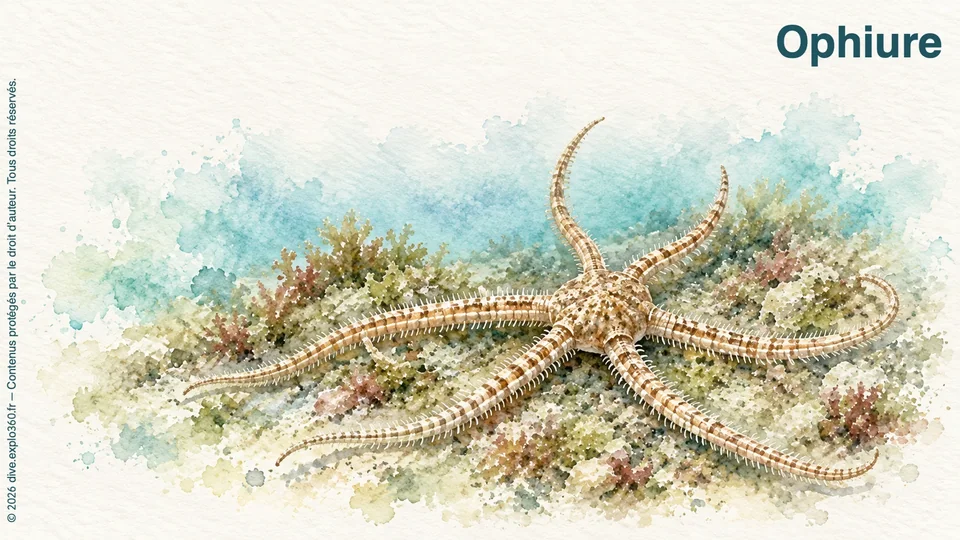
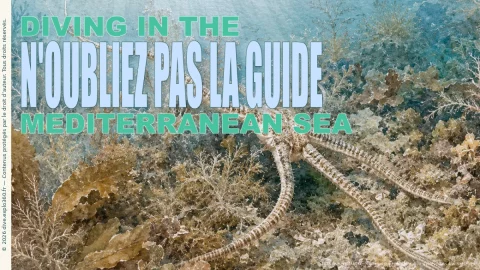
Brittle star arms seem separately attached to the small central disc, so clear is their boundary with the body. Five in the forms described here, they are long, thin, flexible and often spiny.
The general outline occurs in several species. Brown, red or orange tones vary between them and do not form one shared colour for the whole group.
WHERE DOES IT LIVE?
Both rocky seabeds and sediment expanses support brittle stars, but positions differ between species. Some use cracks and stone undersides; others remain partly buried in sand or mud. Gravel is another substrate they occupy.
WHAT DOES IT EAT?
An arm raised in a current may collect particles, while one moving over the seabed encounters deposits or small animals. Species may suspension-feed, gather organic material, scavenge or prey on animals. Tube feet help handle and transfer food towards the mouth beneath the central disc. Some combine methods. The observed feeding movement is therefore more informative than a single menu assigned to the whole group.
GO FURTHER WITH AMIGANSEAU
Unlock the full profile
Deepen your knowledge with the exclusive chapters and interactive resources included in an AMIGANSEAU licence.
Subscribing to Dive.Explo360 means supporting a different way to discover marine life.
Our independent platform is entirely self-funded and relies solely on subscriptions. Every licence helps us continue our work, create new content, and share what we know about the marine world with as many people as possible.
Starting at €80 per year, your support makes all the difference.
 Understand the species