 Habitat
 Depth
 Group
 Role
 Size
WHAT DOES IT LOOK LIKE?
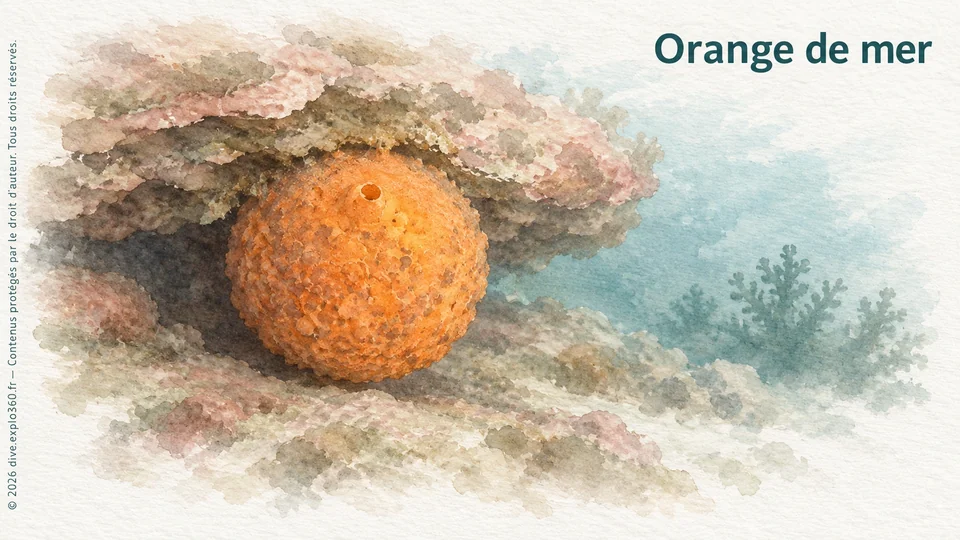
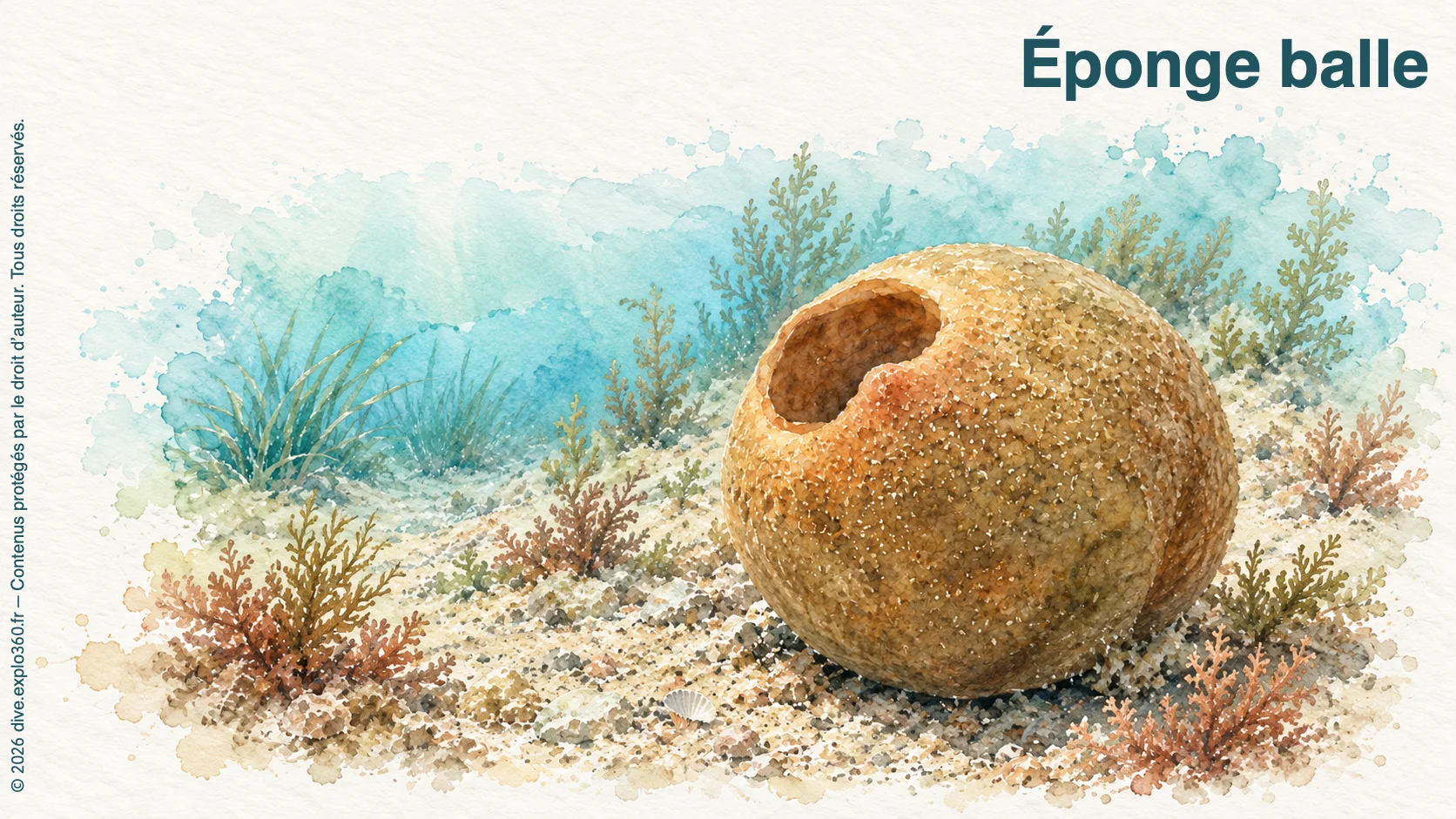
The bumpy surface and ball shape give the sea orange (Tethya aurantium) its name. A few centimetres across, it ranges from orange to orange red. An oscule, a large circular opening, opens at the top. Little balls on short stalks may alter its outline.
WHERE DOES IT LIVE?
It attaches to Mediterranean rocks, notably beneath overhangs and in shaded cave areas. French records include both the mainland and Corsica.
Its ball shape can conceal the attachment point when viewed from above. A side view helps explain its position without trying to lift it.
WHAT DOES IT EAT?
The sea orange’s water exchanges connect scattered small entrances to an outlet at the top. Inhalant pores supply internal chambers with food-bearing water. Flagellated, collar-bearing choanocytes contribute to flow and collection. Water then reaches the apical osculum. Food is taken microscopically beneath the surface and processed by sponge cells.
GO FURTHER WITH AMIGANSEAU
Unlock the full profile
Deepen your knowledge with the exclusive chapters and interactive resources included in an AMIGANSEAU licence.
Subscribing to Dive.Explo360 means supporting a different way to discover marine life.
Our independent platform is entirely self-funded and relies solely on subscriptions. Every licence helps us continue our work, create new content, and share what we know about the marine world with as many people as possible.
Starting at €80 per year, your support makes all the difference.
 Understand the species