Habitat
 Depth
 Group
 Role
 Size
 Good to know
WHAT DOES IT LOOK LIKE?
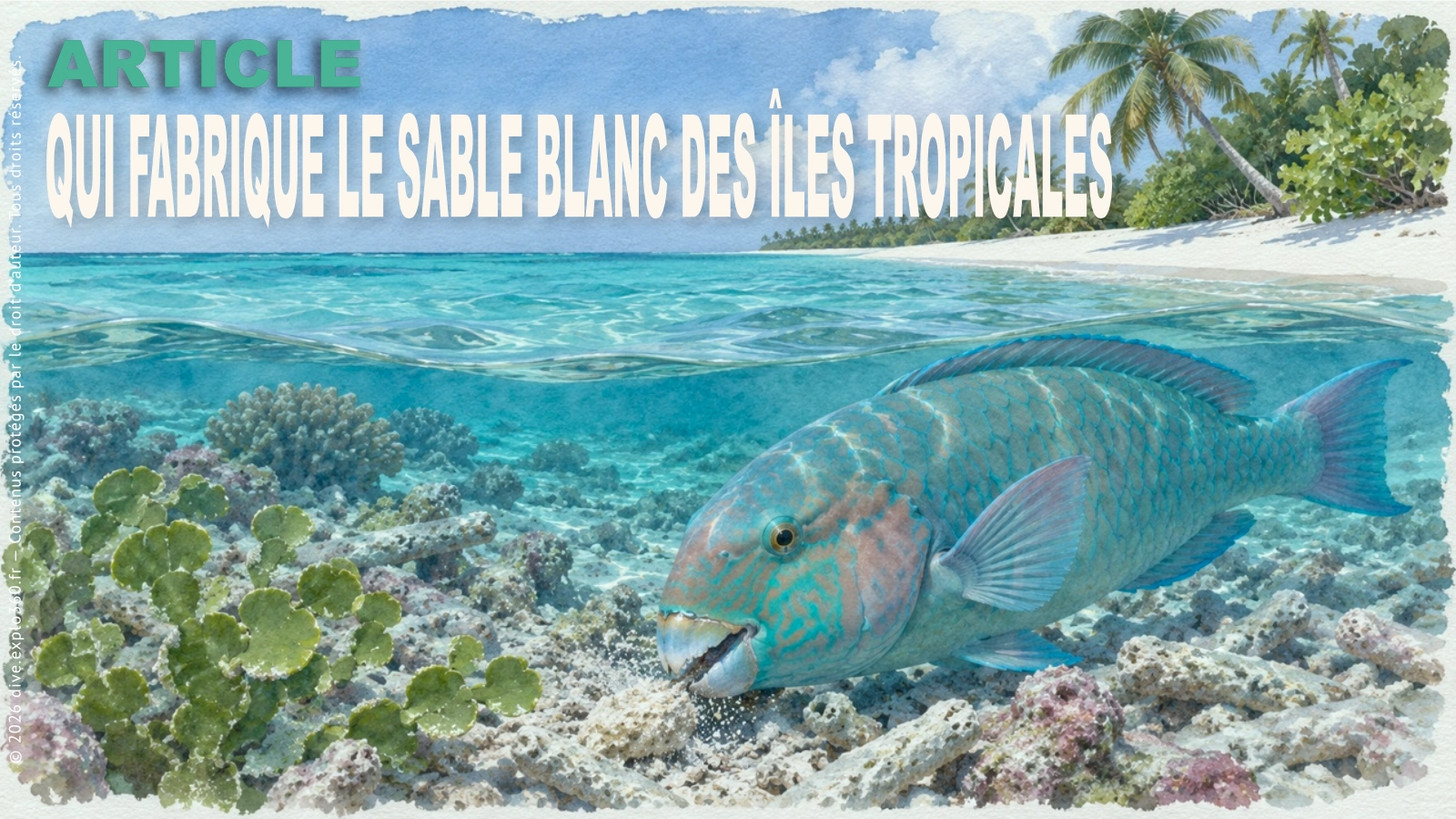
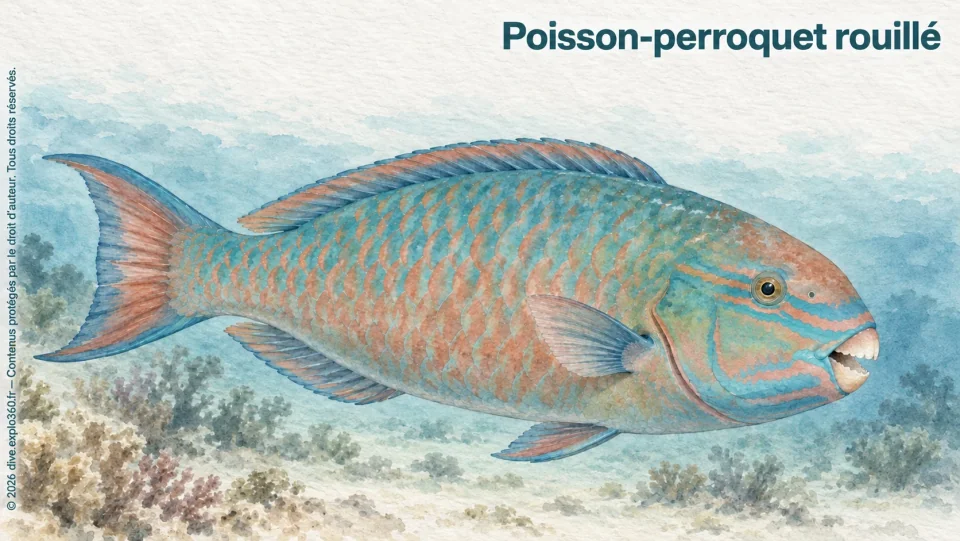
The terminal phase, the large male’s colouring, brings green, blue and pink to orange to the rusty parrotfish (Scarus ferrugineus). Earlier appearances may be duller. The body remains long, with large scales and teeth joined into a beak. Maximum length reaches 41 cm, including the tail.
WHERE DOES IT LIVE?
It occurs on Red Sea and Gulf of Aden reefs, including sheltered slopes. Documented depths range from 1 to 60 m. It uses bottom surfaces for feeding, moving near the structures that form the reef rather than living entirely in open water. Findings from a study on one coastal reef do not necessarily describe every habitat used across the species’ range.
WHAT DOES IT EAT?
Algal turfs offer the rusty parrotfish food mixed with bottom particles. Its beak removes bites. Consumption changes with season, temperature, fish size and territorial activity.
GO FURTHER WITH AMIGANSEAU
Unlock the full profile
Deepen your knowledge with the exclusive chapters and interactive resources included in an AMIGANSEAU licence.
- HOW DOES IT REPRODUCE?
- OUR OBSERVATIONS
- ARTICLE
Also included in the full profile
- Advanced navigation between description, ecological context, observations and behaviour
- Interactive food chain to explore the species’ feeding relationships
 Understand the species