Habitat
 Depth
 Group
 Role
 Size
 Good to know
WHAT DOES IT LOOK LIKE?
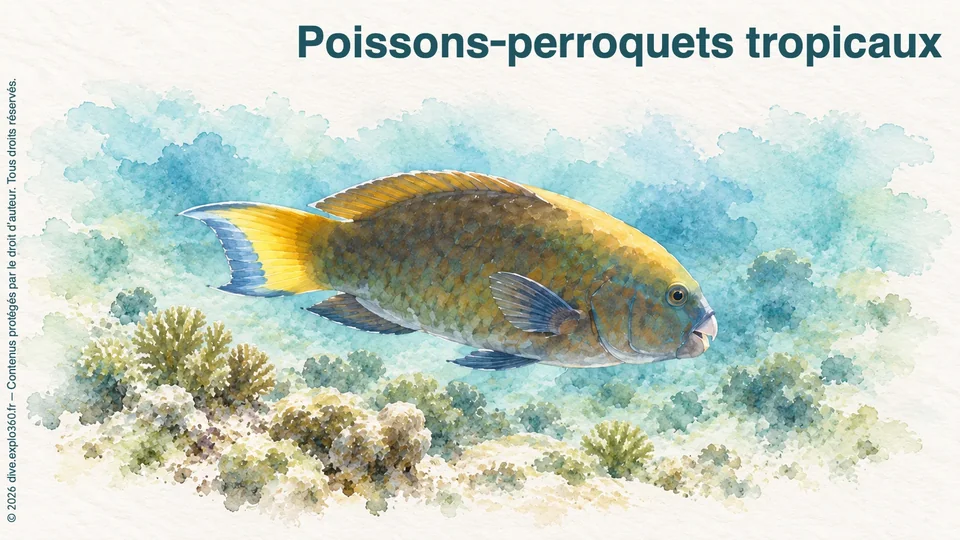
The apparent beak of parrotfishes extends a body covered in large scales. Closely set teeth form the edge of the mouth.
The variety of colour patterns does not always reflect a variety of species: within one species, colouring can change with age. This group entry keeps those shared features without assigning them a single pattern.
WHERE DOES IT LIVE?
Red Sea reefs bring together several parrotfish species whose positions may differ. The surfaces used and shelters available form a mosaic of small habitats. One species’ presence in an area therefore cannot describe how all the others occupy the reef.
WHAT DOES IT EAT?
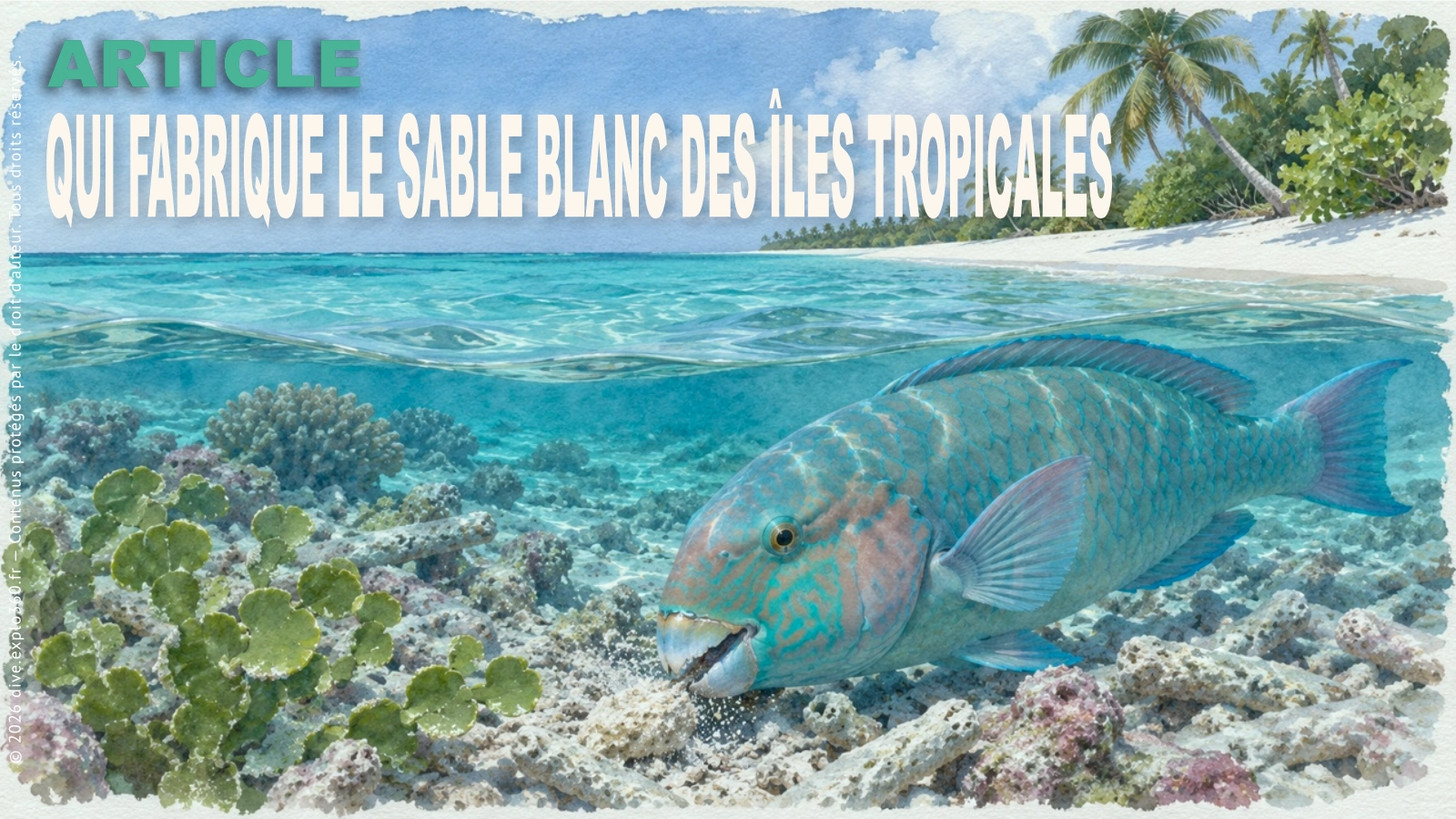
The beak contacts the substrate and removes a bite, followed by grinding in the throat. Red Sea parrotfishes obtain more than a simple algal leaf: surface growth and calcareous substrates contain microbial communities, including cyanobacteria, mixed with algae and organic particles. Some species scrape a shallow layer; others remove deeper portions. Observations on Egyptian reefs show clear differences among species in biting and resulting scars. What the fish swallows and the nutrients it absorbs are not quite the same. Seeing a fish swallow a piece of limestone therefore tells only part of the story of what nourishes it.
GO FURTHER WITH AMIGANSEAU
Unlock the full profile
Deepen your knowledge with the exclusive chapters and interactive resources included in an AMIGANSEAU licence.
Subscribing to Dive.Explo360 means supporting a different way to discover marine life.
Our independent platform is entirely self-funded and relies solely on subscriptions. Every licence helps us continue our work, create new content, and share what we know about the marine world with as many people as possible.
Starting at €80 per year, your support makes all the difference.
 Understand the species