Habitat
 Depth
 Group
 Role
 Average size
 Precautions
WHAT DOES IT LOOK LIKE?
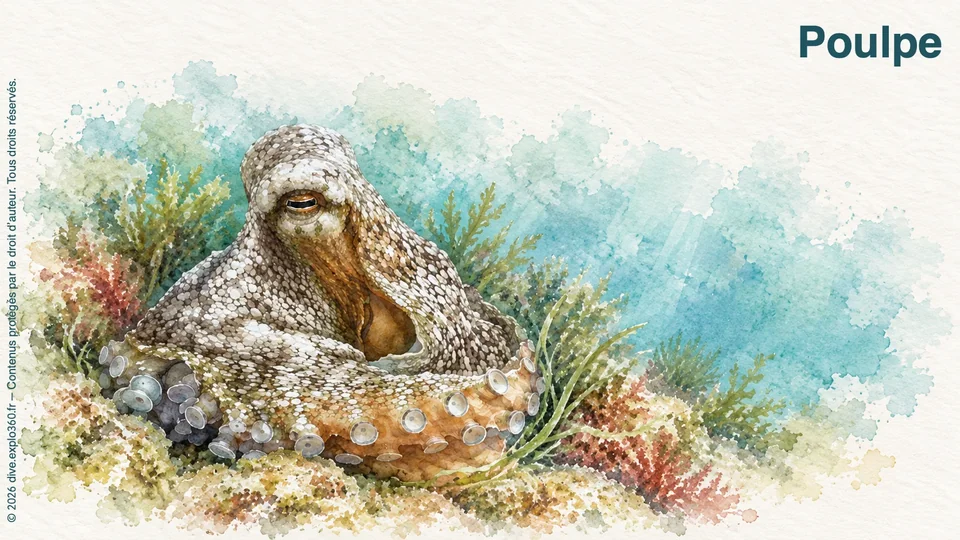
Two rows of suckers beneath each arm add detail to the common octopus (Octopus vulgaris). Eight flexible arms radiate around the head, ahead of the mantle, the rounded sac forming the rear body.
The skin’s appearance is changeable: colours can shift quickly, and raised features may become stronger or fade. The same animal can therefore look smooth and then bumpy.
WHERE DOES IT LIVE?
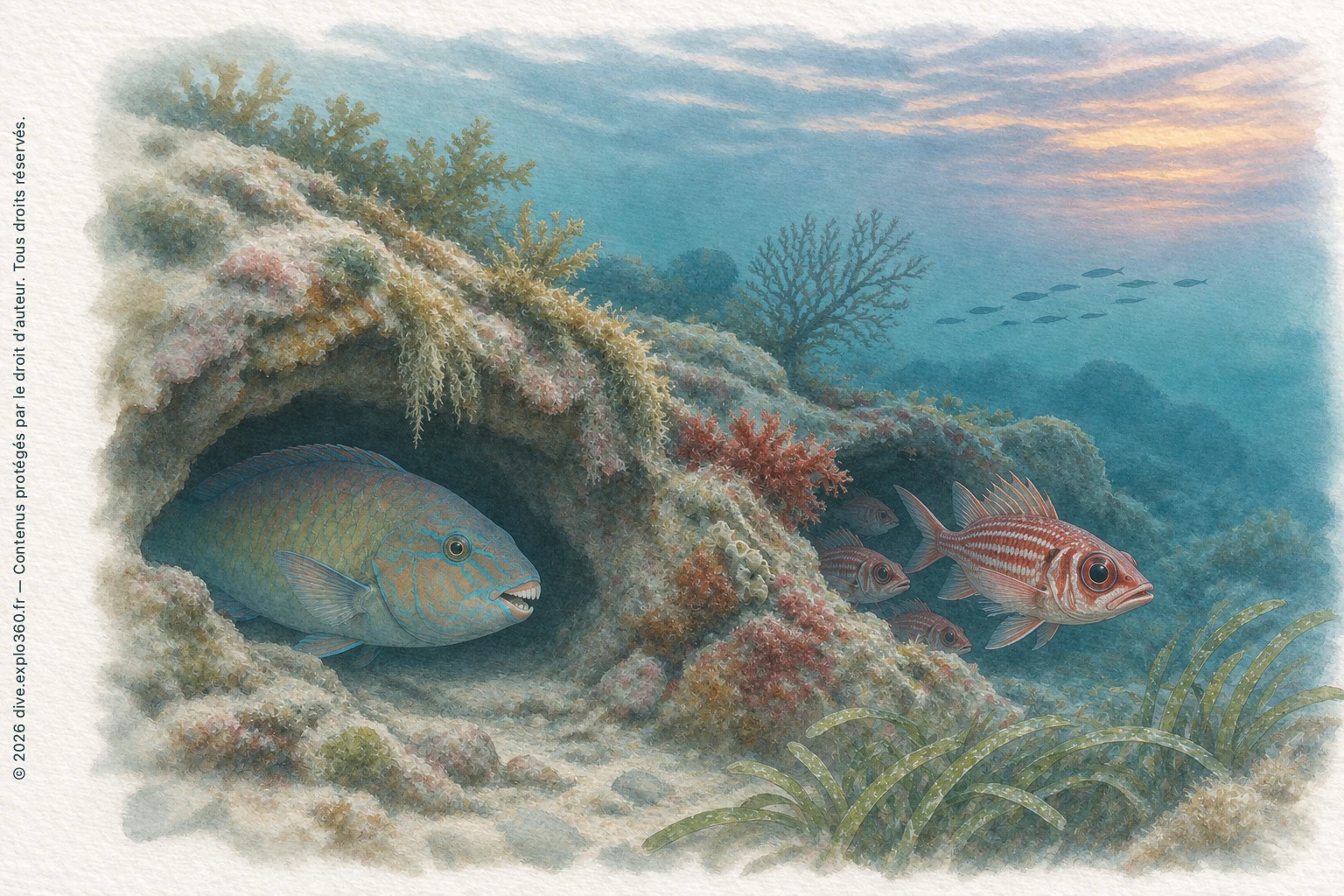
It occurs on varied seabeds, particularly rocky or sandy ones and seagrass beds. It lives alone and shelters in a cavity it may arrange and camouflage with shells or stones.
WHAT DOES IT EAT?
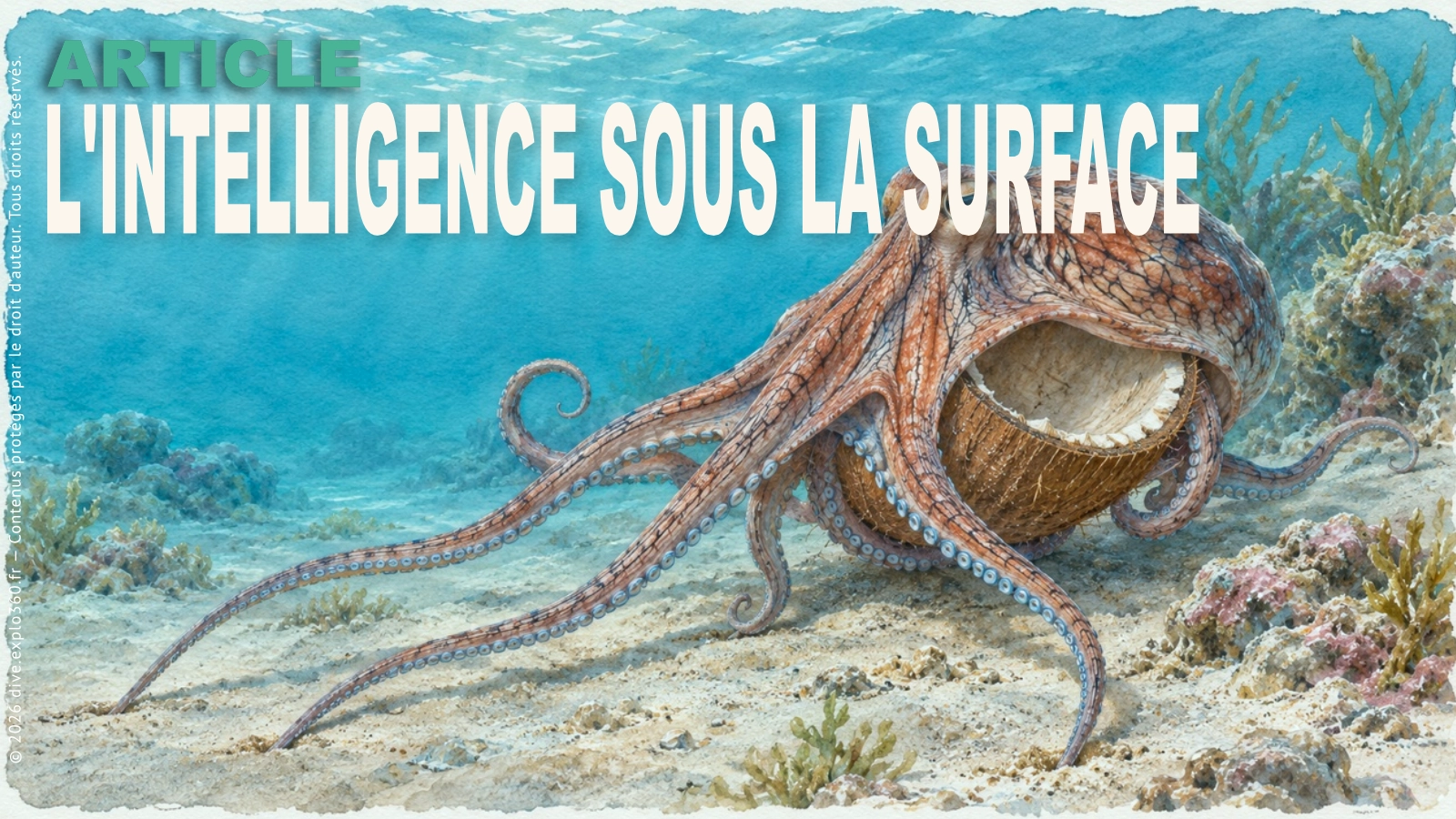
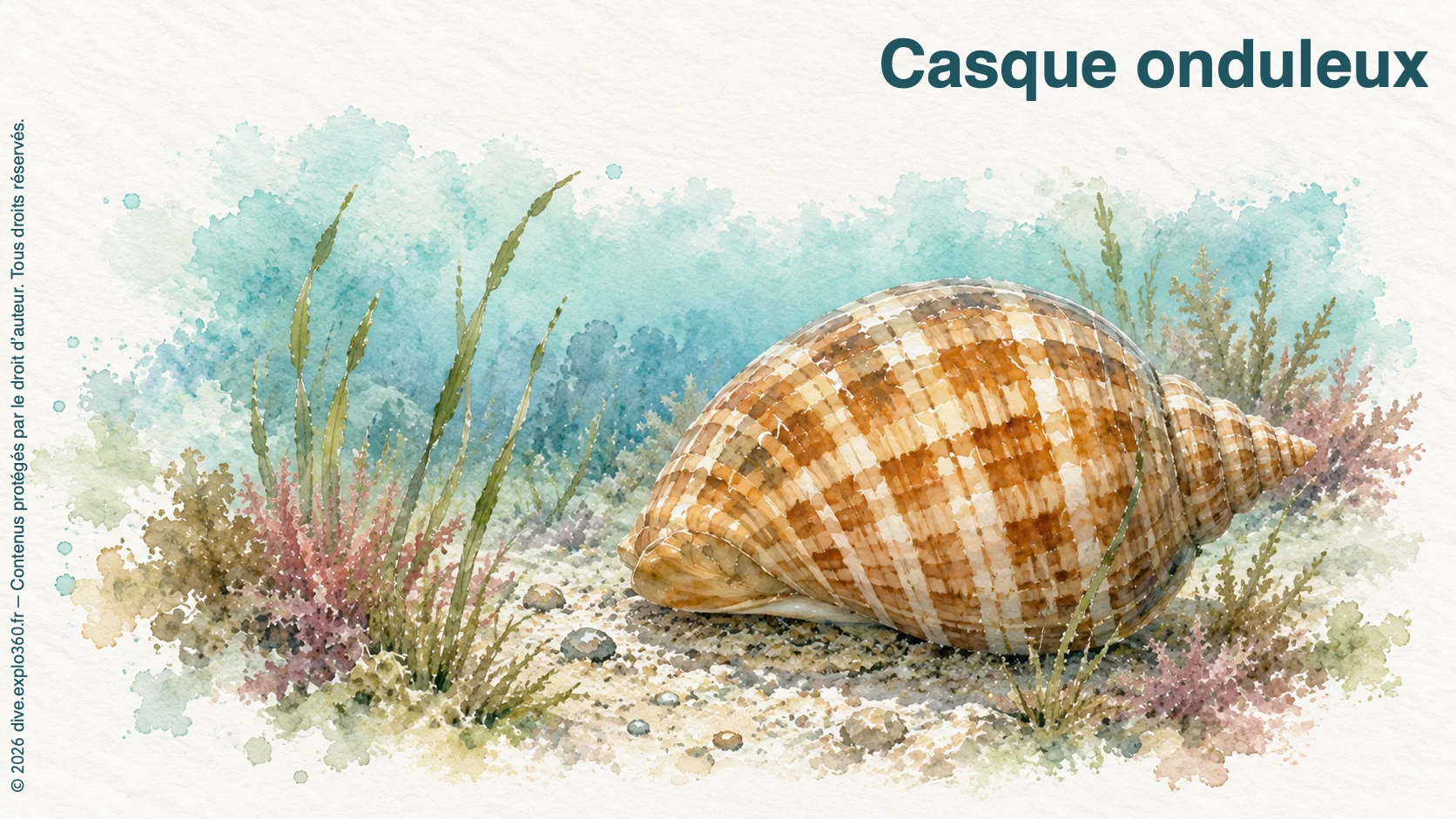
Prey may remain hidden beneath the octopus’s arms through much of a meal. Suckers hold it, arms bring it to the mouth, and the beak cuts tissues. The octopus can also drill a shell to reach the protected animal; salivary secretions help immobilise the prey. Crustaceans and molluscs, including bivalves and other cephalopods, are its principal foods. Fish sometimes supplement the menu. Hard remains discarded near the den offer a glimpse of carried prey even when capture was not observed.
GO FURTHER WITH AMIGANSEAU
Unlock the full profile
Deepen your knowledge with the exclusive chapters and interactive resources included in an AMIGANSEAU licence.
- HOW DOES IT REPRODUCE?
- OUR OBSERVATIONS
- ARTICLE
Also included in the full profile
- Advanced navigation between description, ecological context, observations and behaviour
- Interactive food chain to explore the species’ feeding relationships
- Infographic and illustrated summary profile
- Additional photographic observations
 Understand the species