Habitat
 Depth
 Group
 Role
WHAT DOES IT LOOK LIKE?
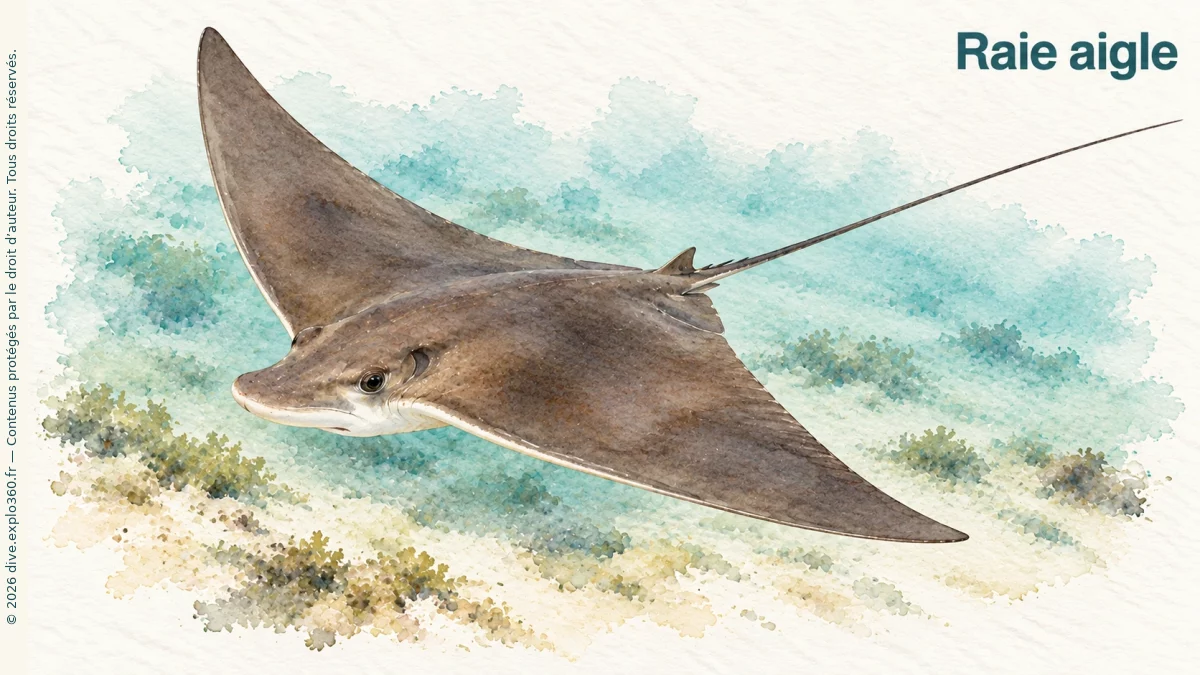
The common eagle ray combines pointed pectoral wings with a projecting head and rounded rostrum. Eyes and spiracles occupy the raised head; the mouth and five pairs of gill slits are underneath. The usually plain dark brown to black upper surface contrasts with the white underside. A small dorsal fin stands at the base of the slender tail, followed by defensive stings. The tail should never be treated as harmless equipment to handle.
WHERE DOES IT LIVE?
The range includes the Mediterranean, eastern Atlantic and waters around southern Africa. Coastal soft bottoms are important, although the animal can travel through open water. Benthopelagic describes that mobility better than simply calling it a bottom-dweller. Broad published depth ranges do not indicate equal abundance throughout: local substrate and conditions affect encounters.
WHAT DOES IT EAT?
Molluscs and crustaceans are important food. Adjacent teeth form crushing plates. Disturbance of sediment during feeding may make other prey available to opportunistic fish. A study from Terceira in the Azores found molluscs dominant in its sample. Such local evidence supports the role of benthic predator without imposing an identical prey composition on every Mediterranean site.
GO FURTHER WITH AMIGANSEAU
Unlock the full profile
Deepen your knowledge with the exclusive chapters and interactive resources included in an AMIGANSEAU licence.
- HOW DOES IT REPRODUCE?
- OUR OBSERVATIONS
- ARTICLE
Also included in the full profile
- Advanced navigation between description, ecological context, observations and behaviour
- Interactive food chain to explore the species’ feeding relationships