Habitat
 Depth
 Group
 Role
 Average size
 Precautions
WHAT DOES IT LOOK LIKE?
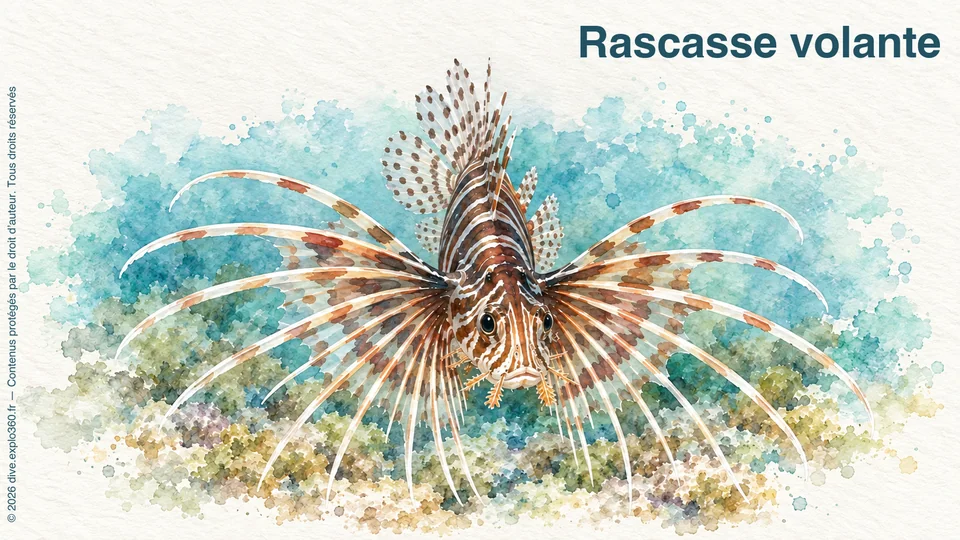
Broad side fans widen the outline of the devil firefish (Pterois miles), already raised by long back spines. Deeply notched membranes separate the fin rays.
The pattern alternates dark bands with white and red; skin flaps, especially prominent above the eyes, add detail to the head. A certain distinction from the red lionfish requires finer features than this striped outline.
WHERE DOES IT LIVE?
Native populations use reef structures for shelter. Their regional ecological context differs from that of introduced populations.
In the Maldives it is part of the Indian Ocean’s native fauna. Crevices and shaded parts of the reef provide refuges close to small animals it can catch.
WHAT DOES IT EAT?
Approach and capture have very different rhythms in the devil firefish. With pectoral fins open, it moves slowly towards a small fish or crustacean. At close range, mouth opening and protrusion generate suction, and prey enters with the water in a brief movement. This contrast reveals the hunting sequence without making every slow movement a strike. Eastern Mediterranean digestive studies show several local fishes and crustaceans in the diet. The species therefore uses a range of small prey, with fish important in the populations analysed.
GO FURTHER WITH AMIGANSEAU
Unlock the full profile
Deepen your knowledge with the exclusive chapters and interactive resources included in an AMIGANSEAU licence.
- HOW DOES IT REPRODUCE?
- OUR OBSERVATIONS
- ARTICLE
Also included in the full profile
- Advanced navigation between description, ecological context, observations and behaviour
- Interactive food chain to explore the species’ feeding relationships
- Infographic and illustrated summary profile
 Understand the species