Habitat
 Depth
 Group
 Role
WHAT DOES IT LOOK LIKE?
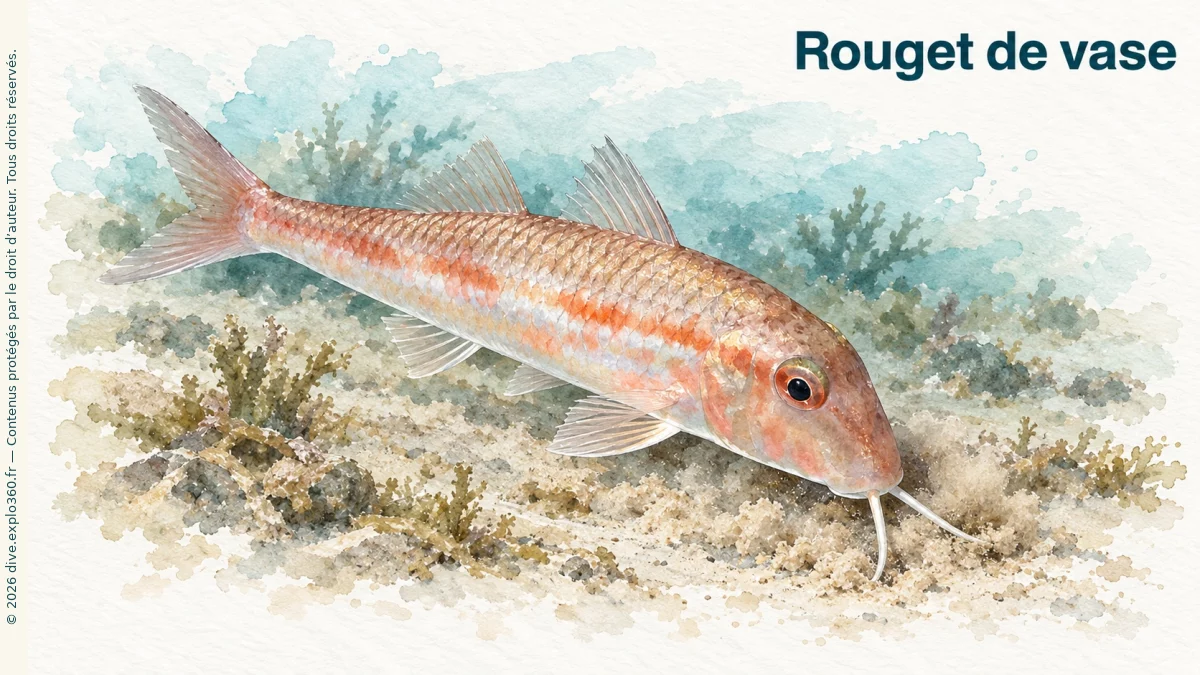
Its body is elongated, with a fairly flat belly and a steep forehead. Two white barbels, movable sensory threads, lie beneath the chin. They are generally no longer than the pectoral fins.
The two dorsal fins are clearly separated; the first lacks the coloured bands of the striped red mullet. Body colour varies from beige and brown to pink, with silvery reflections. Fish several tens of centimetres long occur, but the size of individuals encountered varies considerably.
WHERE DOES IT LIVE?
Red mullet live mainly on mud and sand. They can form groups and occupy areas several hundred metres deep. Their presence in shallow water is also documented, particularly in the eastern Mediterranean.
They occur in the Mediterranean, Black Sea and eastern Atlantic. Young fish begin in open water before moving to the bottom; movement into deeper areas may also occur in autumn.
WHAT DOES IT EAT?
They search for buried worms, crustaceans and molluscs. The barbels explore sediment, the material forming the seabed, and help detect prey before capture.
Digging can attract other fishes, which catch animals displaced or uncovered. This following behaviour shows how one species’ activity makes resources available to others.
GO FURTHER WITH AMIGANSEAU
Unlock the full profile
Deepen your knowledge with the exclusive chapters and interactive resources included in an AMIGANSEAU licence.
- HOW DOES IT REPRODUCE?
- OUR OBSERVATIONS
- ARTICLE
Also included in the full profile
- Advanced navigation between description, ecological context, observations and behaviour
- Interactive food chain to explore the species’ feeding relationships