Habitat
 Depth
 Group
 Role
 Size
WHAT DOES IT LOOK LIKE?
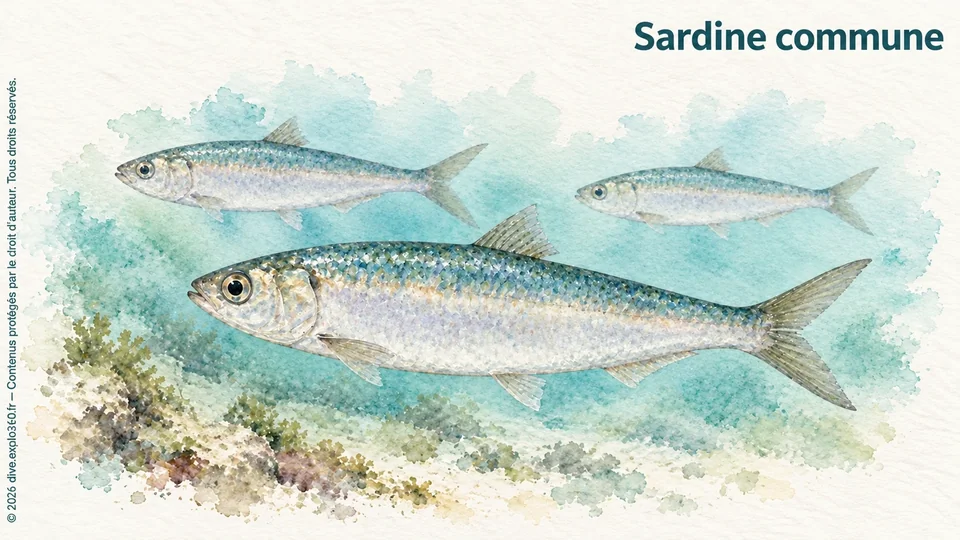
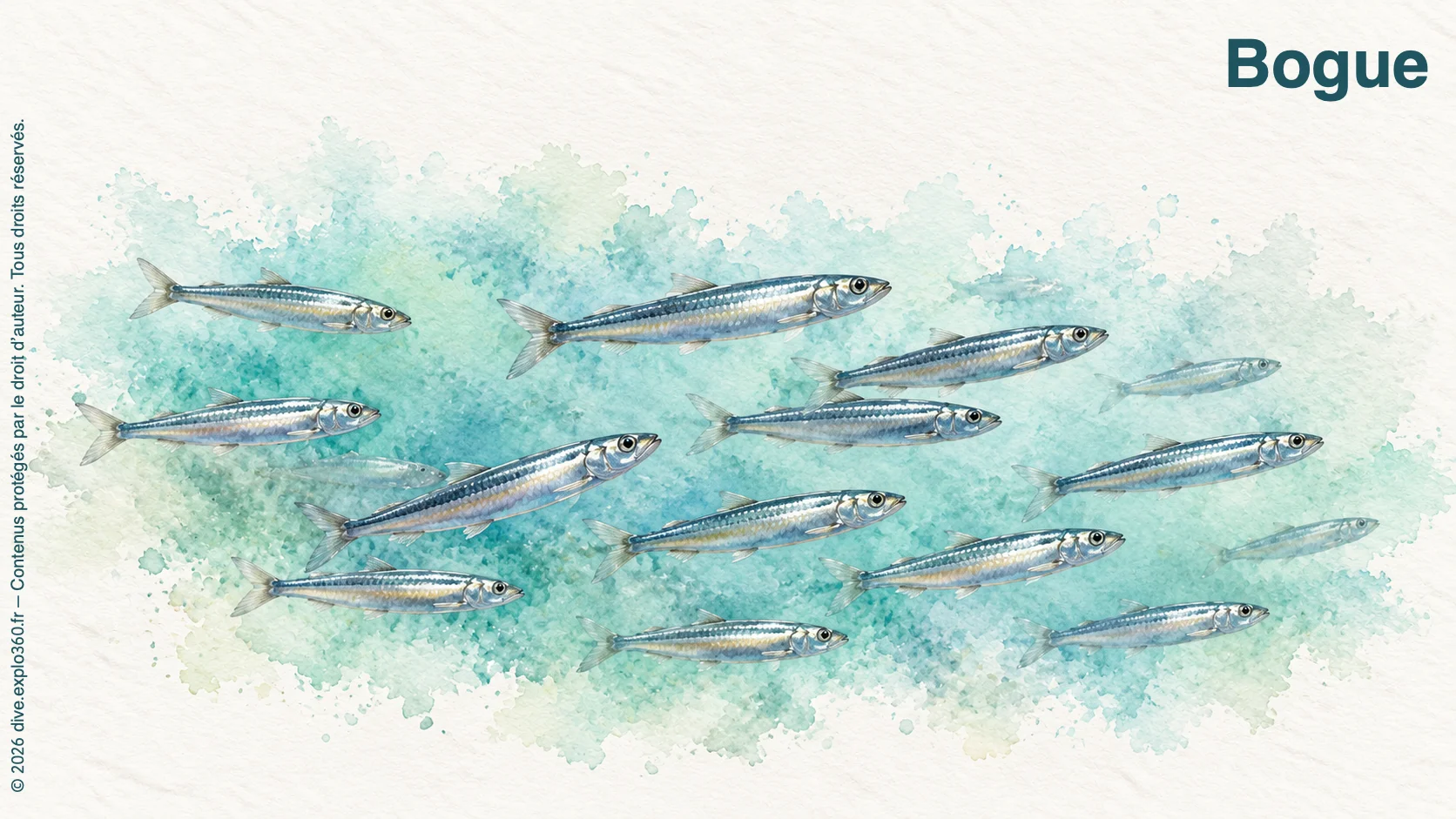
The green or blue back and silver flanks outline the European pilchard (Sardina pilchardus), often around twenty centimetres long. A single dorsal fin, on the back, begins slightly ahead of the belly fins. The streaked operculum, the gill cover, and the last two elongated rays of the fin beneath the rear body add to its features.
WHERE DOES IT LIVE?
The range includes the northeastern Atlantic, Mediterranean and Black Sea. Open-water movements connect coastal and offshore settings. It lives down to about a hundred metres and may change depth during the day.
WHAT DOES IT EAT?
In water containing small food particles, the European sardine can swim with its mouth open and filter plankton. With larger prey, it can switch to individual captures. Its menu includes copepods and other planktonic animals, with a variable phytoplankton contribution. Field studies also show that the most numerous prey do not necessarily supply the most nutritional material: their size affects that contribution.
GO FURTHER WITH AMIGANSEAU
Unlock the full profile
Deepen your knowledge with the exclusive chapters and interactive resources included in an AMIGANSEAU licence.
Subscribing to Dive.Explo360 means supporting a different way to discover marine life.
Our independent platform is entirely self-funded and relies solely on subscriptions. Every licence helps us continue our work, create new content, and share what we know about the marine world with as many people as possible.
Starting at €80 per year, your support makes all the difference.
 Understand the species