Habitat
 Depth
 Group
 Role
 Size
WHAT DOES IT LOOK LIKE?
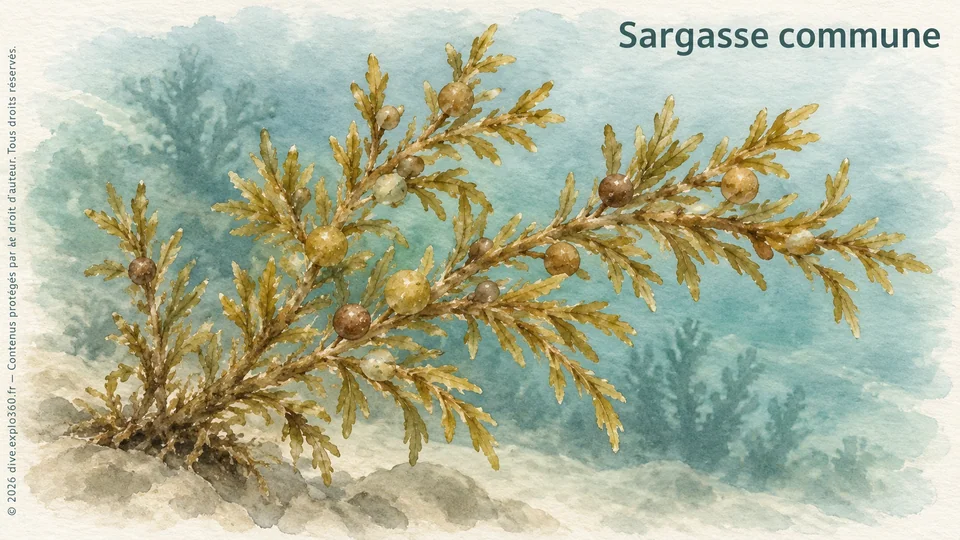
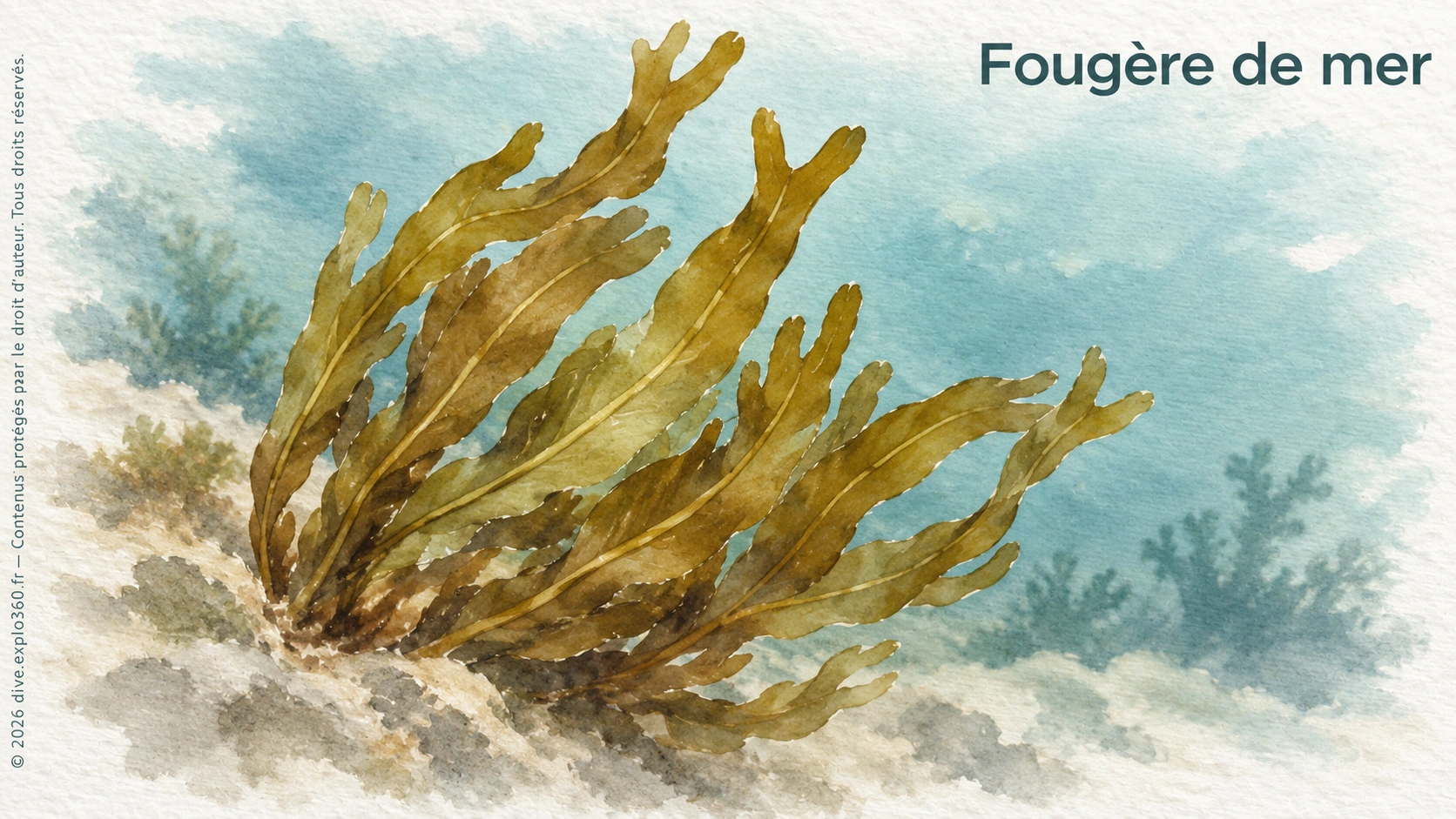
Little hollow bladders, called aerocysts, mingle with the blades of common sargassum (Sargassum vulgare). The brown tuft recalls a little shrub. Each blade has a central rib, with wavy or toothed edges; a short axis and disc-shaped base bring the branches together.
WHERE DOES IT LIVE?
It attaches to Mediterranean rocks and hard surfaces. French records notably include Corsica. It is not uniformly distributed along the entire coast.
Upright parts can vary while the base persists. Branches provide surfaces and relief for other organisms, best described at community scale.
WHAT DOES IT EAT?
Light is common sargassum’s energy source. Pigments in its blades enable photosynthesis, incorporating dissolved carbon into organic molecules. This provides sugars for the alga’s activities and tissue production. It also absorbs mineral nutrients from the surrounding water. Its production combines energy captured by pigments with substances available in seawater.
GO FURTHER WITH AMIGANSEAU
Unlock the full profile
Deepen your knowledge with the exclusive chapters and interactive resources included in an AMIGANSEAU licence.
- HOW DOES IT REPRODUCE?
- OUR OBSERVATIONS
- ARTICLE
Also included in the full profile
- Advanced navigation between description, ecological context, observations and behaviour
- Interactive food chain to explore the species’ feeding relationships
 Understand the species