Habitat
 Depth
 Group
 Role
 Average size
WHAT DOES IT LOOK LIKE?
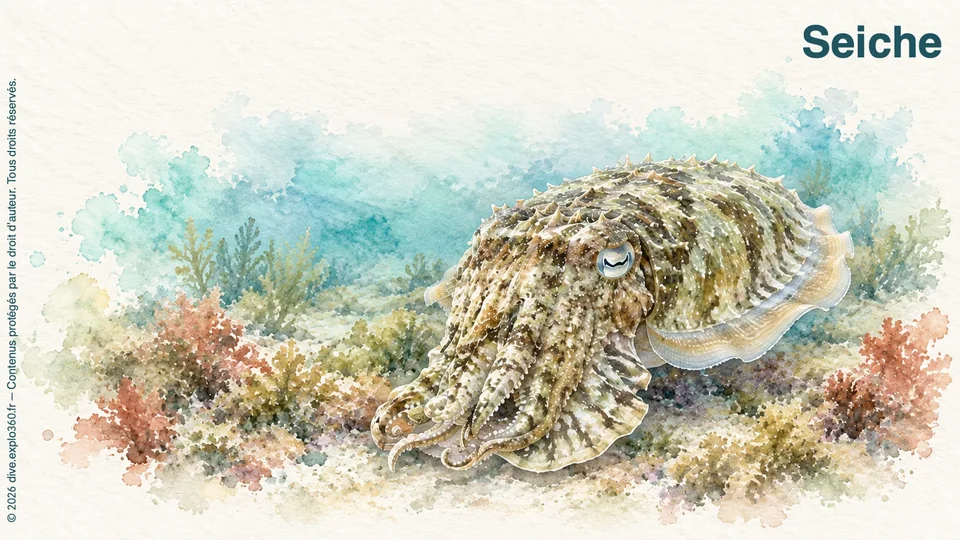
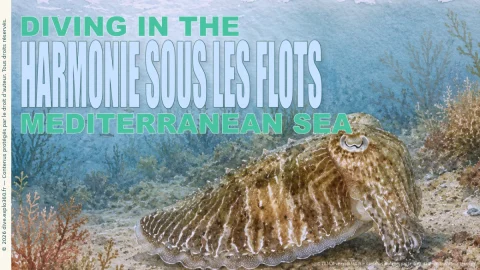
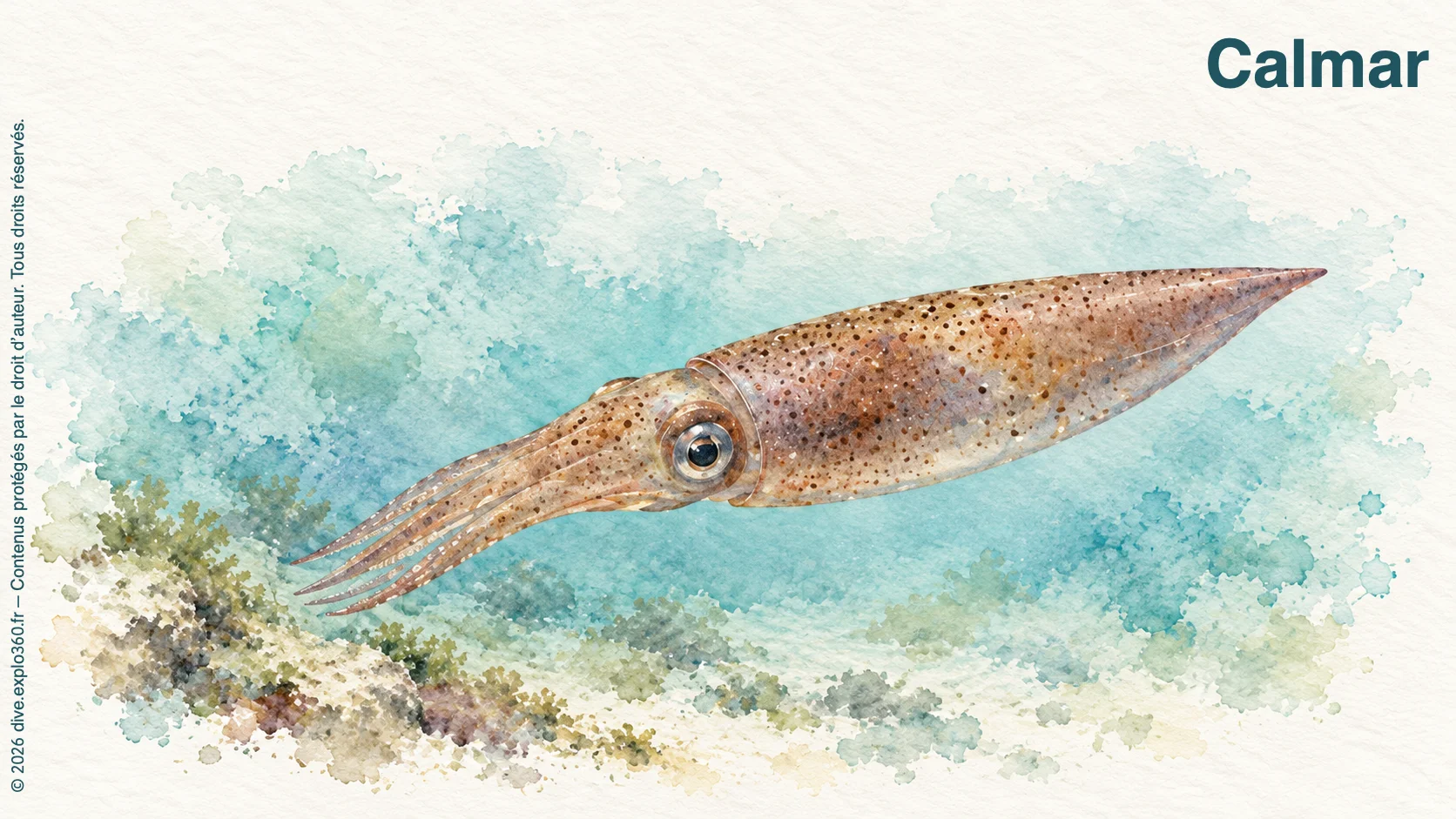
A rippling fin skirt borders the broad, flattened body of the common cuttlefish (Sepia officinalis). The head carries large eyes with W-shaped pupils and eight short arms lined with suckers.
Two longer tentacles end in expanded tips but usually remain hidden. Mottling, shades and skin texture can change quickly, while body and eye shape remain steadier features than colouring.
WHERE DOES IT LIVE?
It frequents coastal areas, on sandy or muddy seabeds or among seagrass and algae. It can also partly bury itself in sand to conceal itself.
WHAT DOES IT EAT?
The common cuttlefish can approach a shrimp or wait until prey is within range before projecting its two feeding tentacles. The catch returns to the arms, which hold it near the mouth. Salivary secretions help subdue it, and the beak cuts tissues. Fish, crabs, shrimps, gastropods and other cephalopods are eaten. The stages differ in visibility: tentacle extension is sudden but recognisable, whereas processing largely occurs within the arms. A cuttlefish holding prey against its mouth may therefore still be feeding after capture.
GO FURTHER WITH AMIGANSEAU
Unlock the full profile
Deepen your knowledge with the exclusive chapters and interactive resources included in an AMIGANSEAU licence.
- HOW DOES IT REPRODUCE?
- OUR OBSERVATIONS
- ARTICLE
Also included in the full profile
- Advanced navigation between description, ecological context, observations and behaviour
- Interactive food chain to explore the species’ feeding relationships
- Infographic and illustrated summary profile
- Additional photographic observations
 Understand the species