Habitat
 Depth
 Group
 Role
 Size
WHAT DOES IT LOOK LIKE?
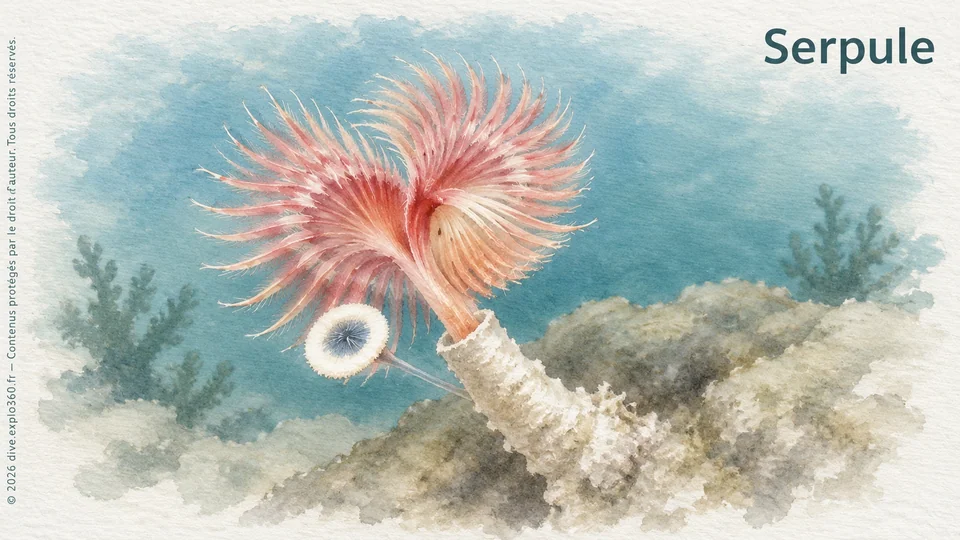
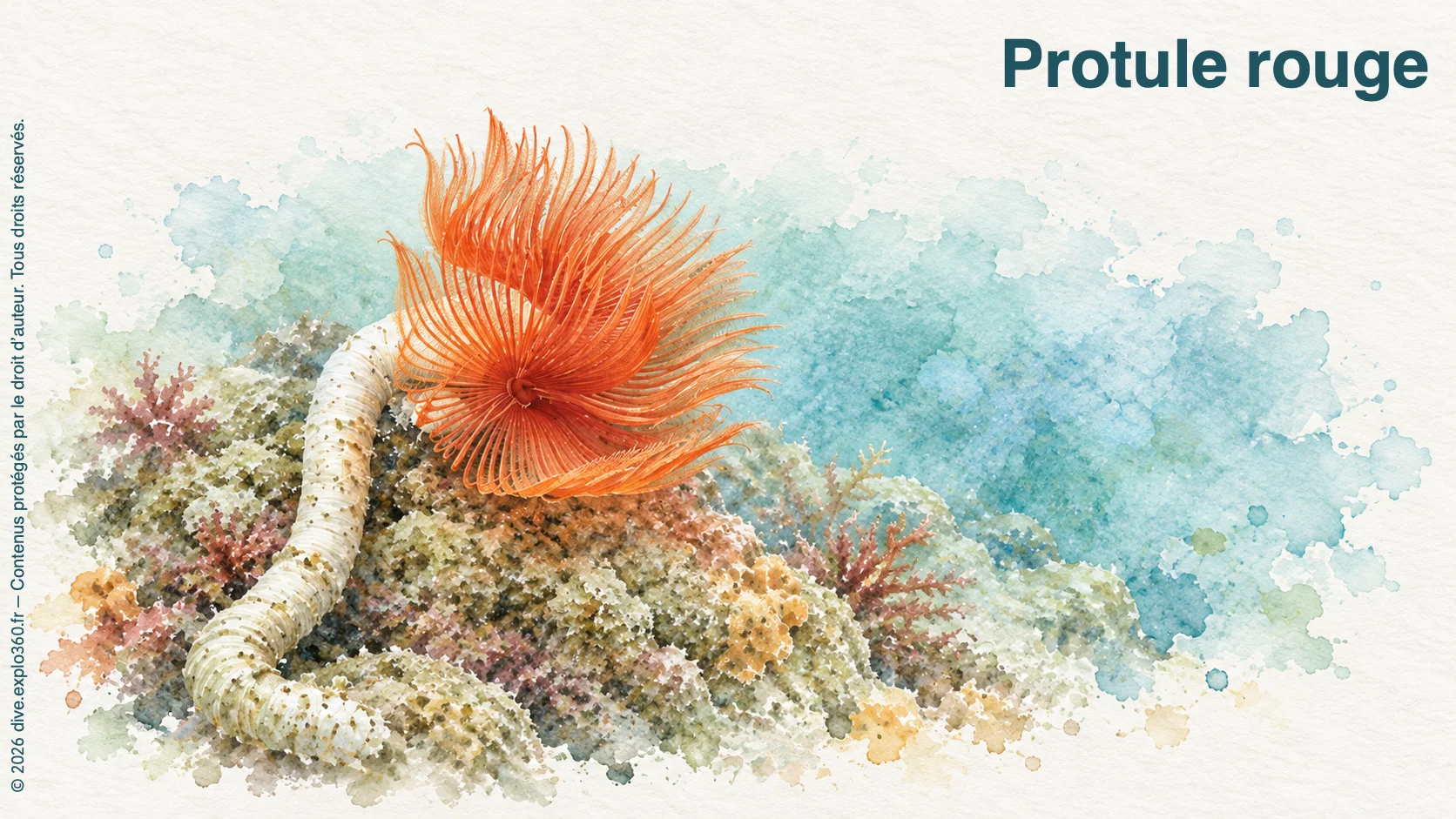
Two lobes make up the crown of the red tube worm (Serpula vermicularis), with varying red, pink and pale colours. A neighbouring filament carries an operculum, the plug that seals the tube when the worm withdraws. The white to pinkish limestone tube is usually attached along part of its length.
WHERE DOES IT LIVE?
It lives on hard surfaces, notably rocks and shells, in French Mediterranean habitats. It can be observed beneath overhangs or in shade, where other organisms may partly cover the tube.
An overgrown tube is not necessarily empty. The opening and fan emergence reveal activity without intervention.
WHAT DOES IT EAT?
The red tubeworm’s crown encounters food in water while the body remains within its calcareous tube. Feathery filaments provide a sticky mucus surface helping retain microorganisms and particles, then convey food to the mouth. Organic detritus may be important, though catches are less finely described than the collection apparatus. An exposed crown allows collection; withdrawal interrupts it.
GO FURTHER WITH AMIGANSEAU
Unlock the full profile
Deepen your knowledge with the exclusive chapters and interactive resources included in an AMIGANSEAU licence.
Subscribing to Dive.Explo360 means supporting a different way to discover marine life.
Our independent platform is entirely self-funded and relies solely on subscriptions. Every licence helps us continue our work, create new content, and share what we know about the marine world with as many people as possible.
Starting at €80 per year, your support makes all the difference.
 Understand the species