Partners and information

Contact us

Verification code

European thorny oyster

Distribution : Mediterranean

In 1885, the publication of a hoard discovered at Bernburg, Germany, drew attention to an unexpected material: the shell of a Mediterranean mollusc. The spiny oyster gradually became an important source of evidence for prehistoric exchange networks. Its ornaments have been found in regions where the living animal could never have occurred.

Images being acquired · Your video or photos here

Habitat of European thorny oyster Habitat
Rocky habitat, Coralligenous habitat, Wreck
Depth range of European thorny oyster Depth
3-50 m
Biological group of European thorny oyster Group
Ecological role of European thorny oyster Role
Filter feeder

Size

6–12.5 cm; up to 13.5 cm

WHAT DOES IT LOOK LIKE?

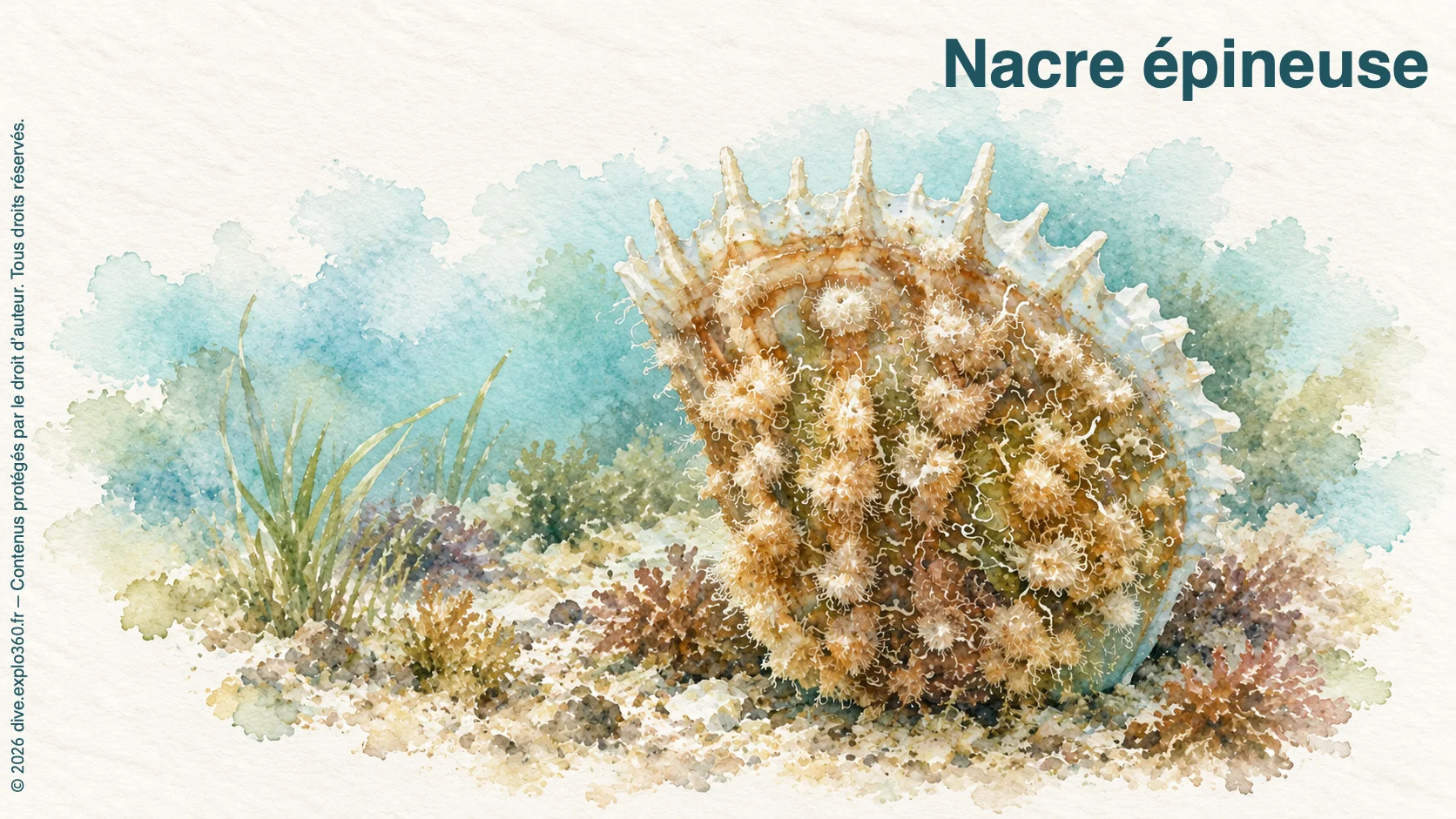
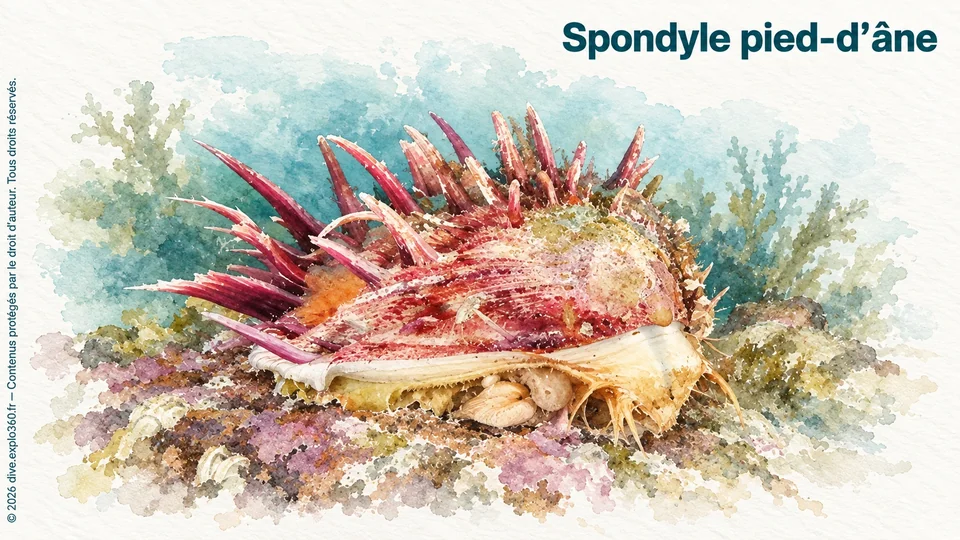
The European thorny oyster (Spondylus gaederopus) has two unequal valves: the shell parts differ in volume. The deep right valve is cemented to the surface, while the left forms a movable lid. The purple to violet upper side bears ribs, radiating ridges, with long, short or poorly developed spines.

GO FURTHER WITH AMIGANSEAU

Unlock the full profile

Deepen your knowledge with the exclusive chapters and interactive resources included in an AMIGANSEAU licence.

Choose my licence
  • WHERE DOES IT LIVE?
  • WHAT DOES IT EAT?
  • HOW DOES IT REPRODUCE?
  • ARTICLE

Also included in the full profile

  • Advanced navigation between description, ecological context, observations and behaviour
  • Interactive food chain to explore the species’ feeding relationships
An active licence gives access to enriched profiles and AMIGANSEAU exploration tools.
European thorny oyster

Understand the species

What is this species’ ecological role?

AMIGANSEAU Explorer Premium

Access enriched species profiles with advanced content (audio, infographics and detailed articles).

Explore all species easily through a single interface.

Enjoy a smooth, fast learning experience suited to every level.

🔒 The full profile is available with a paid subscription only.

Discover licences

POURSUIVRE L’EXPLORATION

Explore further

ArticleTHE SECRETS OF SHIPWRECKSRead the article →ArticleTHE SECRETS OF CORALLIGENOUS HABITATSRead the article →ArticleWhat marine animals do and why it mattersRead the article →