Partners and information

Contact us

Verification code

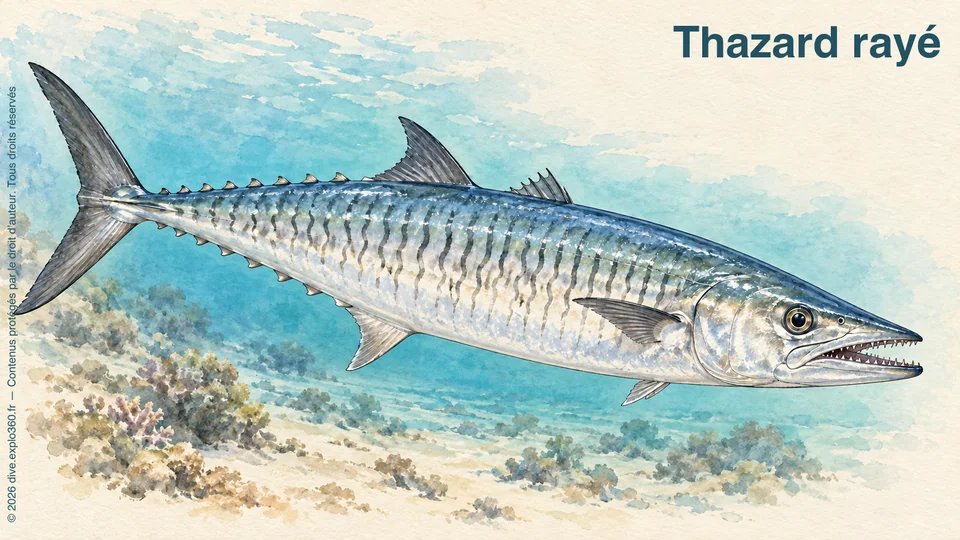
Narrow-barred Spanish mackerel

Distribution : Red Sea and Indian Ocean, including the Maldives, to the western Pacific; also in the eastern Mediterranean.

At fish markets in the United Arab Emirates, you may hear a name quite different from “narrow-barred Spanish mackerel”: kanad. That is what people in the region call this large fish. Fishermen know it well, but why is it such an important part of their catch?

Images being acquired · Your video or photos here

Habitat of Narrow-barred Spanish mackerel Habitat
Open water
Depth range of Narrow-barred Spanish mackerel Depth
10-200 m
Biological group of Narrow-barred Spanish mackerel Group
Ecological role of Narrow-barred Spanish mackerel Role
Predator

Size

Up to 240 cm, from snout to tail fork

Good to know

Observe without touching or feeding animals and keep clear of the coral.

WHAT DOES IT LOOK LIKE?

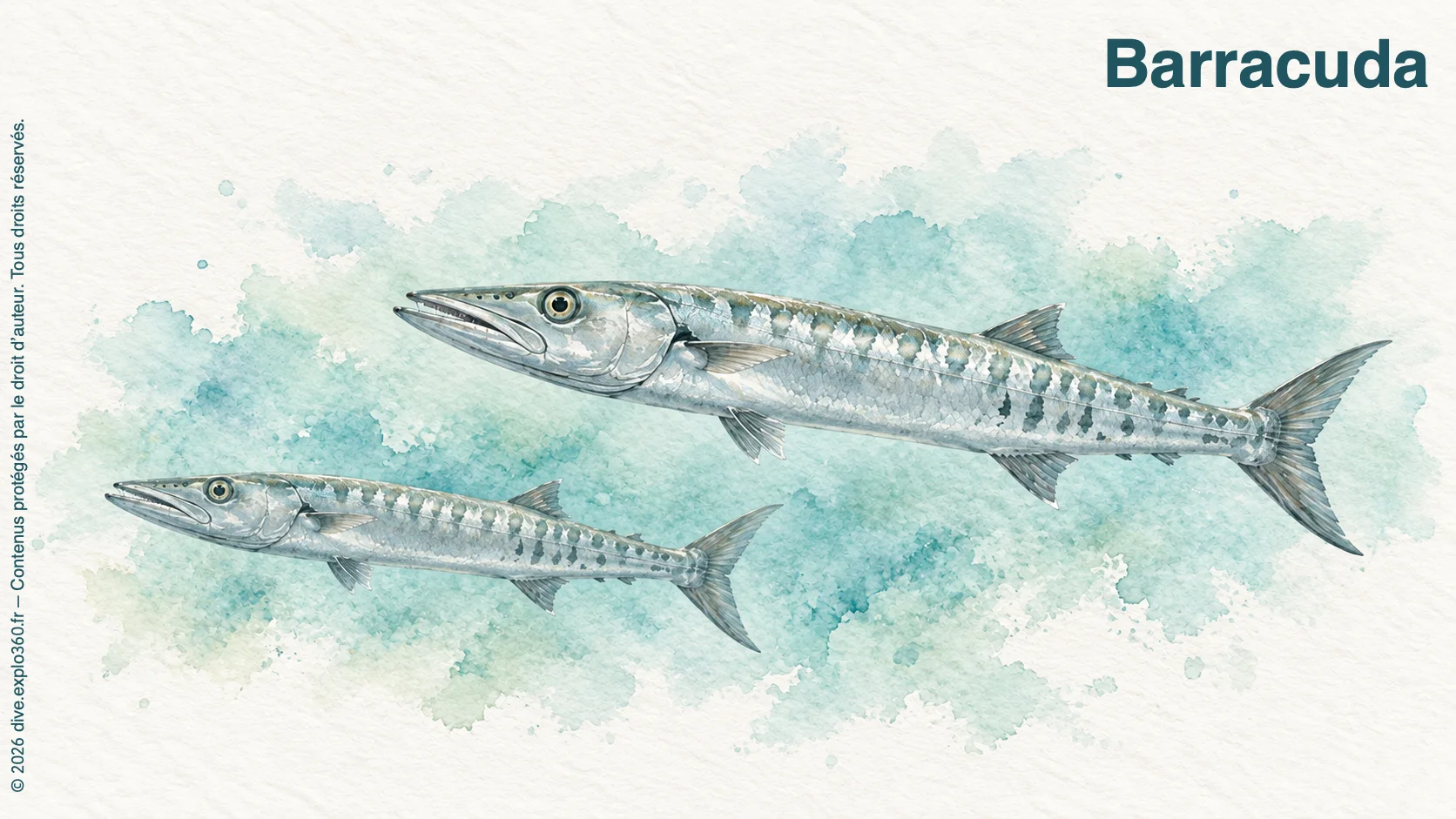
The narrow-barred Spanish mackerel has a long silver body barred with fine dark lines, often wavy. Its back is blue-grey and its tail deeply forked. Its mouth carries pointed teeth.

GO FURTHER WITH AMIGANSEAU

Unlock the full profile

Deepen your knowledge with the exclusive chapters and interactive resources included in an AMIGANSEAU licence.

Choose my licence
  • WHERE DOES IT LIVE?
  • WHAT DOES IT EAT?

Also included in the full profile

  • Advanced navigation between description, ecological context, observations and behaviour
  • Interactive food chain to explore the species’ feeding relationships
An active licence gives access to enriched profiles and AMIGANSEAU exploration tools.
Narrow-barred Spanish mackerel

Understand the species

What is this species’ ecological role?

AMIGANSEAU Explorer Premium

Access enriched species profiles with advanced content (audio, infographics and detailed articles).

Explore all species easily through a single interface.

Enjoy a smooth, fast learning experience suited to every level.

🔒 The full profile is available with a paid subscription only.

Discover licences

POURSUIVRE L’EXPLORATION

Explore further

ArticleSCHOOLS OF FISHRead the article →ArticleWhat marine animals do and why it mattersRead the article →