Partners and information

Contact us

Verification code

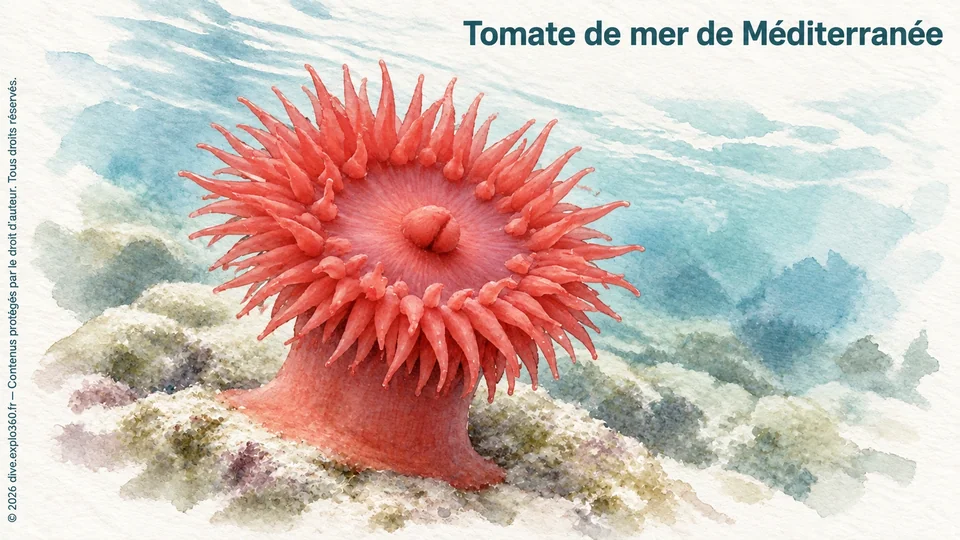
Mediterranean beadlet anemone

Distribution : Mediterranean

On Grand Ribaud, an island near Hyères, tanks were used to keep marine animals alive for experiments conducted by Charles Richet and Paul Portier. In 1901, the researchers used Mediterranean beadlet anemones to investigate the effects of substances extracted from their tentacles. Repeated injections of these extracts into laboratory animals produced a severe and unexpected reaction, contributing to the identification of anaphylaxis. Published in 1902, this research eventually earned Richet the 1913 Nobel Prize in Physiology or Medicine.

Images being acquired · Your video or photos here

Habitat of Mediterranean beadlet anemone Habitat
Rocky habitat
Depth range of Mediterranean beadlet anemone Depth
0-2 m
Biological group of Mediterranean beadlet anemone Group
Ecological role of Mediterranean beadlet anemone Role
Predator

Size

Column about 5–7 cm across

WHAT DOES IT LOOK LIKE?

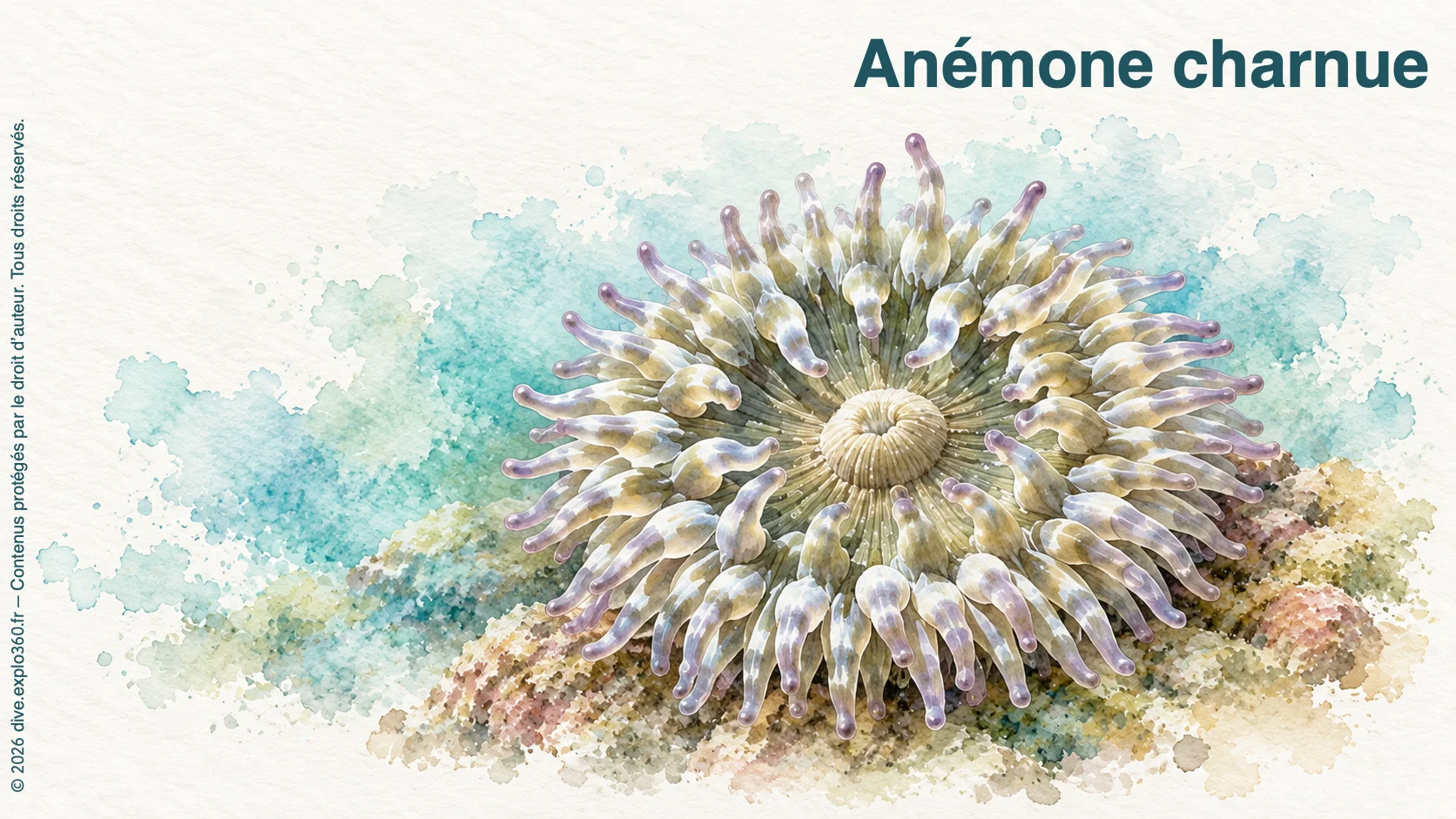
The contrast between red and a fine blue base margin often highlights this Mediterranean beadlet anemone (Actinia mediterranea). Its smooth column, the upright body section, carries an oral disc, the mouth surface, edged with tentacles. When these withdraw completely, the outline closes into a rounded tomato-like mass.

WHERE DOES IT LIVE?

It attaches to rocks, breakwaters and quay walls near the surface and in the first few metres. Changes in sea level can expose it, even in the Mediterranean where tides are smaller than on some Atlantic coasts.

Closing limits the exposed surface, while mucus helps retain water. The base also allows slow movement.

WHAT DOES IT EAT?

A Mediterranean beadlet anemone meal begins when food contacts expanded tentacles. Capture is chiefly nocturnal and includes planktonic animals, other invertebrates and small fishes, alongside animal fragments. Stinging cells help immobilise prey while tentacles bring it to the central mouth. Food enters the digestive cavity, and unassimilated material later leaves through the same opening rather than a separate anus.

GO FURTHER WITH AMIGANSEAU

Unlock the full profile

Deepen your knowledge with the exclusive chapters and interactive resources included in an AMIGANSEAU licence.

Choose my licence
  • HOW DOES IT REPRODUCE?
  • OUR OBSERVATIONS
  • ARTICLE

Also included in the full profile

  • Advanced navigation between description, ecological context, observations and behaviour
  • Interactive food chain to explore the species’ feeding relationships
An active licence gives access to enriched profiles and AMIGANSEAU exploration tools.
Mediterranean beadlet anemone

Understand the species

What is this species’ ecological role?

AMIGANSEAU Explorer Premium

Access enriched species profiles with advanced content (audio, infographics and detailed articles).

Explore all species easily through a single interface.

Enjoy a smooth, fast learning experience suited to every level.

🔒 The full profile is available with a paid subscription only.

Discover licences

POURSUIVRE L’EXPLORATION

Explore further

ArticleWhat marine animals do and why it mattersRead the article →ArticlePHYLA WITHOUT THE FUSSRead the article →