Partners and information

Contact us

Verification code

Mangrove red snapper

Distribution : Red Sea, Indian Ocean and tropical Pacific, including the Maldives. Also introduced to the Mediterranean, with records as far as Malta.

The mangrove jack holds a distinctive place in northern Australia. For some Aboriginal peoples, it has totemic significance; among recreational anglers, it is renowned for its strength and its ability to head straight for submerged obstacles when hooked. Both relationships with the fish are documented, but they tell different stories. The Aboriginal traditions concerned are not identified in the public sources consulted: behind the familiar name mangrove jack lie knowledge and meanings that cannot be read from a fish-market stall.

Images being acquired · Your video or photos here

Habitat of Mangrove red snapper Habitat
Coral reef
Depth range of Mangrove red snapper Depth
1-120 m
Biological group of Mangrove red snapper Group
Ecological role of Mangrove red snapper Role
Predator

Size

Up to 1.20 m

Good to know

Observe without touching or feeding animals and keep clear of the coral.

WHAT DOES IT LOOK LIKE?

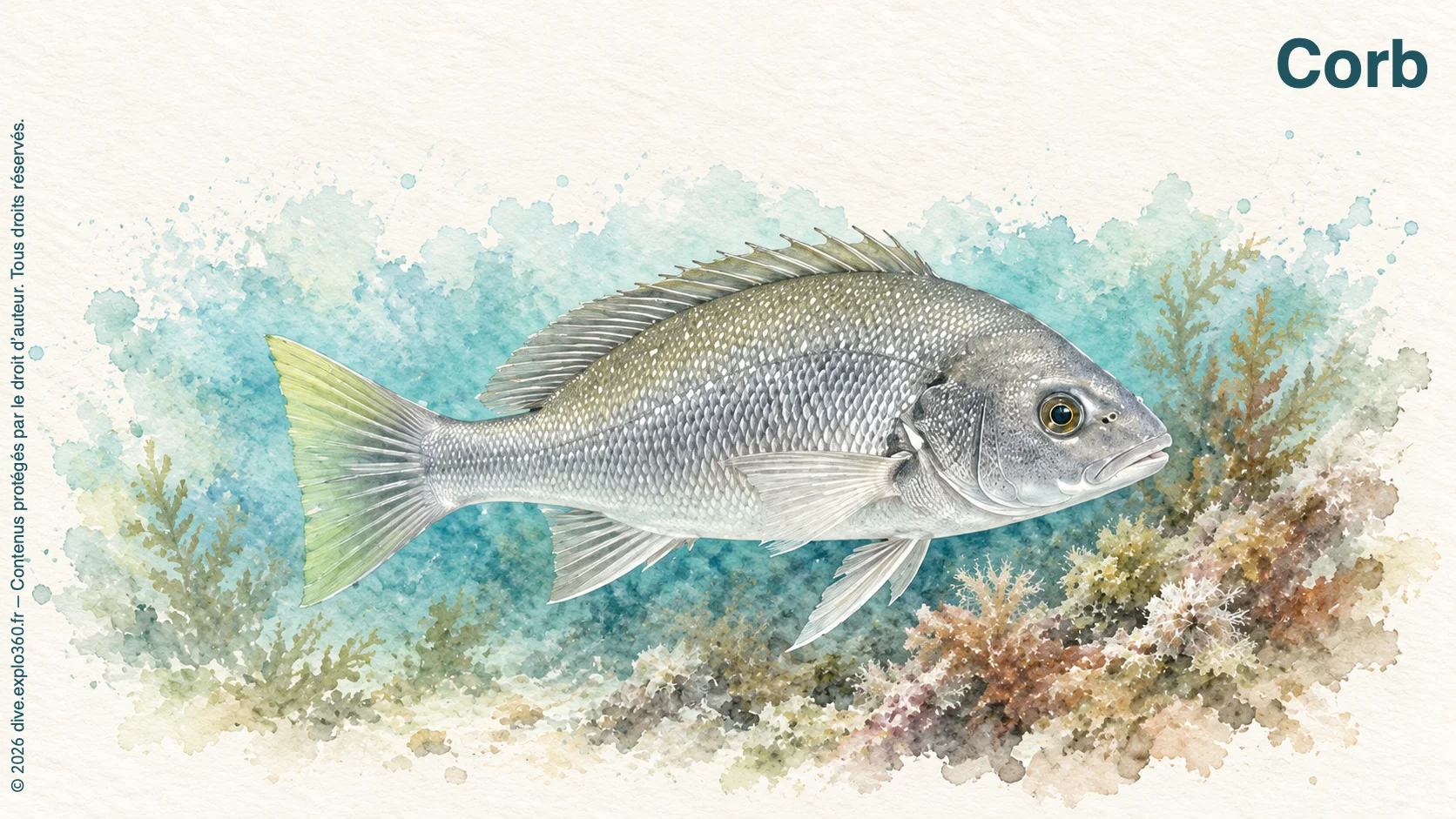
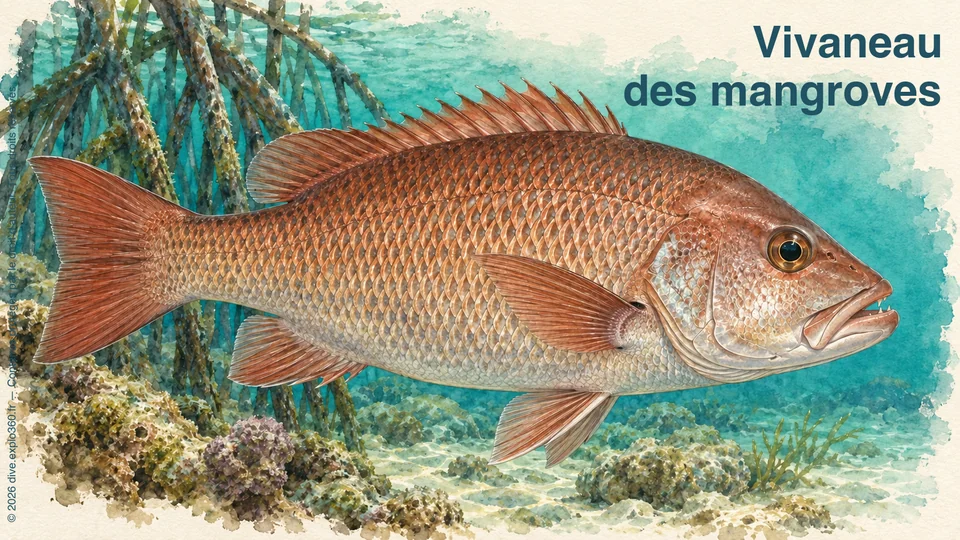
Large mangrove red snappers (Lutjanus argentimaculatus) may become strongly reddish, while young fish show paler bars. Dark-centred scales form diamonds along the flanks. The mouth is large, the tail edge almost straight and the back fin continuous. Length reaches at least 1.20 m.

WHERE DOES IT LIVE?

It lives in warm waters of the Indian and Pacific Oceans, including the Maldives. Young fish inhabit mangroves, estuaries and sometimes lower river reaches. Adults also live around deeper reefs.

Its native range includes the Red Sea. It has also been recorded in the Mediterranean, which it reached from other seas. Adults find shelter beneath ledges and in reef caves. It tolerates different salinities, meaning different amounts of salt in the water. The fish can therefore move from coastal waters mixed with freshwater to marine reefs, where adults are known down to 120 m.

WHAT DOES IT EAT?

After nightfall, the mangrove red snapper seeks fish and crustaceans. Crabs and shrimps feature in its menu. Prey are caught around the seabed and shelters in the coastal and reef habitats used by this predator.

GO FURTHER WITH AMIGANSEAU

Unlock the full profile

Deepen your knowledge with the exclusive chapters and interactive resources included in an AMIGANSEAU licence.

Choose my licence
  • HOW DOES IT REPRODUCE?
  • OUR OBSERVATIONS
  • ARTICLE

Also included in the full profile

  • Advanced navigation between description, ecological context, observations and behaviour
  • Interactive food chain to explore the species’ feeding relationships
An active licence gives access to enriched profiles and AMIGANSEAU exploration tools.
Mangrove red snapper

Understand the species

What is this species’ ecological role?

AMIGANSEAU Explorer Premium

Access enriched species profiles with advanced content (audio, infographics and detailed articles).

Explore all species easily through a single interface.

Enjoy a smooth, fast learning experience suited to every level.

🔒 The full profile is available with a paid subscription only.

Discover licences

POURSUIVRE L’EXPLORATION

Explore further

ArticleWHAT IF IT ALL HAPPENED UNDERWATER?Read the article →ArticleWhat marine animals do and why it mattersRead the article →ArticlePHYLA WITHOUT THE FUSSRead the article →