 Habitat
 Depth
 Group
 Role
 Size
WHAT DOES IT LOOK LIKE?
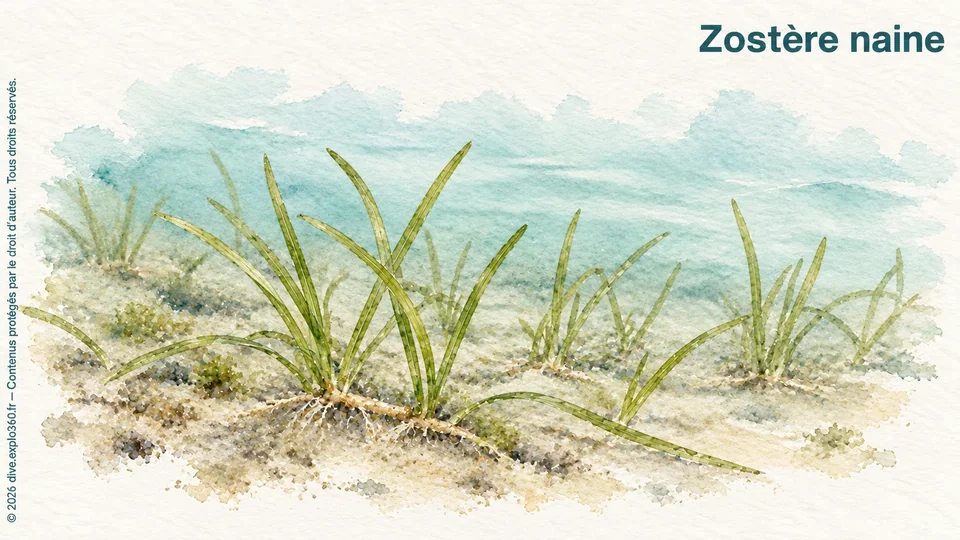
Slender leaves characterise dwarf eelgrass (Zostera noltei): little pale green ribbons around 1 to 1.5 mm wide, up to around twenty centimetres long. Three parallel veins run through them. Smooth edges accompany shoots linked by a rhizome, the creeping stem beneath the ground.
WHERE DOES IT LIVE?
It grows in muddy sand near the coast and in Mediterranean and northeast Atlantic lagoons. It is often found in less than 1.5 metres of water. These shallows let light reach its leaves. The amount of salt in the water, how long the plants remain submerged and the type of sediment also influence where meadows develop.
WHAT DOES IT EAT?
Light powers photosynthetic sugar production in dwarf eelgrass leaves. The plant also absorbs mineral nutrients through two uptake zones: leaves in contact with seawater and roots within sediment. Ammonium, nitrate and phosphate are among studied resources. Carbohydrate reserves can later support its functioning when light is absent.
GO FURTHER WITH AMIGANSEAU
Unlock the full profile
Deepen your knowledge with the exclusive chapters and interactive resources included in an AMIGANSEAU licence.
Subscribing to Dive.Explo360 means supporting a different way to discover marine life.
Our independent platform is entirely self-funded and relies solely on subscriptions. Every licence helps us continue our work, create new content, and share what we know about the marine world with as many people as possible.
Starting at €80 per year, your support makes all the difference.
 Understand the species