Habitat
 Depth
 Group
 Role
WHAT DOES IT LOOK LIKE?
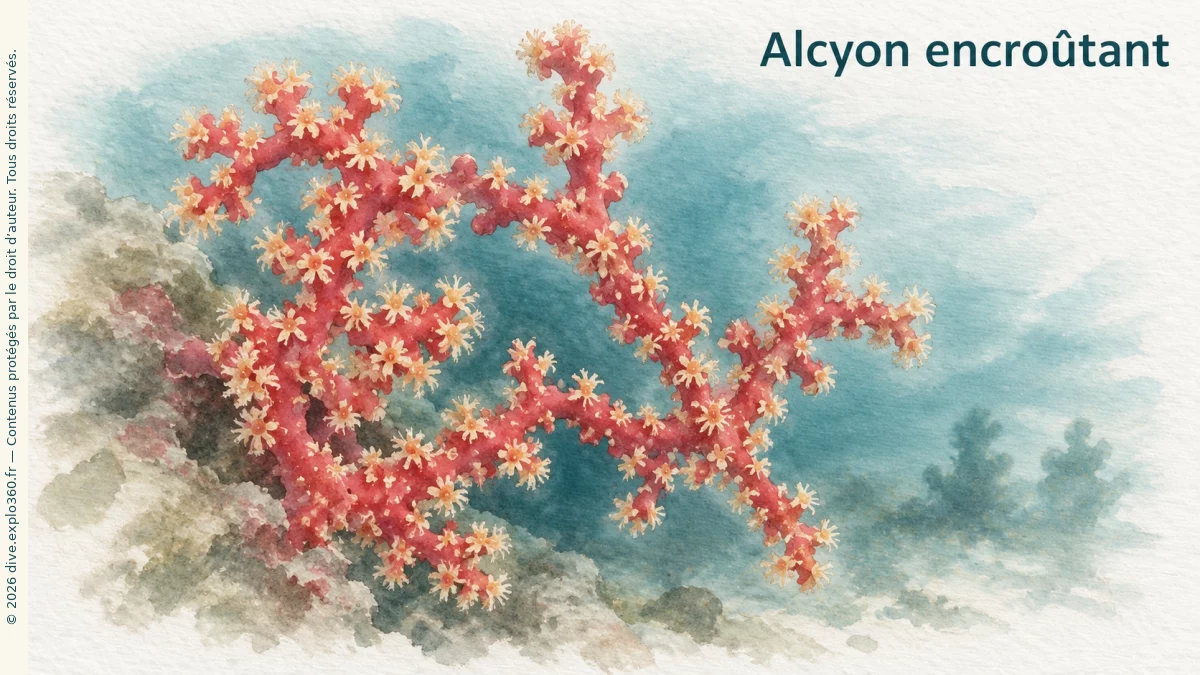
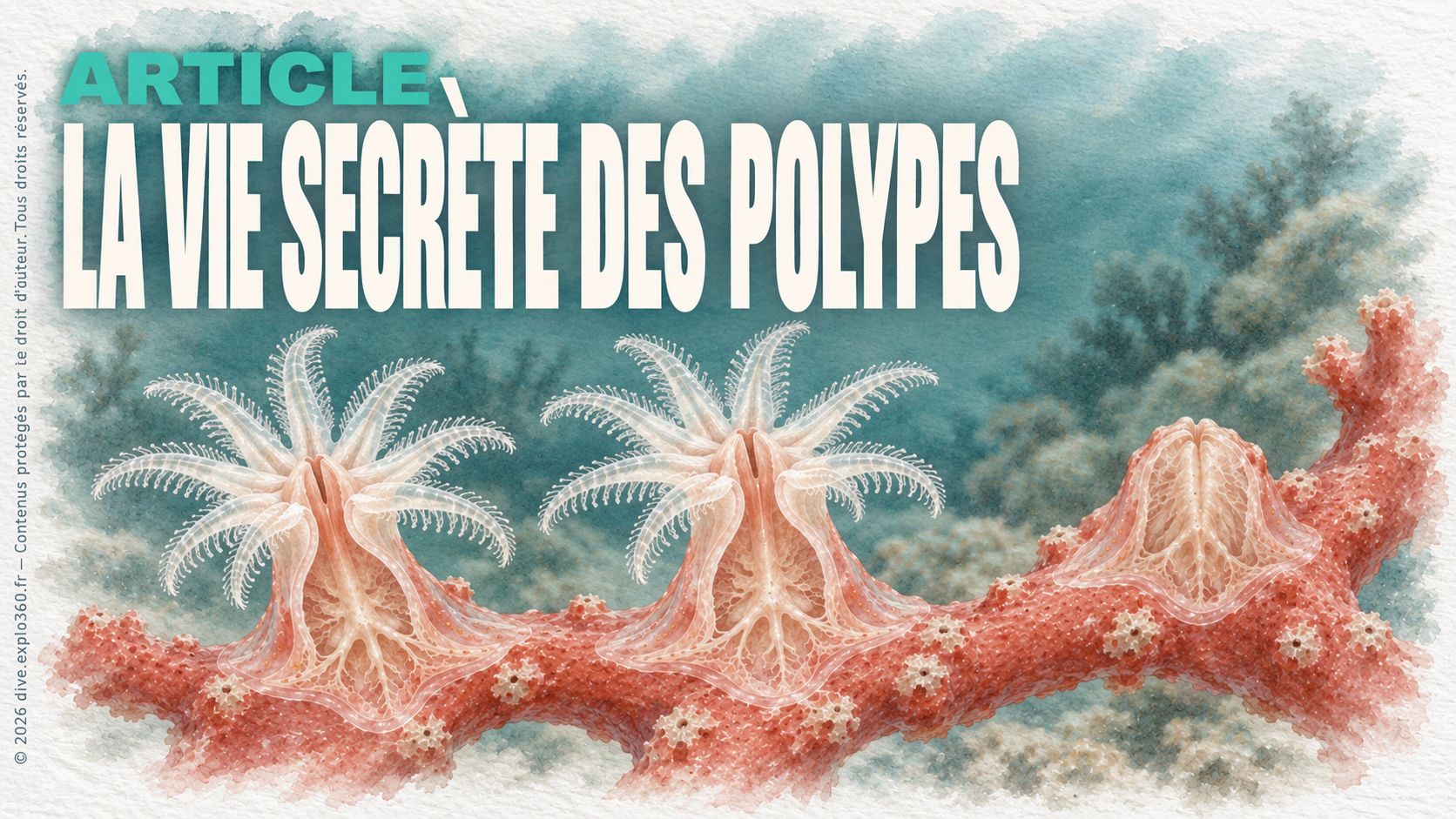
The soft coral forms a fleshy layer often violet-red or pink, sometimes white or yellowish. Polyps, the small connected animals forming the colony, are pale white to yellow and may reach around five millimetres. They protrude irregularly, with some areas lacking polyps.
Each has eight finely branched tentacles. Sclerites, tiny calcareous elements, support the tissues. The large rigid branching framework sometimes shaping its appearance, however, belongs to the overgrown sea fan.
WHERE DOES IT LIVE?
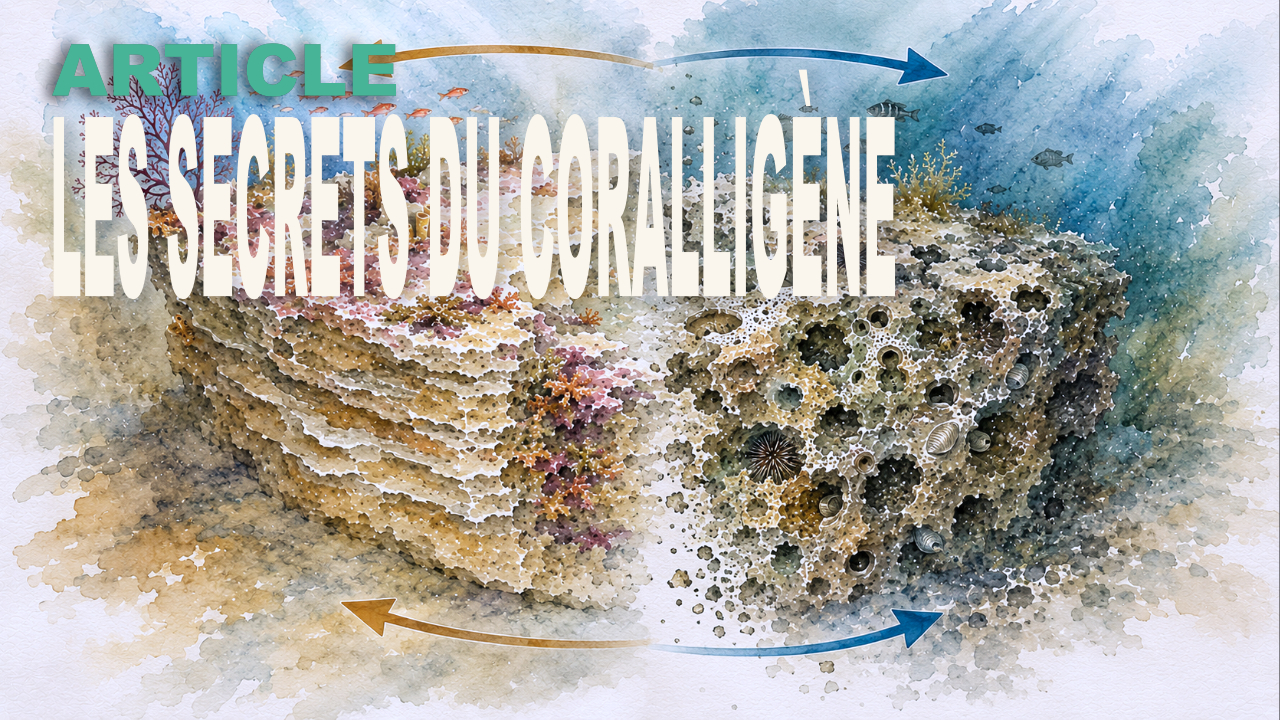
In the Mediterranean it frequently develops on sea fans, notably in rocky and coralligenous habitats. Branches where tissue has disappeared offer settlement sites. Overgrowth may then extend elsewhere on the supporting structure.
Records exist along French coasts, from the Côte Bleue to the Var and Roussillon. It also occurs in the Atlantic, where small forms attached directly to rock are more common. Such regional differences should not obscure a Mediterranean encounter’s description.
WHAT DOES IT EAT?
Polyps use food particles and plankton delivered by water movement. Tentacles catch material and bring it to the mouth. The animal does not necessarily eat its supporting structure like a predator consuming prey.
Its presence on a living organism can nevertheless cause harm through overgrowth and occupation of space. The host relationship and feeding method are therefore separate questions.
GO FURTHER WITH AMIGANSEAU
Unlock the full profile
Deepen your knowledge with the exclusive chapters and interactive resources included in an AMIGANSEAU licence.
- HOW DOES IT REPRODUCE?
- OUR OBSERVATIONS
- ARTICLE
Also included in the full profile
- Advanced navigation between description, ecological context, observations and behaviour
- Interactive food chain to explore the species’ feeding relationships