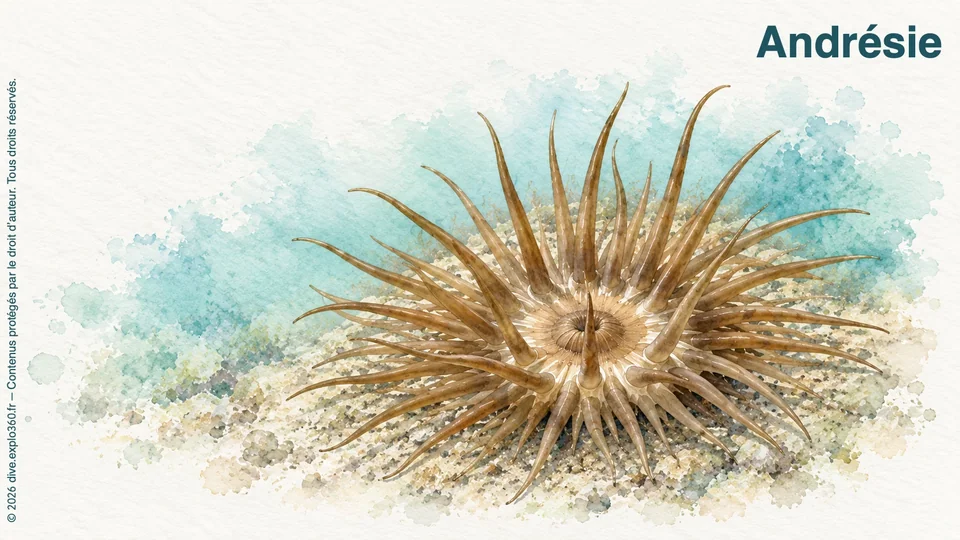
Habitat
 Depth
 Group
 Role
 Average size
WHAT DOES IT LOOK LIKE?
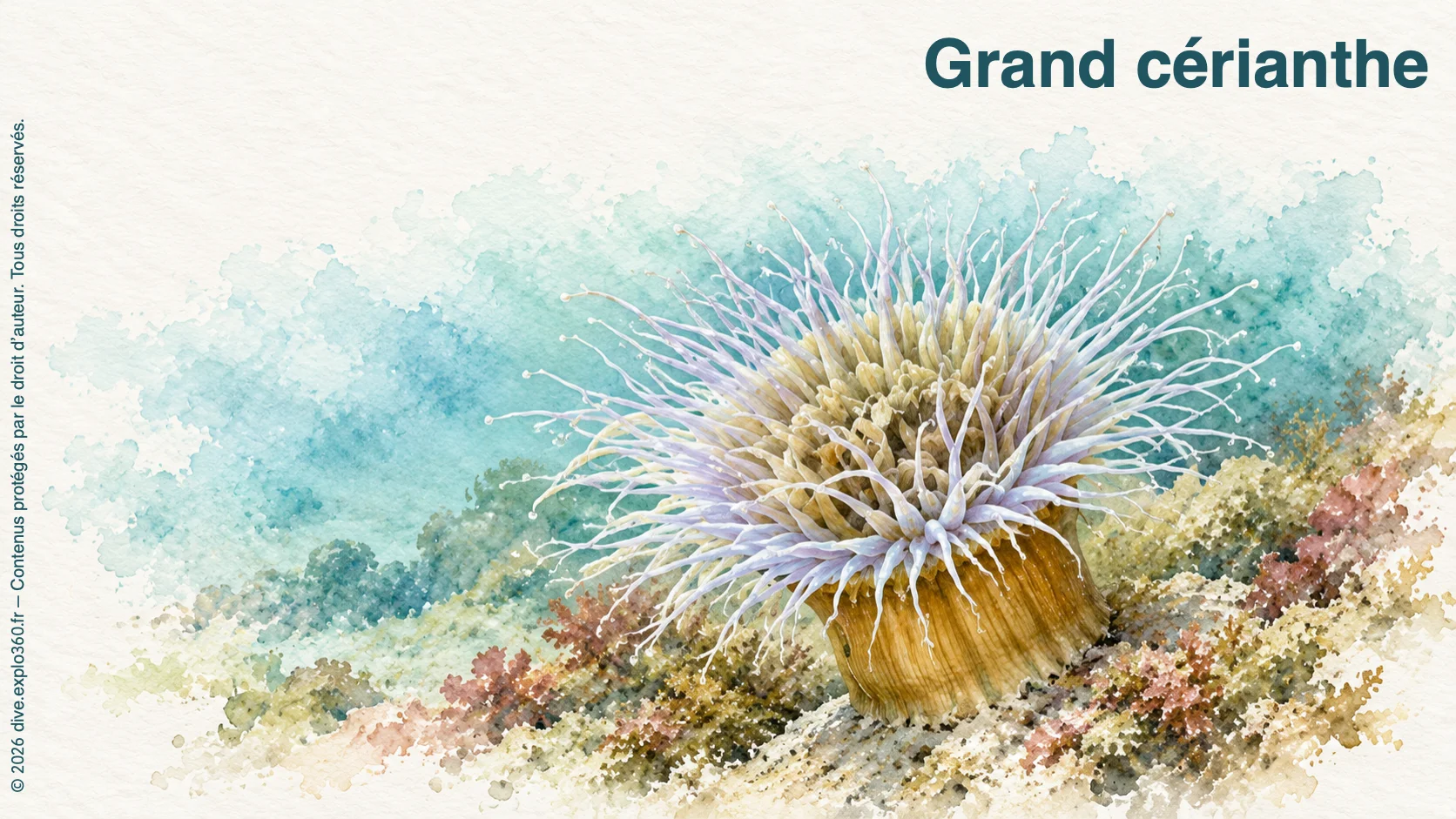
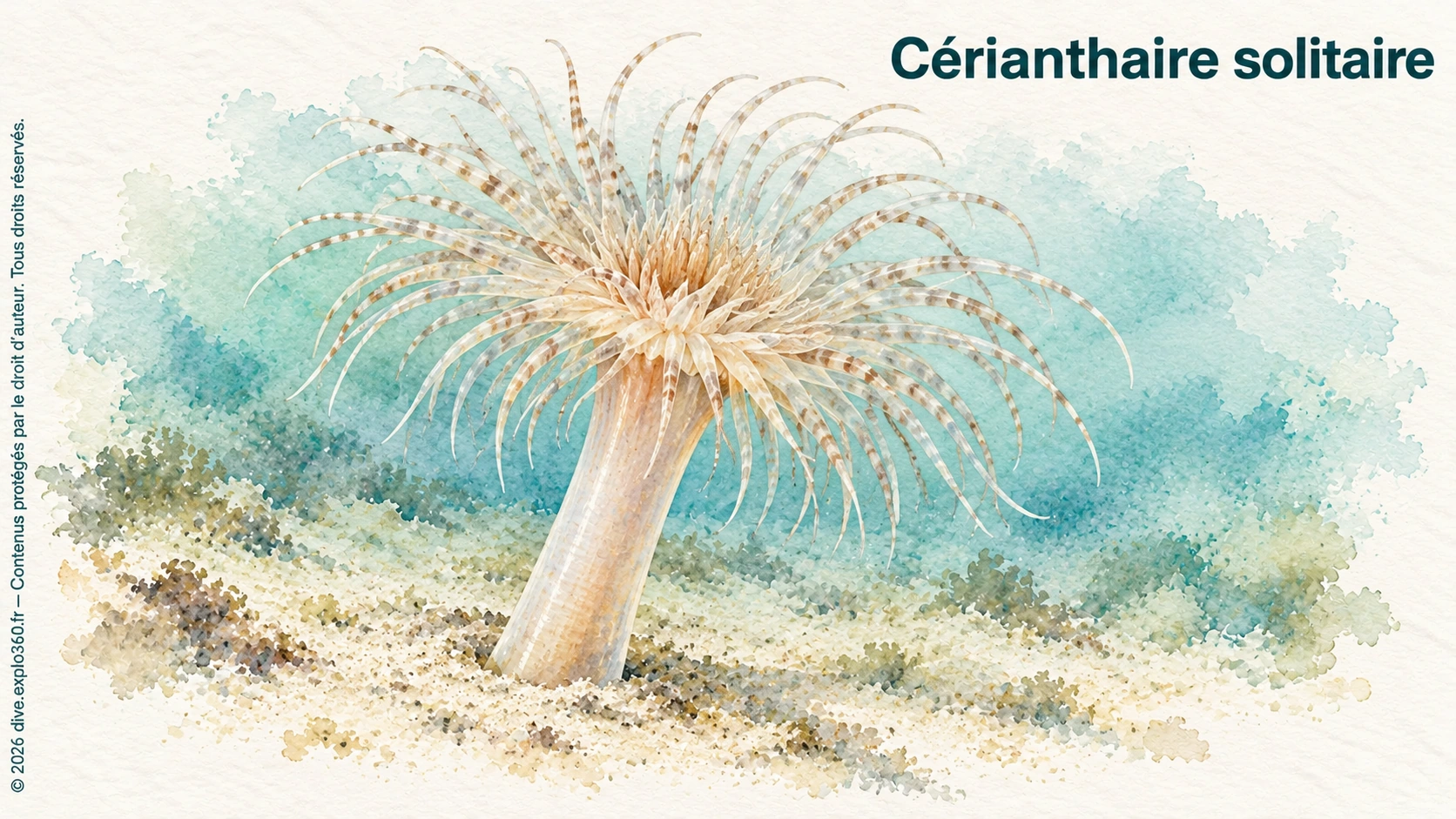
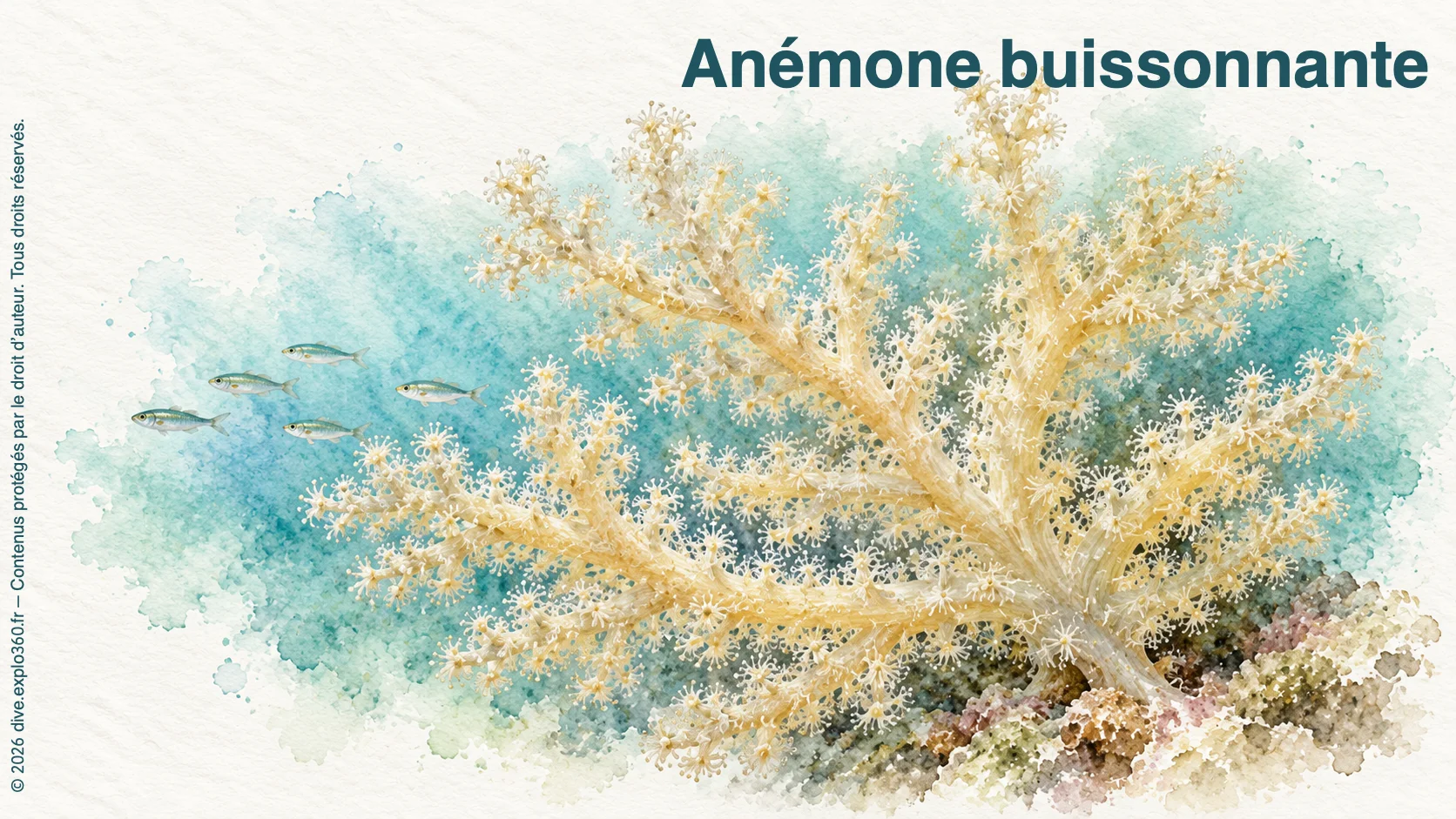
Around the edge of the burrowing anemone (Andresia parthenopea), tentacles spread flat; nearer the centre, they stand upright. Several rings surround the mouth on the oral disc, the anemone’s upper surface.
The body mainly reveals this disc. It may be very pale or brown, while the contrasting tentacle positions add depth to the outline.
WHERE DOES IT LIVE?
Sand and muddy-sand seabeds form the habitat of the burrowing anemone. Its column remains buried directly in sediment, without the protective tube of a tube anemone. It occurs in the Mediterranean and north-east Atlantic from shallow water to several tens of metres.
WHAT DOES IT EAT?
When prey is held by the burrowing anemone’s tentacles, their stinging cells can immobilise it before it is moved towards the central mouth. These stages distinguish an actual capture from an anemone simply holding its tentacles open. Feeding depends on taking animals within reach rather than continuously filtering water.
GO FURTHER WITH AMIGANSEAU
Unlock the full profile
Deepen your knowledge with the exclusive chapters and interactive resources included in an AMIGANSEAU licence.
- HOW DOES IT REPRODUCE?
- OUR OBSERVATIONS
- ARTICLE
Also included in the full profile
- Advanced navigation between description, ecological context, observations and behaviour
- Interactive food chain to explore the species’ feeding relationships
- Natural history podcast and dive debrief
- Infographic and illustrated summary profile
 Understand the species