


 Habitat
 Depth
 Group
 Role
 Average size
 Precautions
WHAT DOES IT LOOK LIKE?
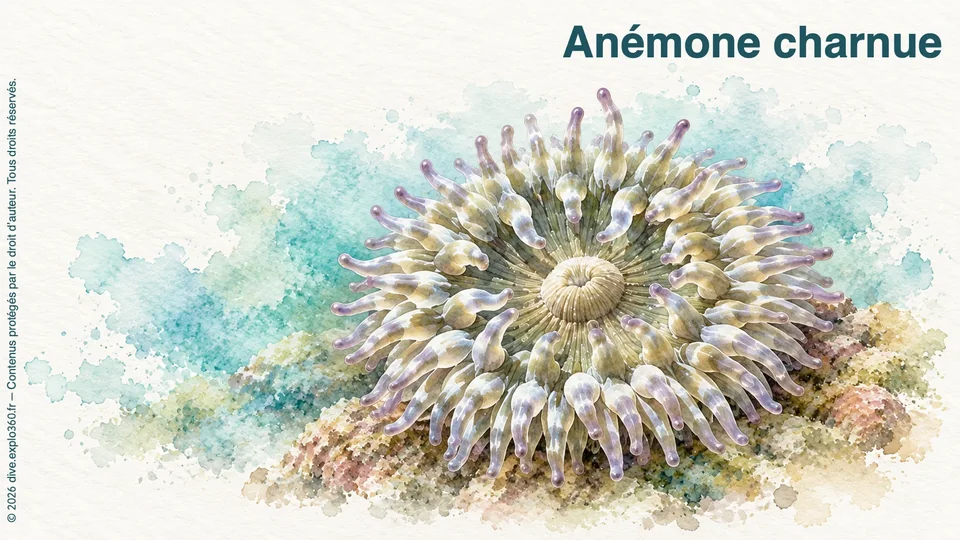
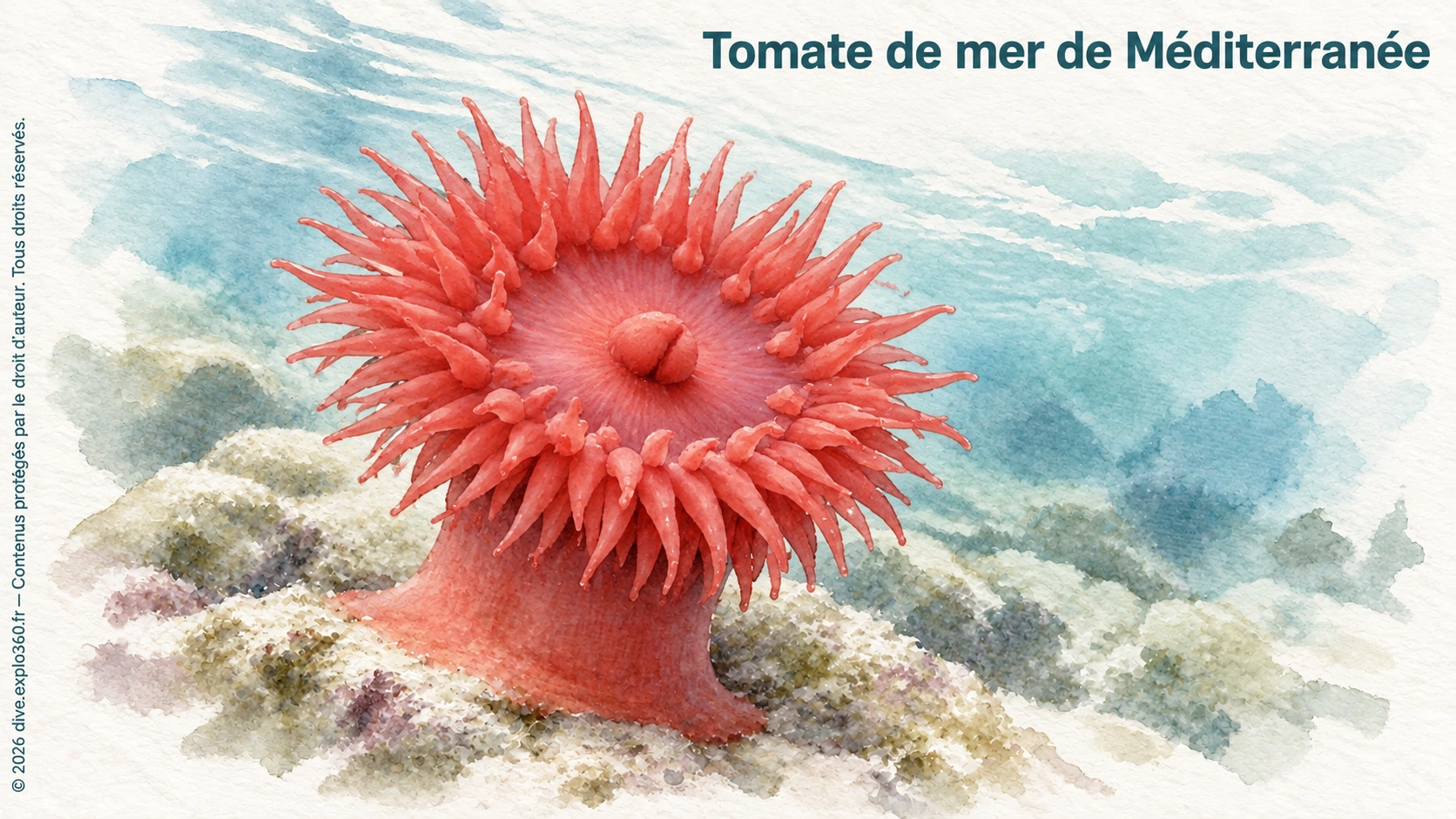
Short, thick tentacles form the compact crown of this dahlia anemone (Cribrinopsis crassa). These flexible extensions surround the oral disc, the central surface bearing the mouth.
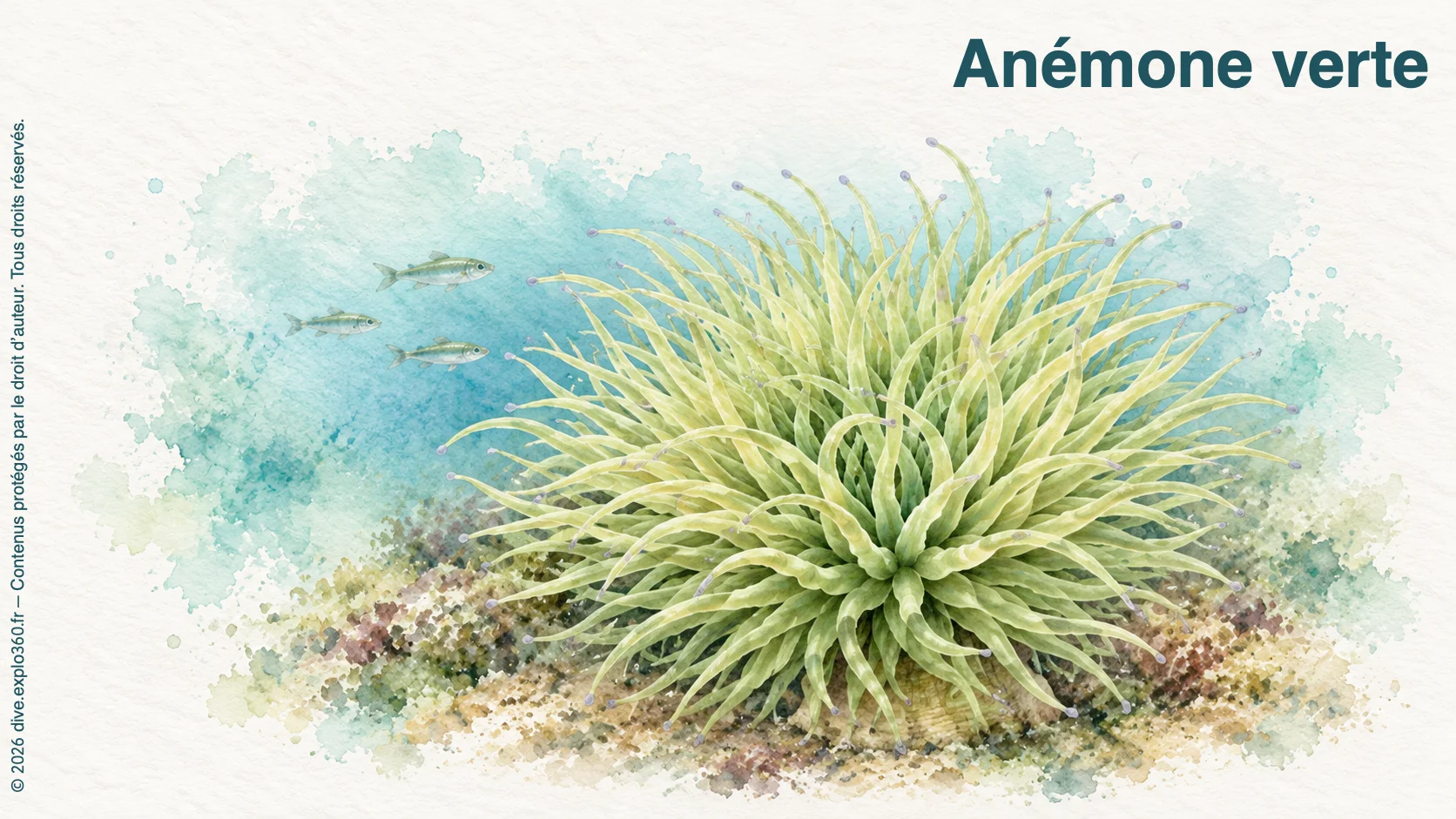
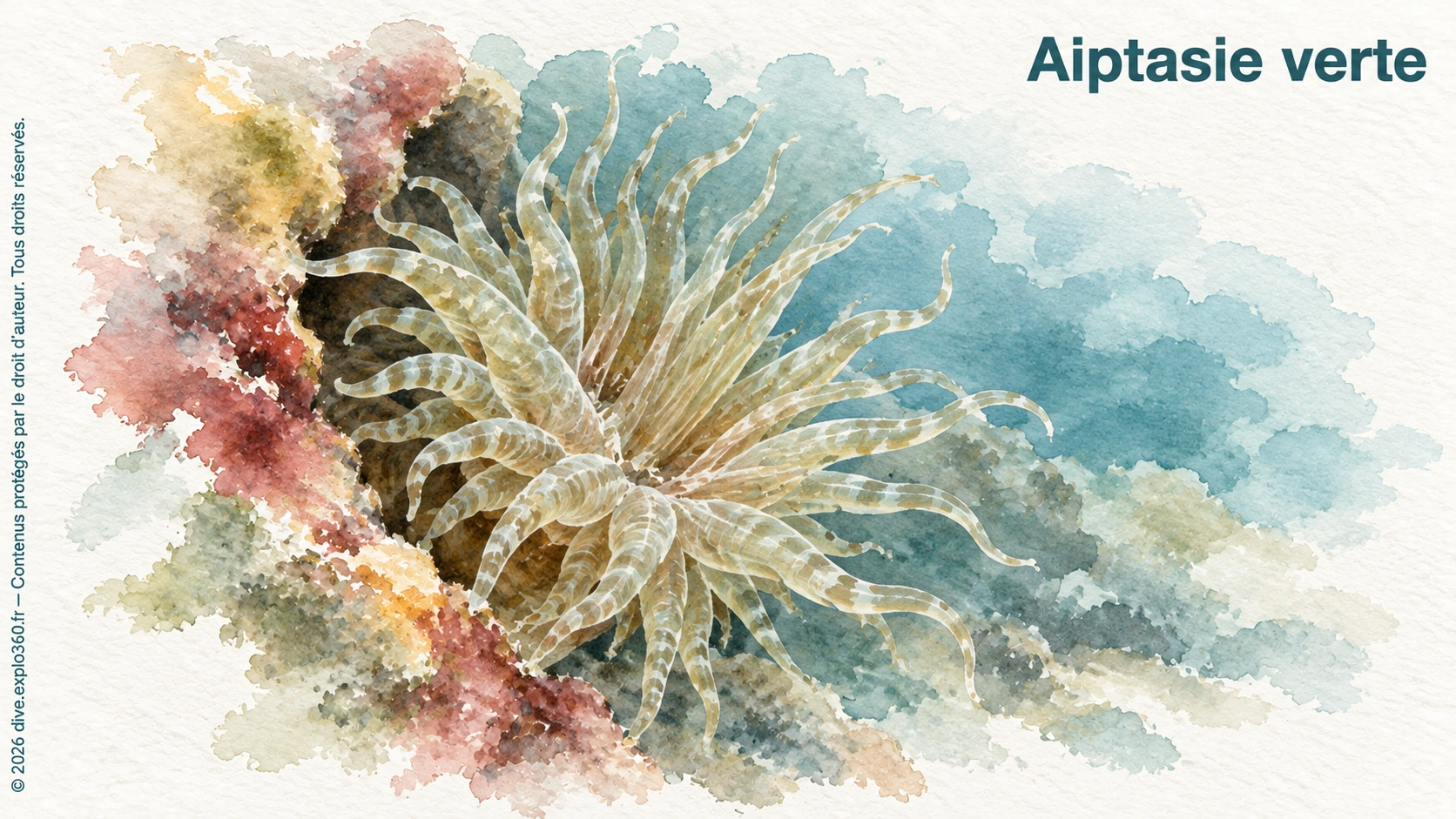
Green colour and purple tips recall the snakelocks anemone. In that species, however, the tentacles extend into much longer, finer strands: similar colours accompany very different proportions.
WHERE DOES IT LIVE?
Rock cracks and dimly lit positions are useful places to look for the dahlia anemone. Attached to its surface, it occurs in calm Mediterranean habitats. It is described from shallow water to around fifty metres, with light exposure varying greatly between structures at the same depth.
WHAT DOES IT EAT?
The dahlia anemone takes most of its meals at night. Its tentacles carry stinging cells whose capsules discharge threads capable of injecting venom. They help capture and immobilise animals coming within reach. Seeing prey move towards the central mouth is a more direct sign of feeding than seeing the anemone open.
GO FURTHER WITH AMIGANSEAU
Unlock the full profile
Deepen your knowledge with the exclusive chapters and interactive resources included in an AMIGANSEAU licence.
- HOW DOES IT REPRODUCE?
- OUR OBSERVATIONS
- ARTICLE
Also included in the full profile
- Advanced navigation between description, ecological context, observations and behaviour
- Interactive food chain to explore the species’ feeding relationships
- Natural history podcast and dive debrief
- Infographic and illustrated summary profile


 Understand the species