


 Habitat
 Depth
 Group
 Role
 Average size
 Precautions
WHAT DOES IT LOOK LIKE?
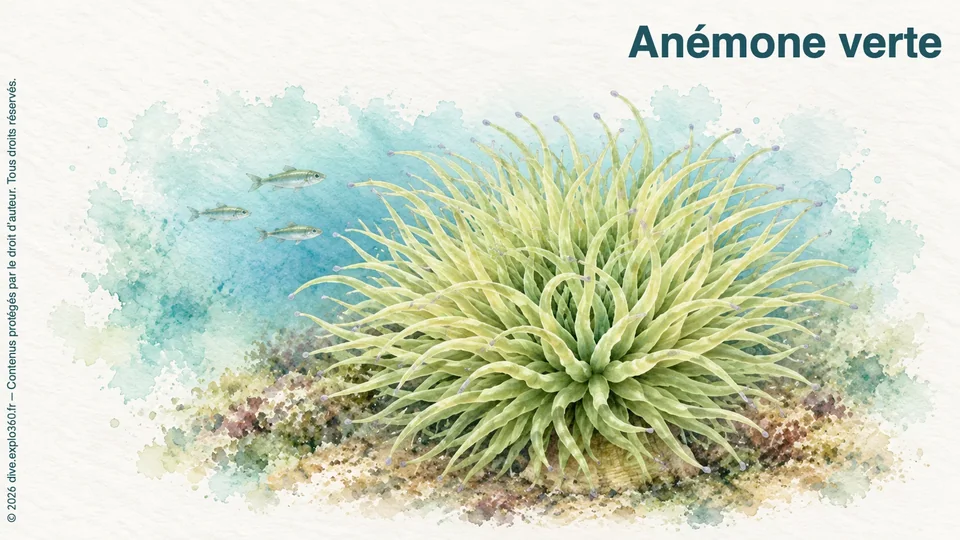
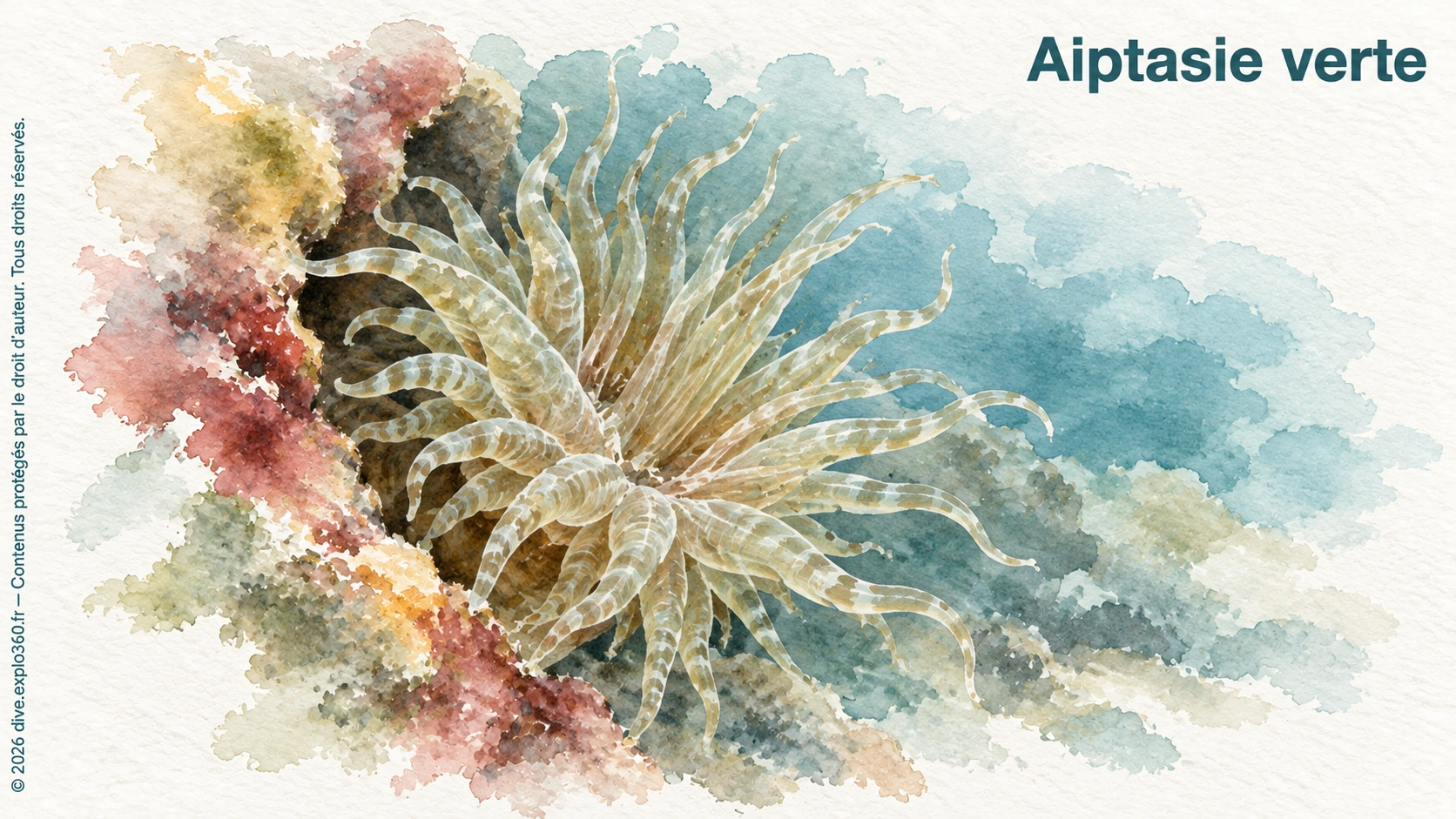
Long, thin, flexible tentacles form the slender crown of the snakelocks anemone (Anemonia viridis). They are often green with purple tips, though some individuals are paler and have no purple tips.
The tentacles surround the mouth at the centre of the crown. Their slenderness contrasts with the short, thick tentacles of the dahlia anemone, even when the two animals have similar colours.
WHERE DOES IT LIVE?
Well-lit rock surfaces near the surface are a common habitat of the snakelocks anemone. Attached to its support, it mainly occupies the first few metres, with records to around twenty metres. Its range includes the Mediterranean and eastern Atlantic.
WHAT DOES IT EAT?
A small fish or crustacean held by the tentacles may be immobilised and brought towards the mouth. Another nutritional supply remains hidden inside the tissues. Symbiotic microalgae use light to produce organic compounds that help nourish the anemone. Capture and exchanges with these partners complement one another but operate through different mechanisms.
GO FURTHER WITH AMIGANSEAU
Unlock the full profile
Deepen your knowledge with the exclusive chapters and interactive resources included in an AMIGANSEAU licence.
- HOW DOES IT REPRODUCE?
- OUR OBSERVATIONS
- ARTICLE
Also included in the full profile
- Advanced navigation between description, ecological context, observations and behaviour
- Interactive food chain to explore the species’ feeding relationships
- Natural history podcast and dive debrief
- Infographic and illustrated summary profile
- Additional photographic observations

 Understand the species
