


 Habitat
 Depth
 Group
 Role
 Average size
WHAT DOES IT LOOK LIKE?
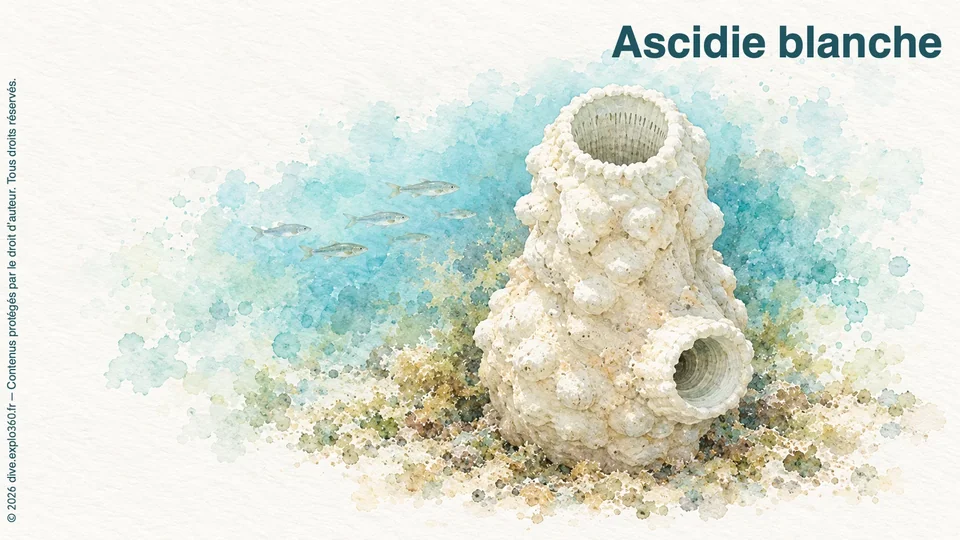
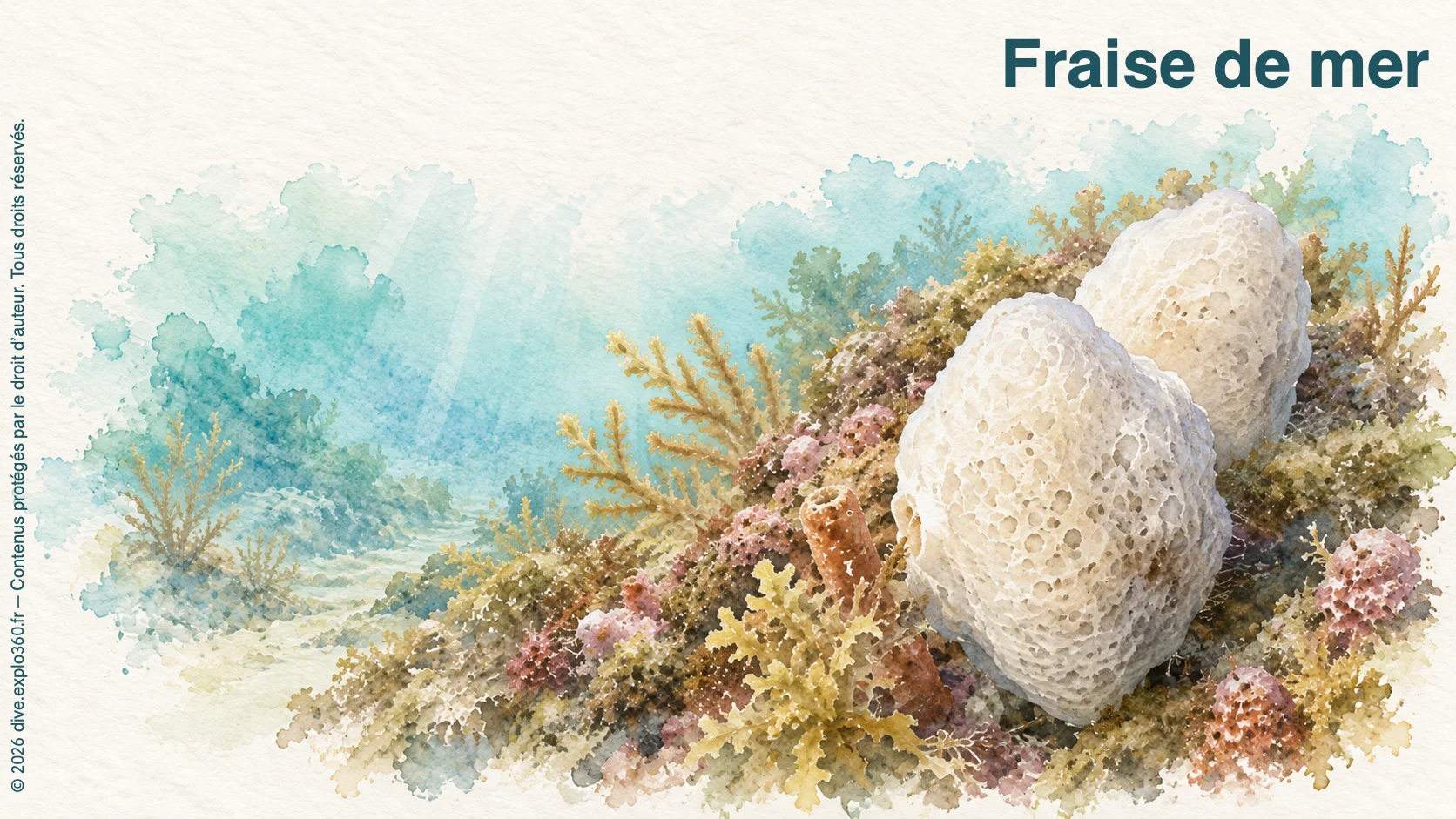
The white sea squirt (Phallusia mammillata) looks like a white sac covered in rounded bumps. Its thick outer covering, called the tunic, sometimes lets a little light through.
Two siphons, the body openings, are well separated. One lies towards the top and the other at the side. Each sac is a distinct individual.
WHERE DOES IT LIVE?
Rocky surfaces and submerged structures support the white sea squirt, including within sandy or muddy seabeds. Occurrence on a soft bottom does not mean it lives loose in sediment: it remains attached by its base. Often seen in sheltered and sometimes turbid areas, it occurs in the Mediterranean and north-east Atlantic.
WHAT DOES IT EAT?
Mucus plays a central feeding role in the white sea squirt: it gathers particles retained as water passes through the internal filter. Cilia then carry this food aggregate towards the oesophagus and stomach. Water passes through the branchial sac and follows the outgoing circuit. Small sensory tentacles at the inlet help prevent oversized objects from entering.
GO FURTHER WITH AMIGANSEAU
Unlock the full profile
Deepen your knowledge with the exclusive chapters and interactive resources included in an AMIGANSEAU licence.
- HOW DOES IT REPRODUCE?
- OUR OBSERVATIONS
- ARTICLE
Also included in the full profile
- Advanced navigation between description, ecological context, observations and behaviour
- Interactive food chain to explore the species’ feeding relationships
- Natural history podcast and dive debrief
- Infographic and illustrated summary profile

 Understand the species