


 Habitat
 Depth
 Group
 Role
 Average size
WHAT DOES IT LOOK LIKE?
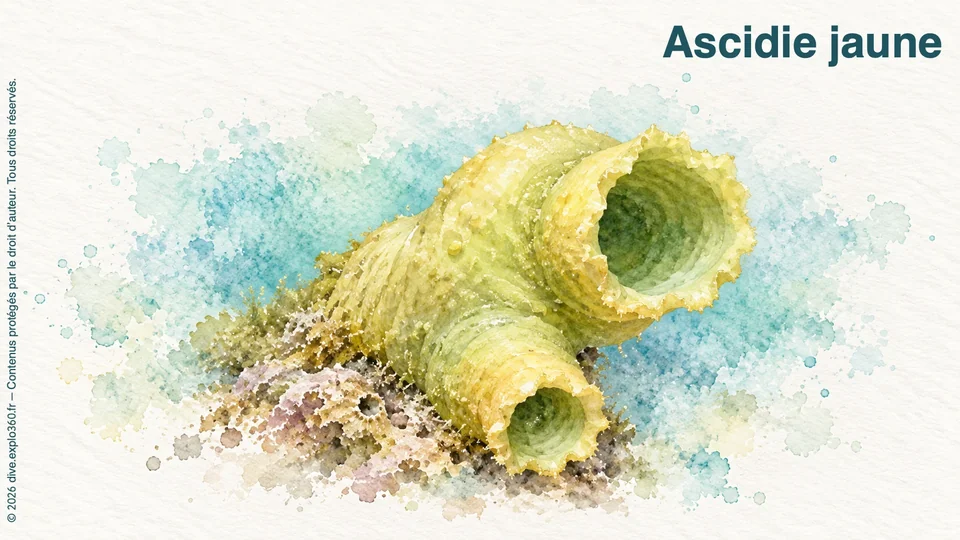
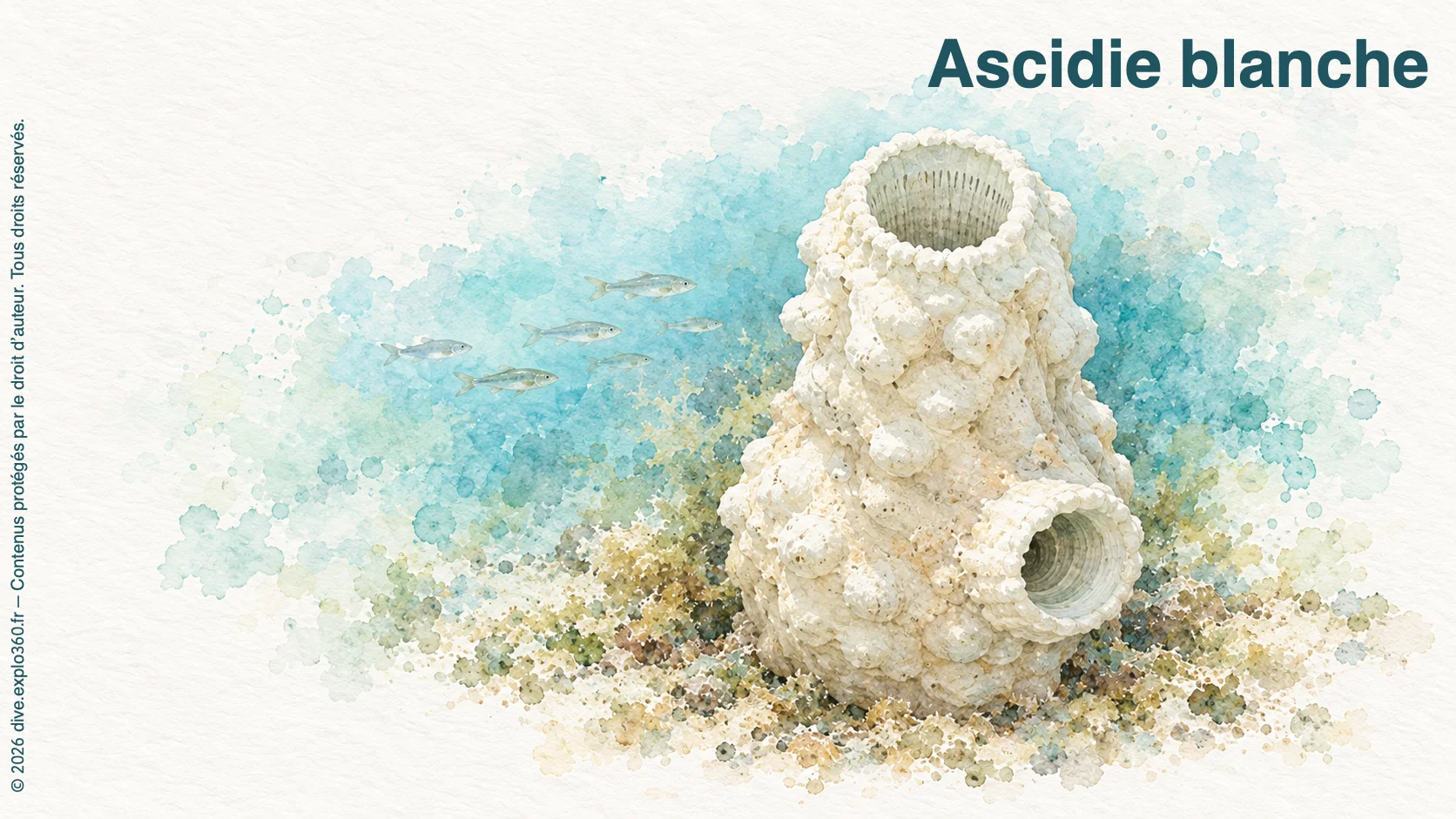
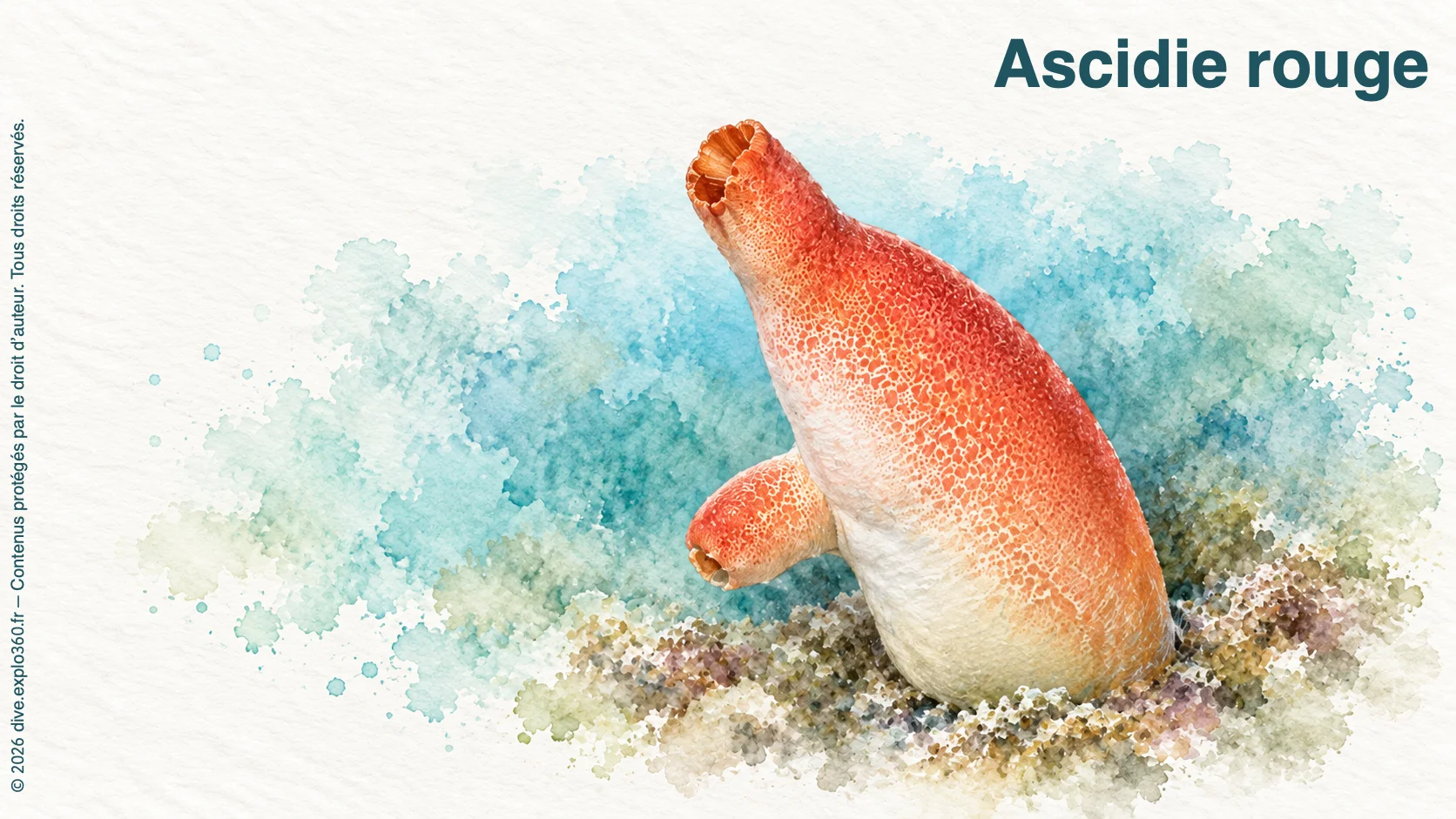
The yellow sea squirt (Ciona edwardsi) stands upright like a flexible, translucent yellow tube. Its outer covering, called the tunic, is smooth and looks like jelly. Its two openings, or siphons, sit close together, one at the top and one at the side.
The opening margins are lobed. Externally it closely resembles other related sea squirts, and a photograph may leave their identity unresolved.
WHERE DOES IT LIVE?
Within small fissures in rock or coralligenous formations, Edwards’ sea squirt may sit embedded in the structure. It attaches to rocky Mediterranean surfaces exposed to water movement. Records include diving depths and much deeper areas; shelter within a fissure does not imply an absence of current.
WHAT DOES IT EAT?
In the yellow sea squirt, food is collected inside the pharynx. A glandular groove produces mucus that traps particles carried in by the water. Cilia gather this food and direct it towards the stomach. Meanwhile, water passes through the filter slits and reaches the outgoing siphon. The mechanism combines filtration with particle transport, without external prey capture. Once retained, food enters the digestive tract; filtered water leaves through the exhalant siphon.
GO FURTHER WITH AMIGANSEAU
Unlock the full profile
Deepen your knowledge with the exclusive chapters and interactive resources included in an AMIGANSEAU licence.
Subscribing to Dive.Explo360 means supporting a different way to discover marine life.
Our independent platform is entirely self-funded and relies solely on subscriptions. Every licence helps us continue our work, create new content, and share what we know about the marine world with as many people as possible.
Starting at €80 per year, your support makes all the difference.
 Understand the species