


 Habitat
 Depth
 Group
 Role
 Average size
WHAT DOES IT LOOK LIKE?
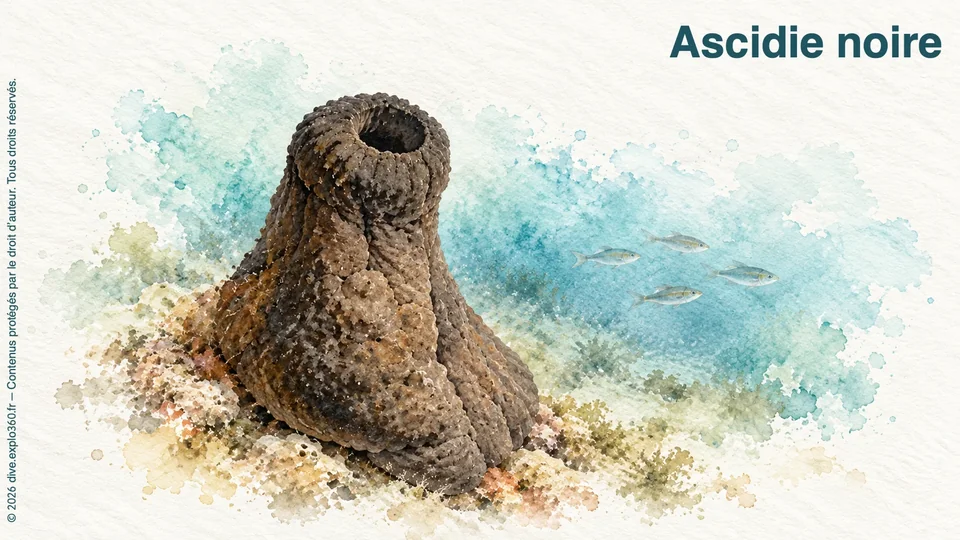
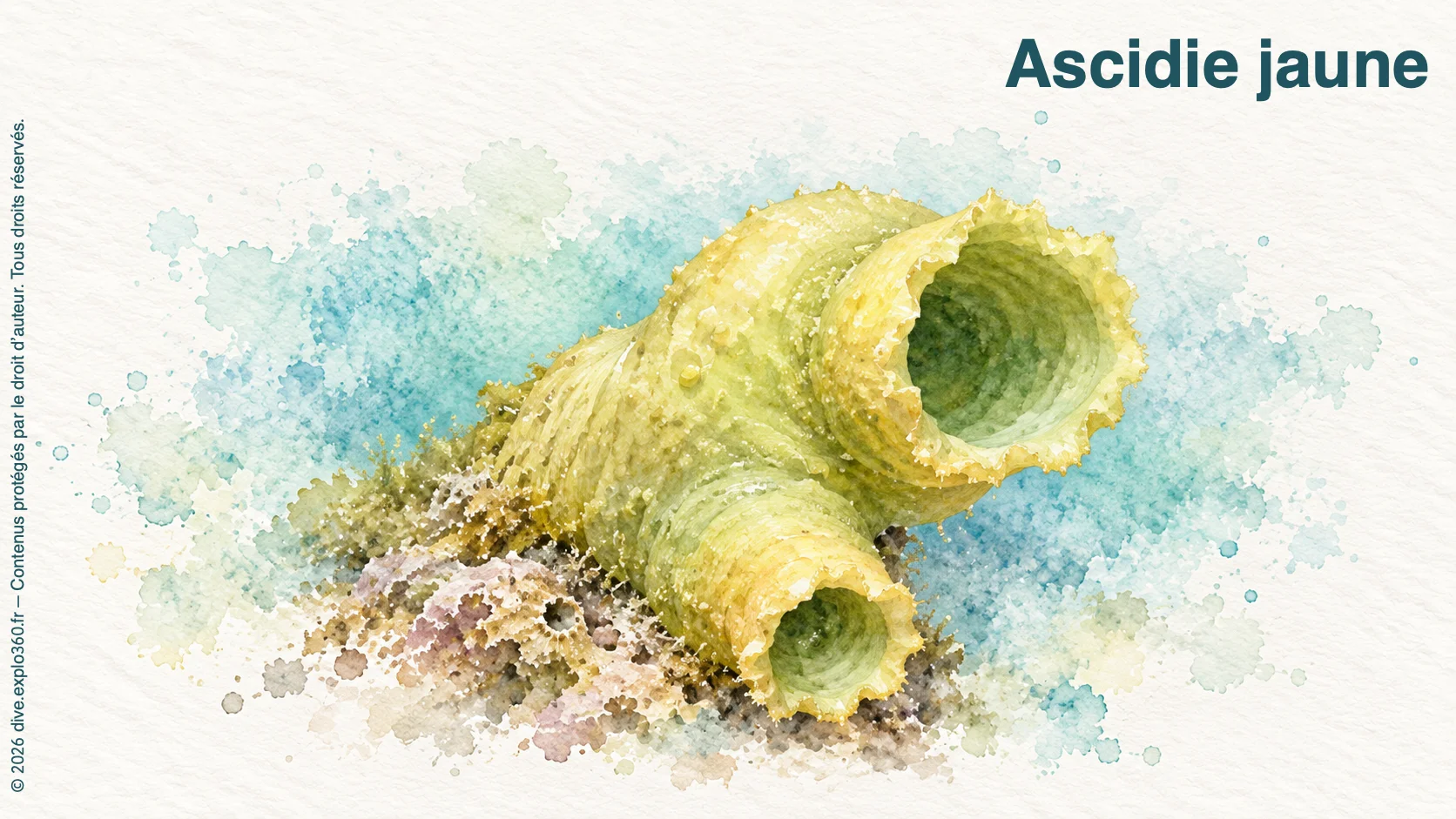
The dark sea squirt (Phallusia fumigata) forms a thick, elongated sac with an irregular outline. It may stand upright or lie on its side. Its outer covering, called the tunic, is usually dark grey to black and is sometimes brownish. The smooth surface may have a few wrinkles. Of its two openings, the upper siphon is easier to see. The other is less conspicuous and may be hidden from some angles.
WHERE DOES IT LIVE?
A shell or another solid object may support the dark sea squirt within a soft seabed. It also occupies rocks and submerged structures. A hard attachment surface therefore provides a more precise habitat feature than the broad seabed category, including in areas with flowing water.
WHAT DOES IT EAT?
The black sea squirt filters water in its branchial sac, inside the body. Water delivers food particles, which mucus gathers into a nutritious aggregate. Beating cilia then move it towards the oesophagus and stomach. Sensory tentacles at the inlet act earlier in the circuit, limiting the entry of oversized objects. This differs from the impression that the siphon itself retains all food.
GO FURTHER WITH AMIGANSEAU
Unlock the full profile
Deepen your knowledge with the exclusive chapters and interactive resources included in an AMIGANSEAU licence.
- HOW DOES IT REPRODUCE?
- OUR OBSERVATIONS
- ARTICLE
Also included in the full profile
- Advanced navigation between description, ecological context, observations and behaviour
- Interactive food chain to explore the species’ feeding relationships
- Natural history podcast and dive debrief
- Infographic and illustrated summary profile

 Understand the species