


 Habitat
 Depth
 Group
 Role
 Average size
WHAT DOES IT LOOK LIKE?
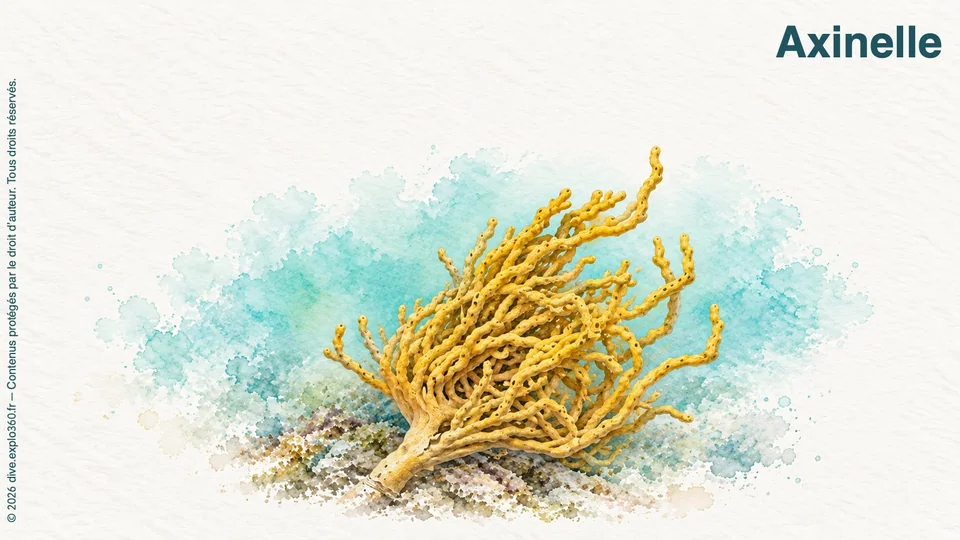
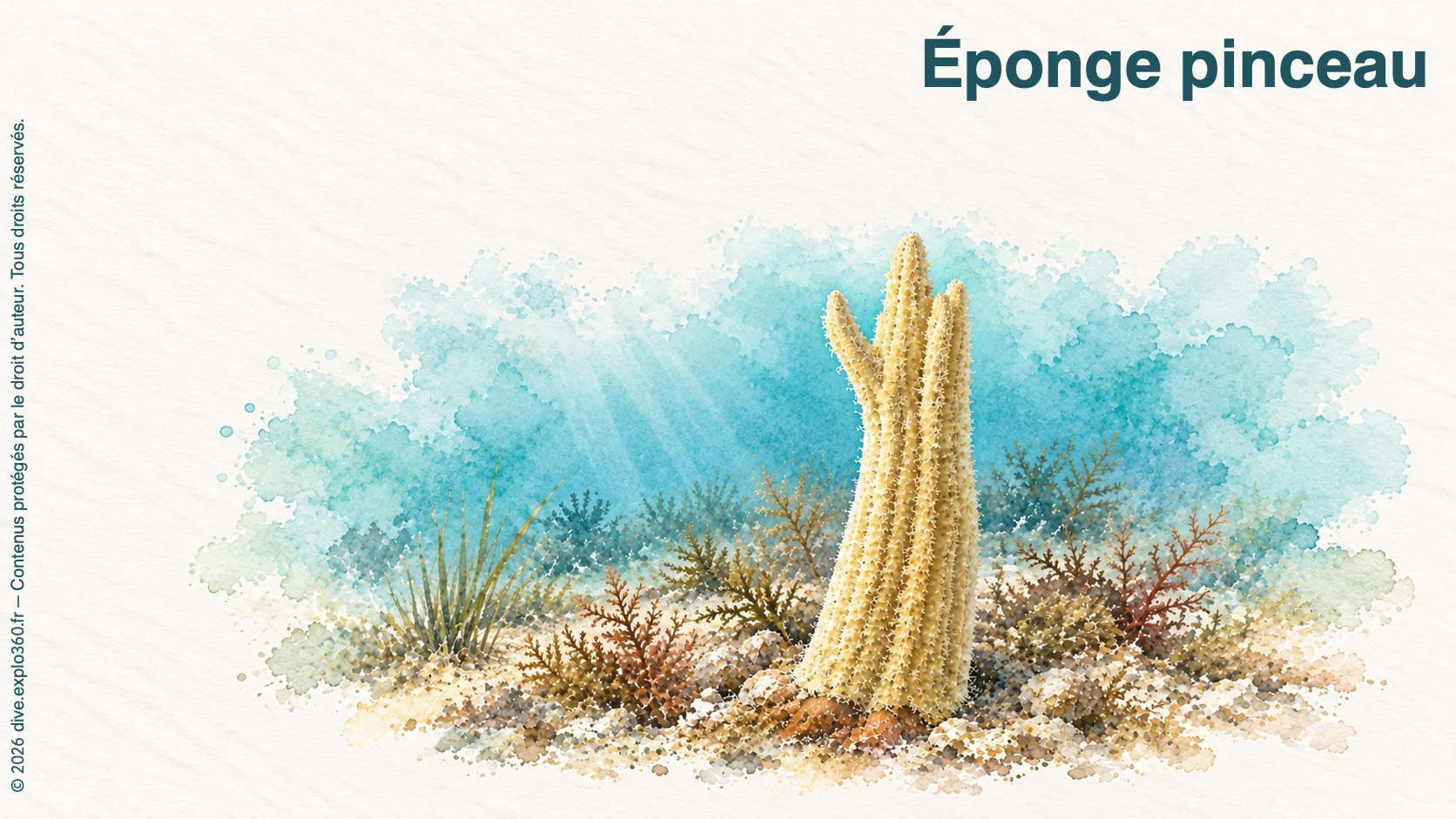
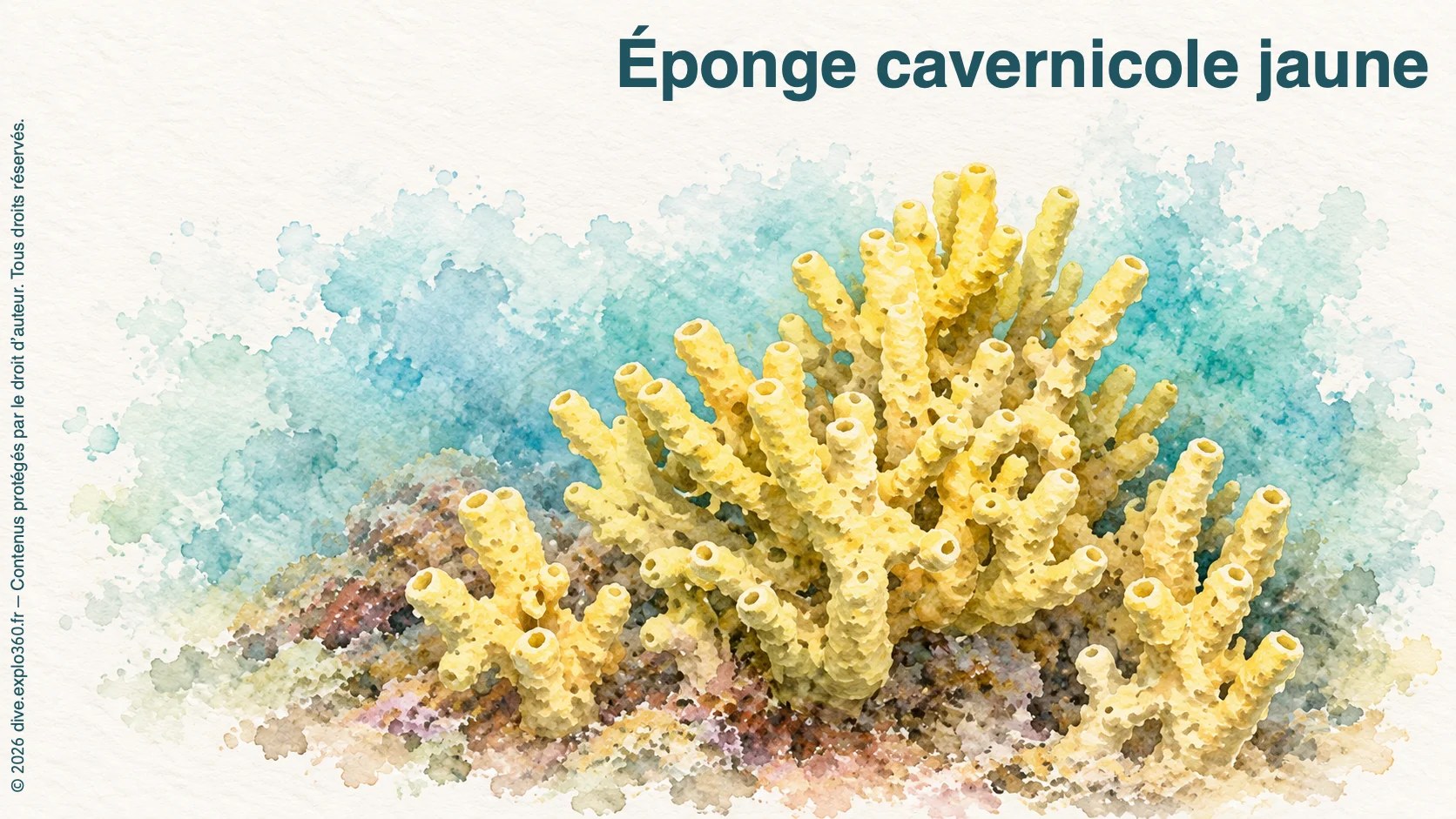
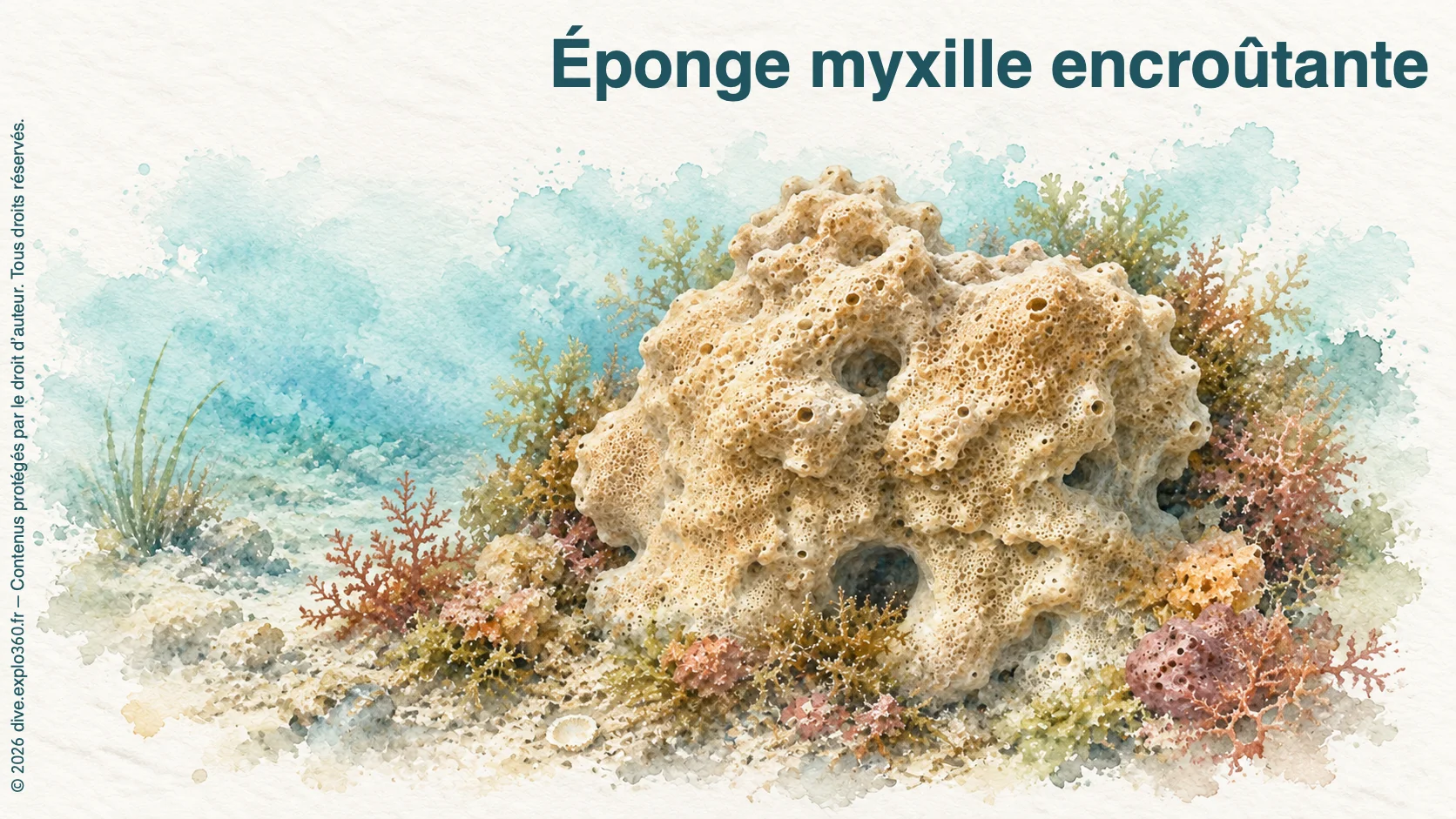
Up close, this sponge (Axinella polypoides) shows small circles or stars formed by surface openings called oscula. From farther away, its upright yellow to orange branches make it look like a shrub.
The surface is slightly rough. Branch arrangement varies and may recall related sponges, whose external appearance can sometimes leave doubt.
WHERE DOES IT LIVE?
On drop-offs and coralligenous formations, the yellow axinella remains anchored to rock. Dimly lit or partly shaded areas are usual positions, often exposed to moderate current. Wall structure and exposure therefore describe an important part of its habitat.
WHAT DOES IT EAT?
The branching sponge’s apparent stillness conceals a current maintained within its internal chambers. Choanocytes, specialised cells bearing a moving flagellum, help pump water and capture food. Planktonic organisms and detrital organic particles enter with water through the small inhalant pores. Retained material is taken up and digested at the cellular level, while water continues towards the outgoing oscula.
GO FURTHER WITH AMIGANSEAU
Unlock the full profile
Deepen your knowledge with the exclusive chapters and interactive resources included in an AMIGANSEAU licence.
- HOW DOES IT REPRODUCE?
- OUR OBSERVATIONS
- ARTICLE
Also included in the full profile
- Advanced navigation between description, ecological context, observations and behaviour
- Interactive food chain to explore the species’ feeding relationships
- Natural history podcast and dive debrief
- Infographic and illustrated summary profile
 Understand the species