Habitat
 Depth
 Group
 Role
WHAT DOES IT LOOK LIKE?
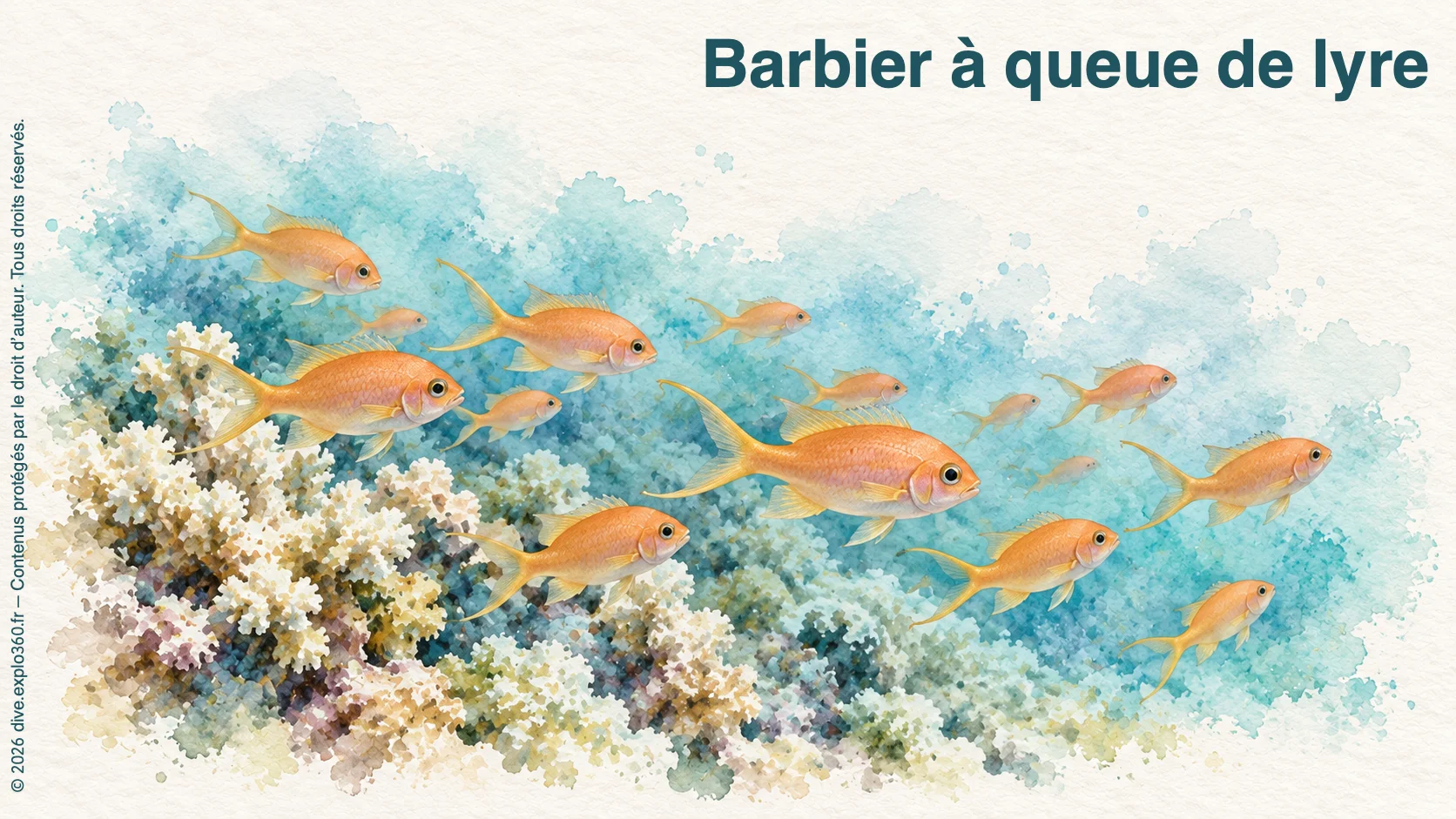
Typically orange females are smaller than reddish-purple males. In males, the third dorsal ray is elongated and a dark patch marks the pectoral fins. The forked tail has extended tips.WHERE DOES IT LIVE?
Populations use reefs and current-exposed structures, mainly at 0–35 m and down to 55 m. Taxonomic boundaries of eastern populations have been discussed; the Red Sea context is explicit here.WHAT DOES IT EAT?
This planktivore catches small prey in the water column. Positions beside the reef provide access to zooplankton while retaining proximity to structural shelter.GO FURTHER WITH AMIGANSEAU
Unlock the full profile
Deepen your knowledge with the exclusive chapters and interactive resources included in an AMIGANSEAU licence.
- HOW DOES IT REPRODUCE?
- OUR OBSERVATIONS
Also included in the full profile
- Advanced navigation between description, ecological context, observations and behaviour
- Interactive food chain to explore the species’ feeding relationships
- Infographic and illustrated summary profile