Habitat
 Depth
 Group
 Role
WHAT DO THEY LOOK LIKE?
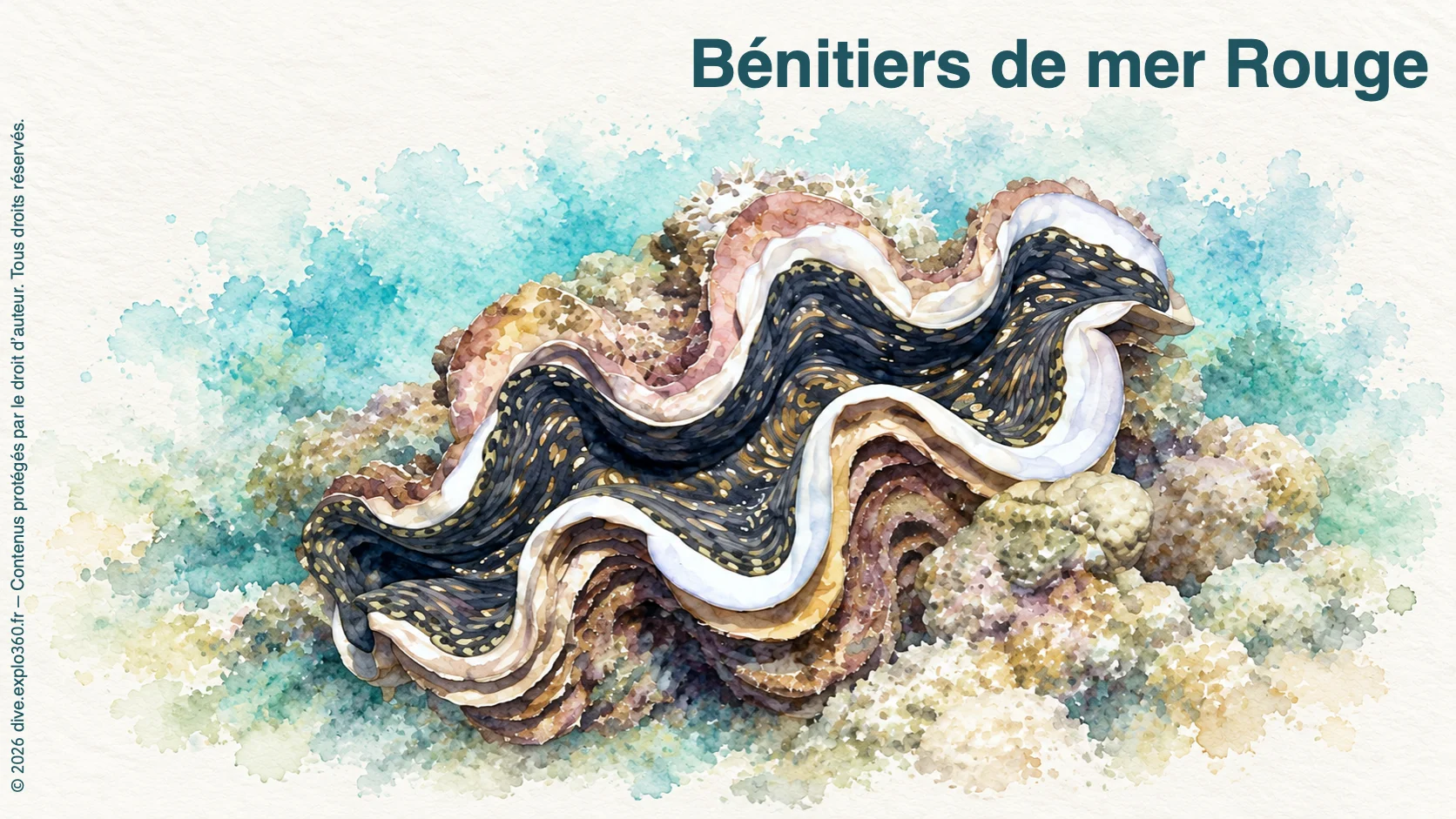
Giant clams have a two-part shell and coloured tissue visible between the halves. This tissue is called the mantle; the shell has ribs and, in some species, scales. Shell shape is more useful than mantle colour alone in distinguishing species, which cannot all be identified from this clip.WHERE DO THEY LIVE?
Giant clams use reef habitats where light reaches their mantle. Depending on species and size, they attach to a surface or settle within reef structure. Mantle orientation and exposure affect access to light; one numerical depth range cannot accurately describe the whole group.WHAT DO THEY EAT?
Filtering provides plankton and particles; associated algae supply part of their energy resources. The association enables exchange: algae use light and the clam benefits from material they produce. The clam remains an animal even when photosynthetic partners strongly contribute to its nutrition.GO FURTHER WITH AMIGANSEAU
Unlock the full profile
Deepen your knowledge with the exclusive chapters and interactive resources included in an AMIGANSEAU licence.
- HOW DO THEY REPRODUCE?
- OUR OBSERVATIONS
Also included in the full profile
- Advanced navigation between description, ecological context, observations and behaviour
- Interactive food chain to explore the species’ feeding relationships
- Infographic and illustrated summary profile