


 Habitat
 Depth
 Group
 Role
 Average size
WHAT DOES IT LOOK LIKE?
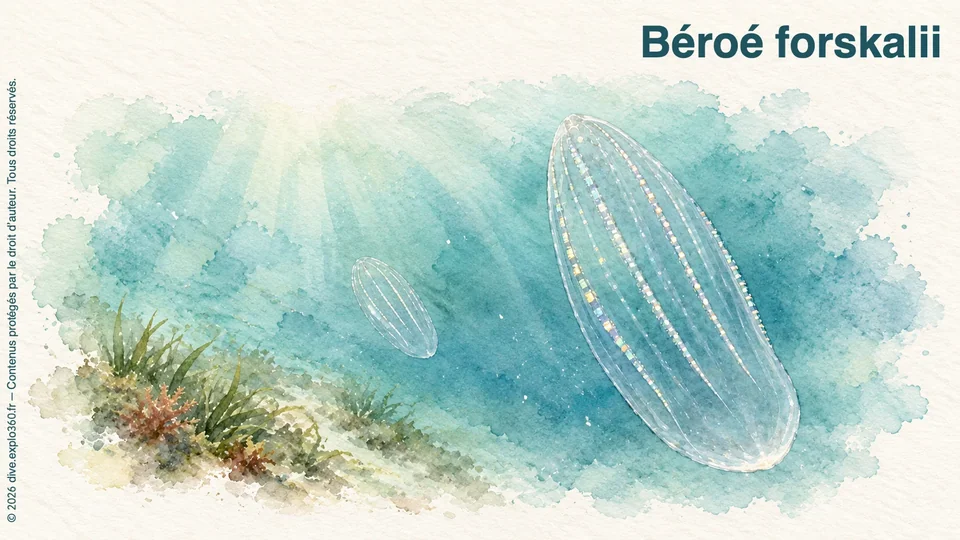
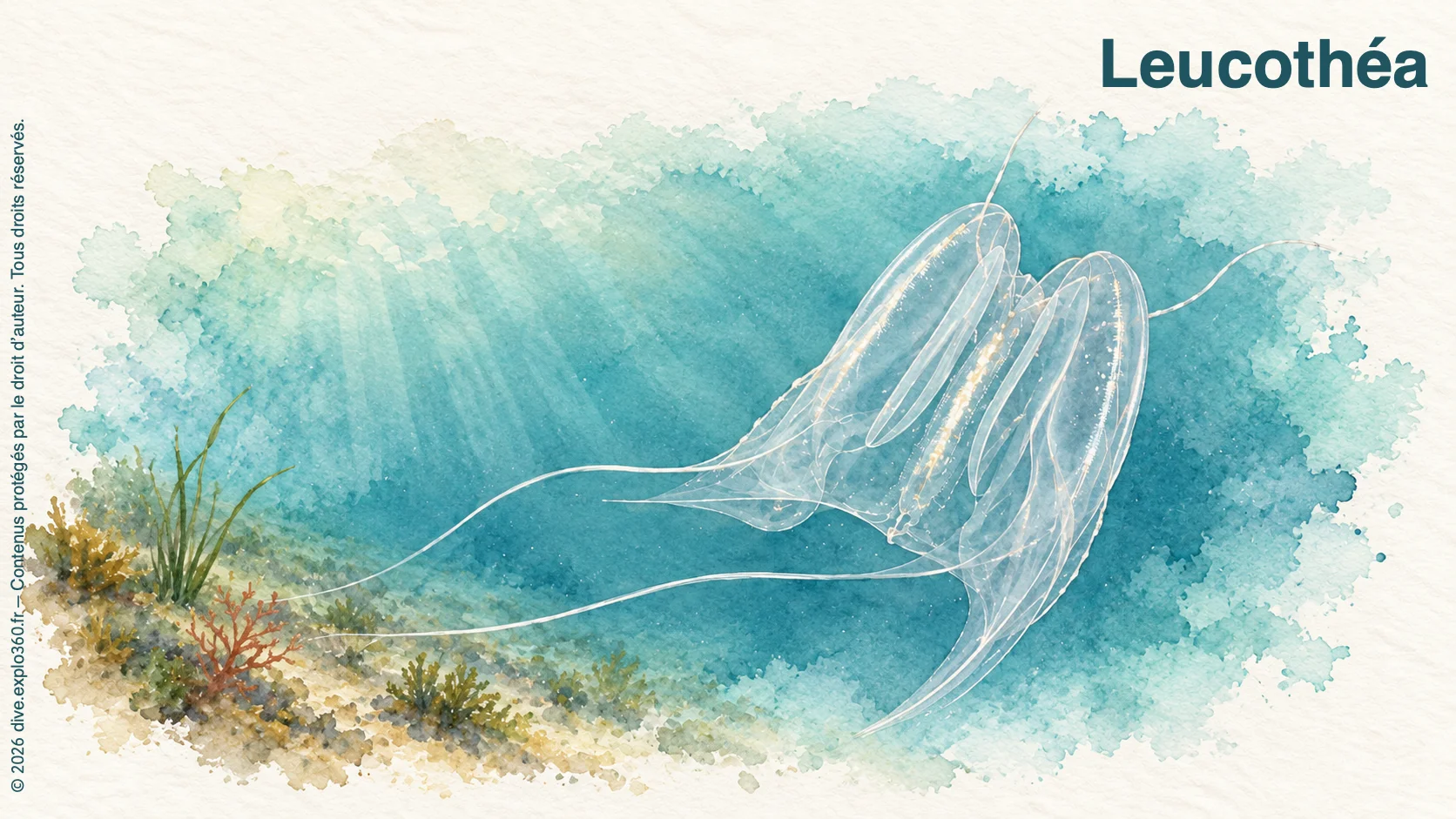
This comb jelly (Beroe forskalii) has a distinctly flattened, sac-shaped body that is transparent and sometimes pinkish. One end tapers to a point, and the other curves around a wide mouth. No tentacles stick out.
Eight comb rows emphasise its length. The combs consist of cilia, tiny moving filaments, which may show iridescent reflections with changing colours.
WHERE DOES IT LIVE?
Within the water column, the Beroe comb jelly may occur near the surface or several tens of metres deep. It lives in open water without needing to attach to the seabed. Its Mediterranean and Atlantic occurrence is irregular with season and conditions, making encounters variable between outings.
WHAT DOES IT EAT?
Feeding in Forsskål’s comb jelly begins at the mouth, which can engulf other ctenophores. Inside, macrocilia—specialised groups of cilia—assist the ingestion of gelatinous tissues. Its diet is therefore centred on animals from its own group, using a capture method unlike that of tentacled comb jellies. The animal’s transparency may reveal digestive contents after a capture.
GO FURTHER WITH AMIGANSEAU
Unlock the full profile
Deepen your knowledge with the exclusive chapters and interactive resources included in an AMIGANSEAU licence.
- HOW DOES IT REPRODUCE?
- OUR OBSERVATIONS
- ARTICLE
Also included in the full profile
- Advanced navigation between description, ecological context, observations and behaviour
- Interactive food chain to explore the species’ feeding relationships
- Natural history podcast and dive debrief
- Infographic and illustrated summary profile
 Understand the species