Habitat
 Depth
 Group
 Role
WHAT DOES IT LOOK LIKE?
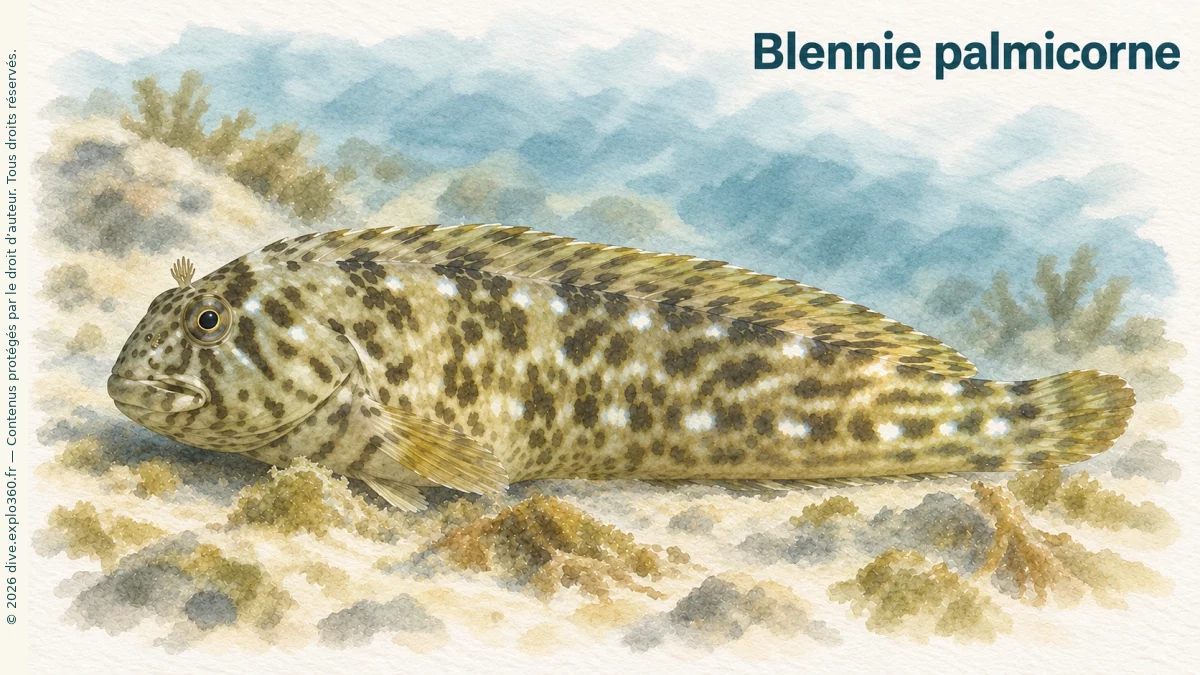
Adults reach about 15 to 19 centimetres. They have elongated bodies, often rounded bellies and fairly heavy heads with eyes set high.
Colour is grey, brown or greenish, with dark mottling. Small white spots may line the rear flanks. Eye filaments are short and split into several branches.
The skin has no scales. Mucus, a slippery protective substance, covers it. During breeding, males become almost black with bluish throats and lips.
WHERE DOES IT LIVE?
The species mainly lives from the surface to 5 metres, on stony bottoms, rubble and pebble beaches. Spaces beneath stones and cavities provide shelter.
Active by day, it moves near its refuge. Water movement in shallow habitats is part of its surroundings.
WHAT DOES IT EAT?
It feeds extensively on algae grazed from surfaces on the seabed. Studies of its feeding describe the use of algal turf and sea lettuce.
DORIS also mentions small invertebrates, animals without a backbone. Studies and scientific guides often describe the diet as mainly herbivorous.
GO FURTHER WITH AMIGANSEAU
Unlock the full profile
Deepen your knowledge with the exclusive chapters and interactive resources included in an AMIGANSEAU licence.
- HOW DOES IT REPRODUCE?
- OUR OBSERVATIONS
- ARTICLE
Also included in the full profile
- Advanced navigation between description, ecological context, observations and behaviour
- Interactive food chain to explore the species’ feeding relationships