Habitat
 Depth
 Group
 Role
WHAT DOES IT LOOK LIKE?
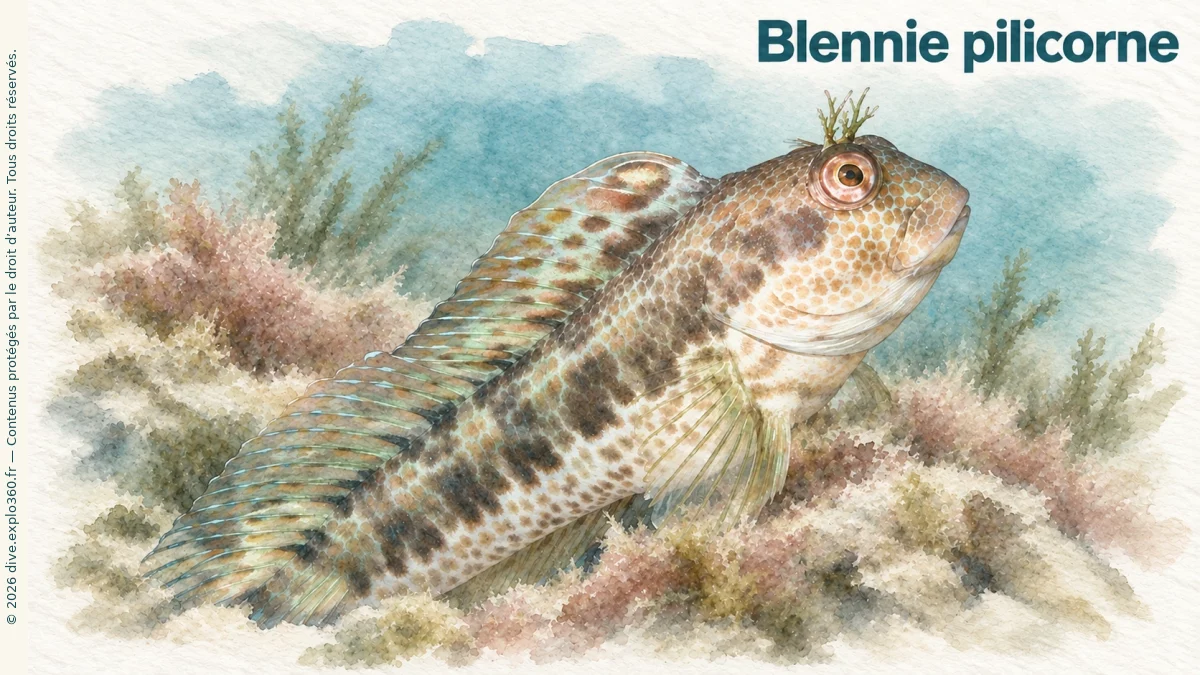
These small fish generally measure 8 to 12 centimetres. They have fairly deep heads, high-set eyes and short branching filaments above each eye.
Colours range from brown with dark markings to almost uniform yellow. Some pale individuals have a broad band along the side. A network of pale, honeycomb-like cheek lines is shared by these forms.
Breeding males become almost blue-black. A long fin follows the back, while small fins beneath the throat support the fish on rock.
WHERE DOES IT LIVE?
They frequent rocky bottoms with holes and cracks, between about 3 and 40 metres. Such areas may be exposed to currents and surge, wave movement against the rocks.
A fish settles, swims a short distance and changes its lookout point. An egg-guarding male remains more closely associated with its cavity.
WHAT DOES IT EAT?
DORIS contributors have observed individuals feeding on the remains of a dead crab. The species can therefore scavenge, consuming an animal that has already died.
Its diet is not sufficiently described for a complete list of meals. This does not make it an exclusive scavenger.
GO FURTHER WITH AMIGANSEAU
Unlock the full profile
Deepen your knowledge with the exclusive chapters and interactive resources included in an AMIGANSEAU licence.
- HOW DOES IT REPRODUCE?
- OUR OBSERVATIONS
- ARTICLE
Also included in the full profile
- Advanced navigation between description, ecological context, observations and behaviour
- Interactive food chain to explore the species’ feeding relationships