


 Habitat
 Depth
 Group
 Role
 Average size
WHAT DOES IT LOOK LIKE?
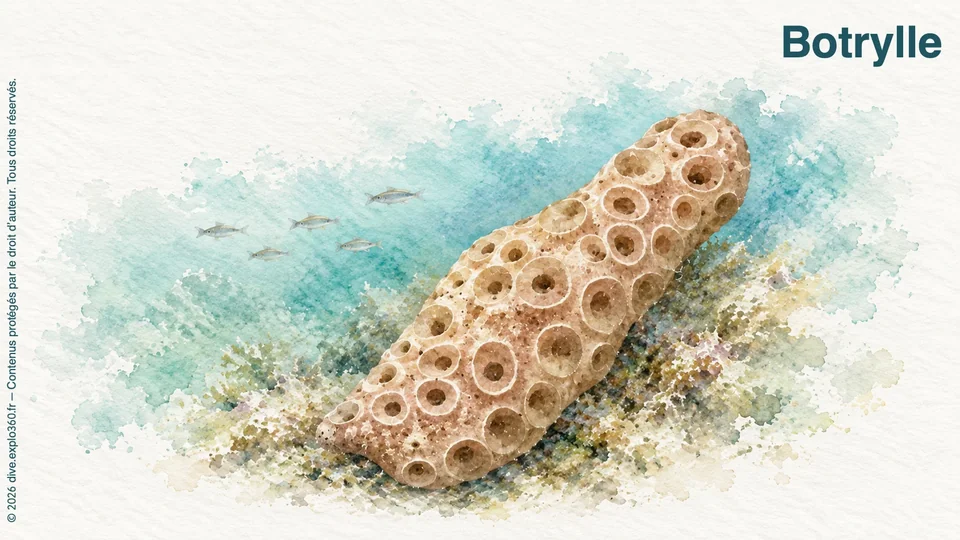
The star tunicate (Botryllus schlosseri) forms a thin sheet where small animals live within a common covering. This is a colony.
The zooids, the individuals making it up, form rosettes, star-like groups around a shared central opening. This pattern differs from the long winding rows of other colonial sea squirts, attached marine animals that also live in groups.
Colours include yellow, brown and purple, with some very dark appearances. The zooids may contrast in colour with the rest of the sheet.
GO FURTHER WITH AMIGANSEAU
Unlock the full profile
Deepen your knowledge with the exclusive chapters and interactive resources included in an AMIGANSEAU licence.
- WHERE DOES IT LIVE?
- WHAT DOES IT EAT?
- HOW DOES IT REPRODUCE?
- OUR OBSERVATIONS
- ARTICLE
Also included in the full profile
- Advanced navigation between description, ecological context, observations and behaviour
- Interactive food chain to explore the species’ feeding relationships
- Natural history podcast and dive debrief
- Infographic and illustrated summary profile
 Understand the species