


 Habitat
 Depth
 Group
 Role
 Size
 Good to know
WHAT DOES IT LOOK LIKE?
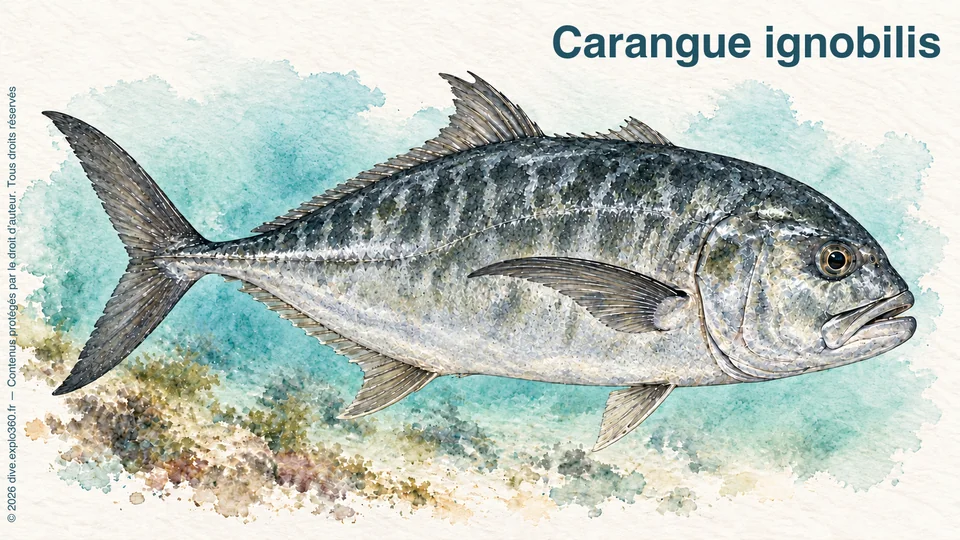
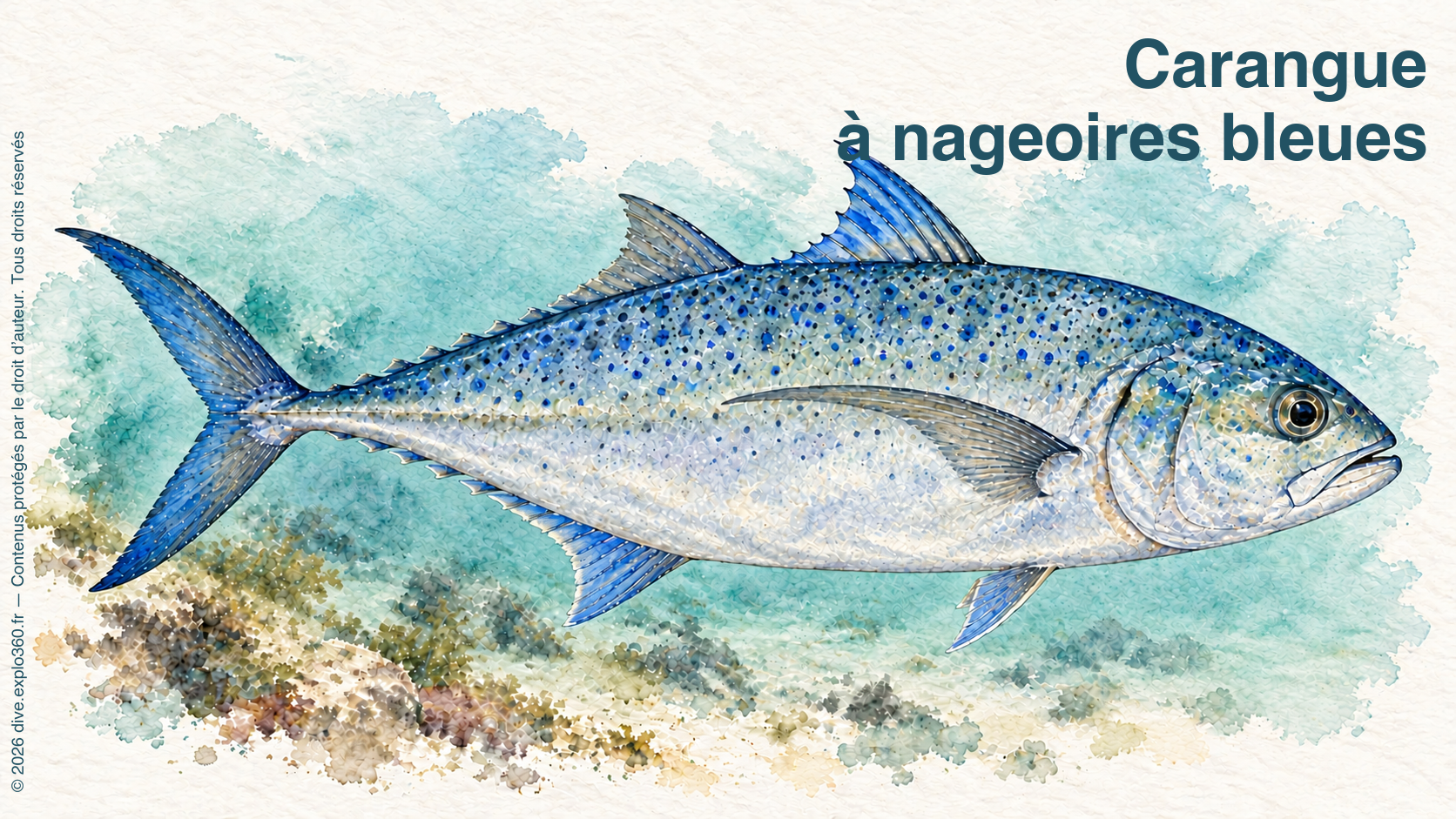
The giant trevally (Caranx ignobilis) has a massive body, a deeply forked tail and long, curved pectoral fins. Large individuals develop a particularly rounded forehead. The straight section of the lateral line bears thickened scales called scutes. Colour ranges from silver to very dark grey, without the small blue spots characteristic of the bluefin trevally.
WHERE DOES IT LIVE?
It uses reefs, channels and coastal waters. It occurs in the Maldives. Young fish use shallow nearshore areas. Larger fish explore reef slopes and channels.
The giant trevally occurs in the Red Sea and across much of the tropical Indo-Pacific. Around reefs, it moves between sandy bottoms, reef slopes and open water.
WHAT DOES IT EAT?
Fish provide much of the giant trevally’s food. A Kerala coast study found them strongly dominant in examined stomachs, followed by crustaceans and molluscs. Its known menu combines substantial fish consumption with other animal resources. Foraging can occur individually or in groups.
GO FURTHER WITH AMIGANSEAU
Unlock the full profile
Deepen your knowledge with the exclusive chapters and interactive resources included in an AMIGANSEAU licence.
- HOW DOES IT REPRODUCE?
- OUR OBSERVATIONS
- ARTICLE
Also included in the full profile
- Advanced navigation between description, ecological context, observations and behaviour
- Interactive food chain to explore the species’ feeding relationships
 Understand the species

