


 Habitat
 Depth
 Group
 Role
 Size
 Good to know
WHAT DOES IT LOOK LIKE?
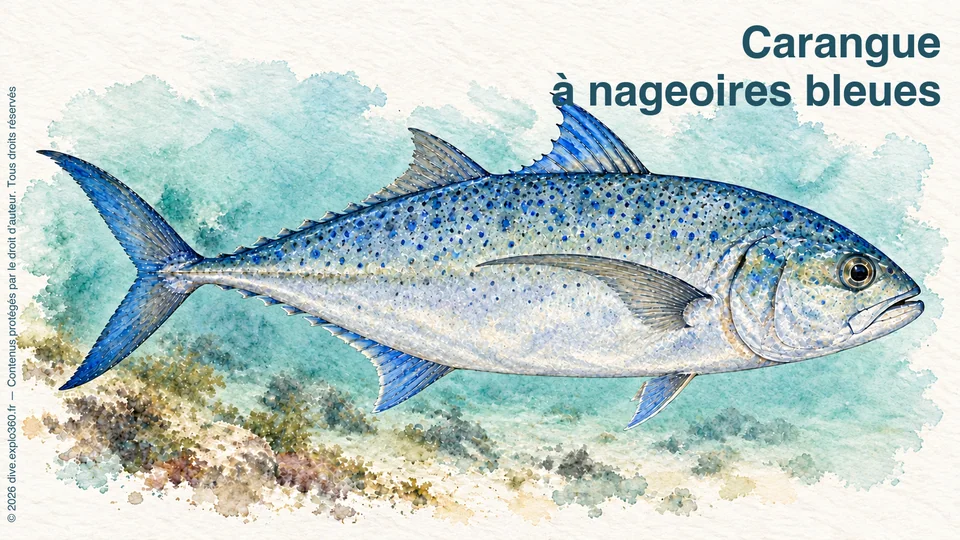
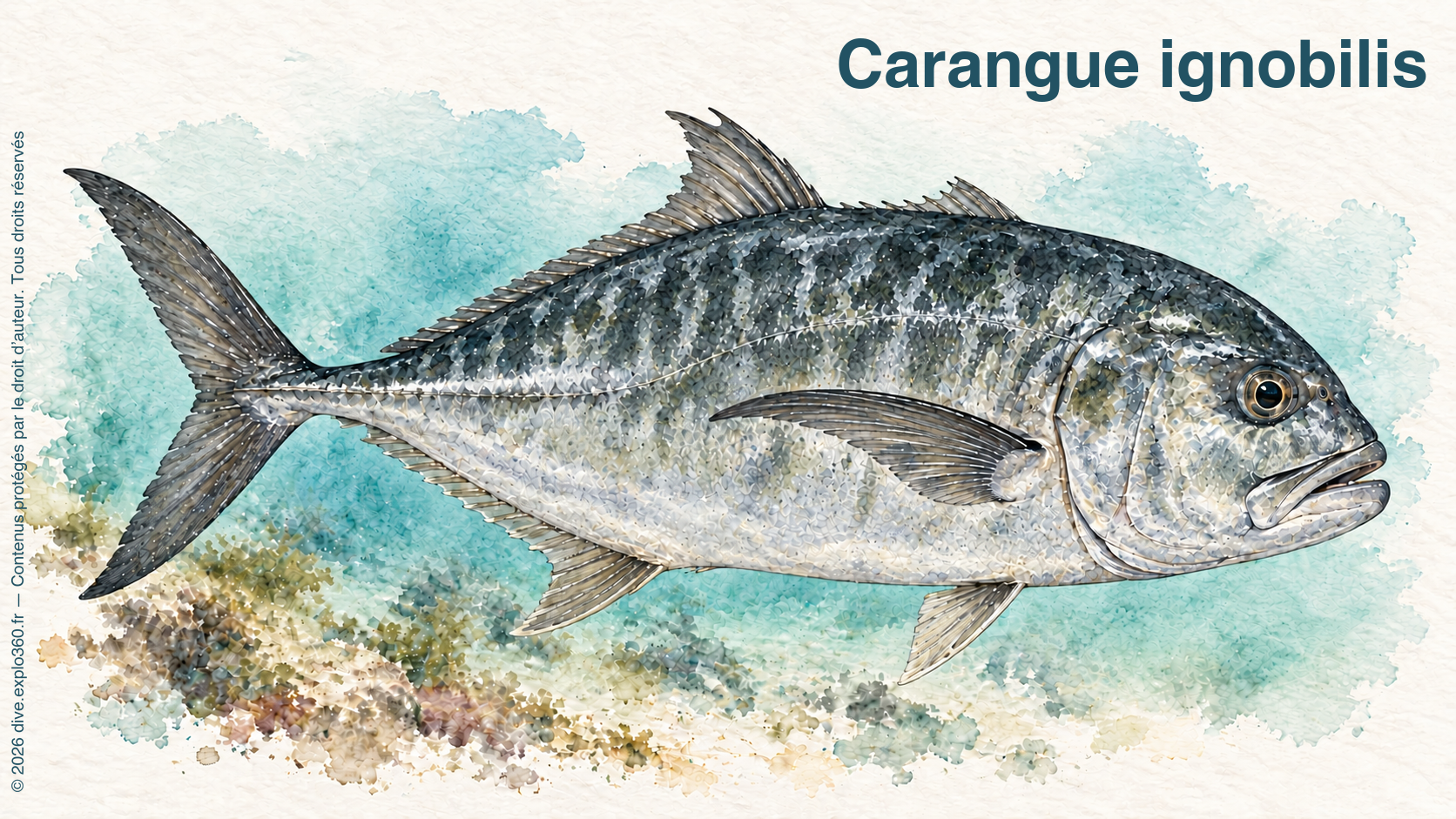
The bluefin trevally (Caranx melampygus) has small spots along its sides and vivid blue fins, especially the forked tail and the other rear fins. Its snout is less bulky than the giant trevally’s. In young fish, the spots are less distinct and the blue is less vivid.
WHERE DOES IT LIVE?
It uses lagoons, channels connecting lagoons to the open sea and outer reef slopes. Its range includes the Red Sea and tropical regions of the Indian and Pacific oceans, including the Maldives. It feeds in shallow areas but can also descend to 190 metres. Its movements take it between the reef and the surrounding water.
WHAT DOES IT EAT?
A bluefin trevally can find feeding opportunities by following a fish exploring the seabed. Dislodged prey becomes accessible without the trevally opening the shelter itself. Fish form most of its diet, with crustaceans as a supplement. Hunts involving this trevally and other predators are also observed around reefs.
GO FURTHER WITH AMIGANSEAU
Unlock the full profile
Deepen your knowledge with the exclusive chapters and interactive resources included in an AMIGANSEAU licence.
- HOW DOES IT REPRODUCE?
- OUR OBSERVATIONS
- ARTICLE
Also included in the full profile
- Advanced navigation between description, ecological context, observations and behaviour
- Interactive food chain to explore the species’ feeding relationships
 Understand the species

